Painted with the Same Star
Look closely. There is someone to meet.
Aïssata
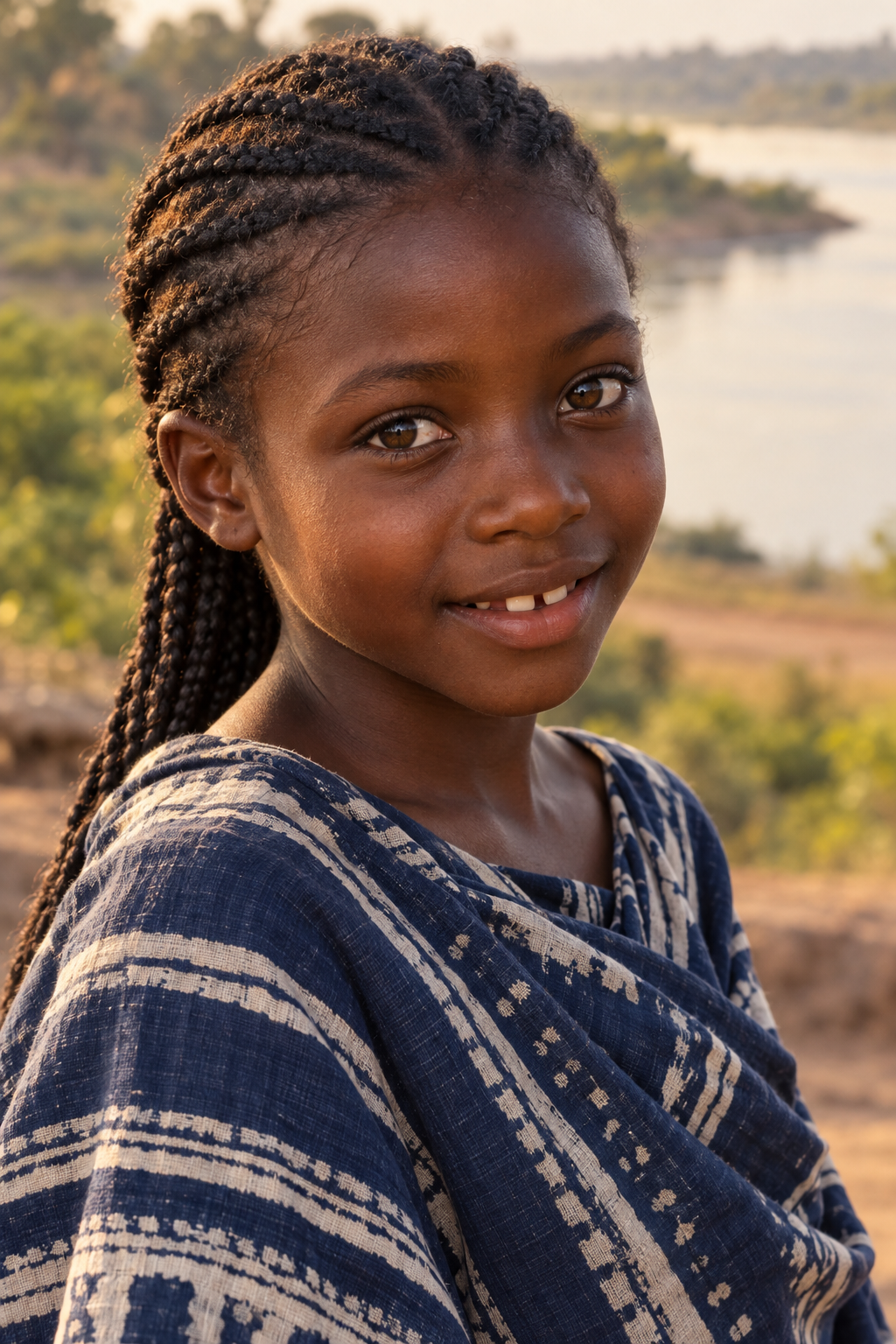
My name is Aïssata. I am ten, and sometimes I forget the water because I am watching the sky. You would understand if you saw it: the pink thinning into yellow, the orange growing warmer, the blue waiting above all of it. The colors make something move inside me. My belly tingles and my legs want to run, as though being happy is too big a thing to do standing still. Every sunrise feels like a promise. I don’t always know what it promises, but I like being awake when it comes. Awa is harder to convince. Sometimes I have to wake her, and sometimes I have to keep her out of trouble, which would be easier if she did not find so many interesting things to do wrong. I want to be like Neene. She notices who has eaten and who is only saying they have; she can gather a sleepy child against her without stopping what she is doing. I am learning to notice, too.
Samba notices other things. A place to climb. Someone to race. Whether I have managed to keep my wrapper clean. He saves stones to build his hearth when he is grown, and once I put a handful of golden dirt with them so we would have gold in our hearth. He makes me laugh, even when I am trying to be sensible. Baaba says the copper star he gave me looks like my eyes in the light. One of its arms is shorter than the others, and I have threaded it onto a cord with beads. I like holding it when he is away. My favorite story is the one he tells about a girl who worries a star will have to choose between her and her father. But there is only one sky, Baaba says. Wherever someone you love has gone, they have not left the sky above you. Sometimes I go outside just to look.
What Lies Ahead
In 1896, a raid tears ten-year-old Aïssata from the river country she calls home. Captured and separated from her family, she is taken into a household where other people claim the right to her work, her body, and the life she will be allowed to lead. She has always believed that being good means listening carefully, helping before she is asked, and making the people she loves proud. Enslavement turns that longing to please into something others can use against her. As obedience becomes a way of surviving and Storymere begins opening within the world she cannot escape, Aïssata struggles to hold on to her sister, her own memories, and the possibility of a future with Samba. The lessons she learns about staying alive will reach far beyond her lifetime.
Follow my story
A First Look into Storymere
Begin with the prologue and a glimpse of Aïssata’s childhood.
The Original Wound
An ordinary morning becomes the day her world changes.
Includes violence and the capture of children.
Awa
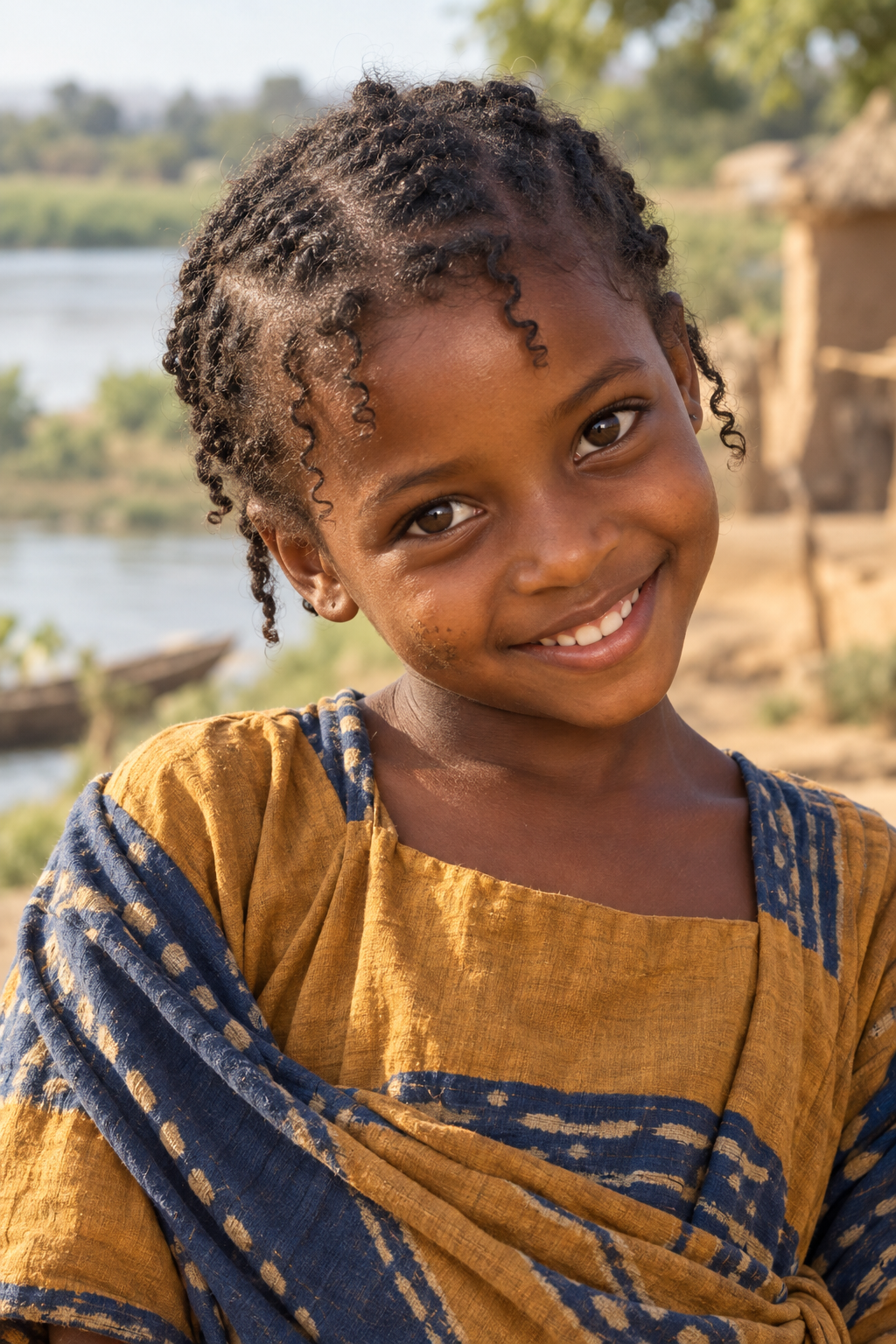
My name is Awa. I am eight, and Samba only wins because he cheats. Once he told me Aïssata was at the river when she wasn’t, and then he ran the other way and touched the tree first. That is not winning. When we stop, I squat with my heels flat and my wrists hanging between my knees until I can breathe properly again. Aïssata stands away from me so I won’t get dirt on her wrapper. She checks it even when I haven’t touched her. I don’t know how she keeps it so clean. By lunchtime, pieces of my hair have come out of Neene’s cornrows and something has usually happened to my clothes. There is a lot to do outside.
At dudal, Ceerno tells me to slow down. I know the words, but sometimes the ends get swallowed because the next ones are already coming. I like how they roll in my mouth, like a date with honey tucked inside. Making the letters sit properly on the board takes longer. Aïssata will rub out a whole word because she doesn’t like one curve, and I could have finished another line by then. During prayers, I watch her from the corner of my eye so I know when to move. Sometimes she catches my wrapper because I am getting up too soon. I know the prayers. Sometimes I am thinking about whether there will be fish.
Aïssata says I must not chase warthogs or jackals or anything else. She sounds like Neene when she says it, which makes me laugh, although I try not to because she is worried. She helps me wash the dirt out before Neene sees. When she was making Baaba’s star story into a song, I helped her find the words. We sang about looking up when you cannot see someone’s face. I miss Baaba too. But then I saw a star so round and bright it looked like Lena’s cheeks after we had been running, and I had to show her. Aïssata laughed. I like when she forgets to be careful long enough to do that.
What Lies Ahead
Awa is eight when the raid reaches her village. Captured alongside Aïssata, she still has her older sister to look toward—until the sisters are separated, and the girl who has always helped her find her place is no longer beside her. Awa carries memories of a home where she was known: her mother’s voice, her father’s stories, races with Samba, and a song she helped her sister finish. Around her, people are deciding where she will go and who may claim her. What becomes of a child who remembers belonging to herself? Awa’s fate will become an absence her sister carries, and a question that reaches into another girl’s life more than a century later.
Malika
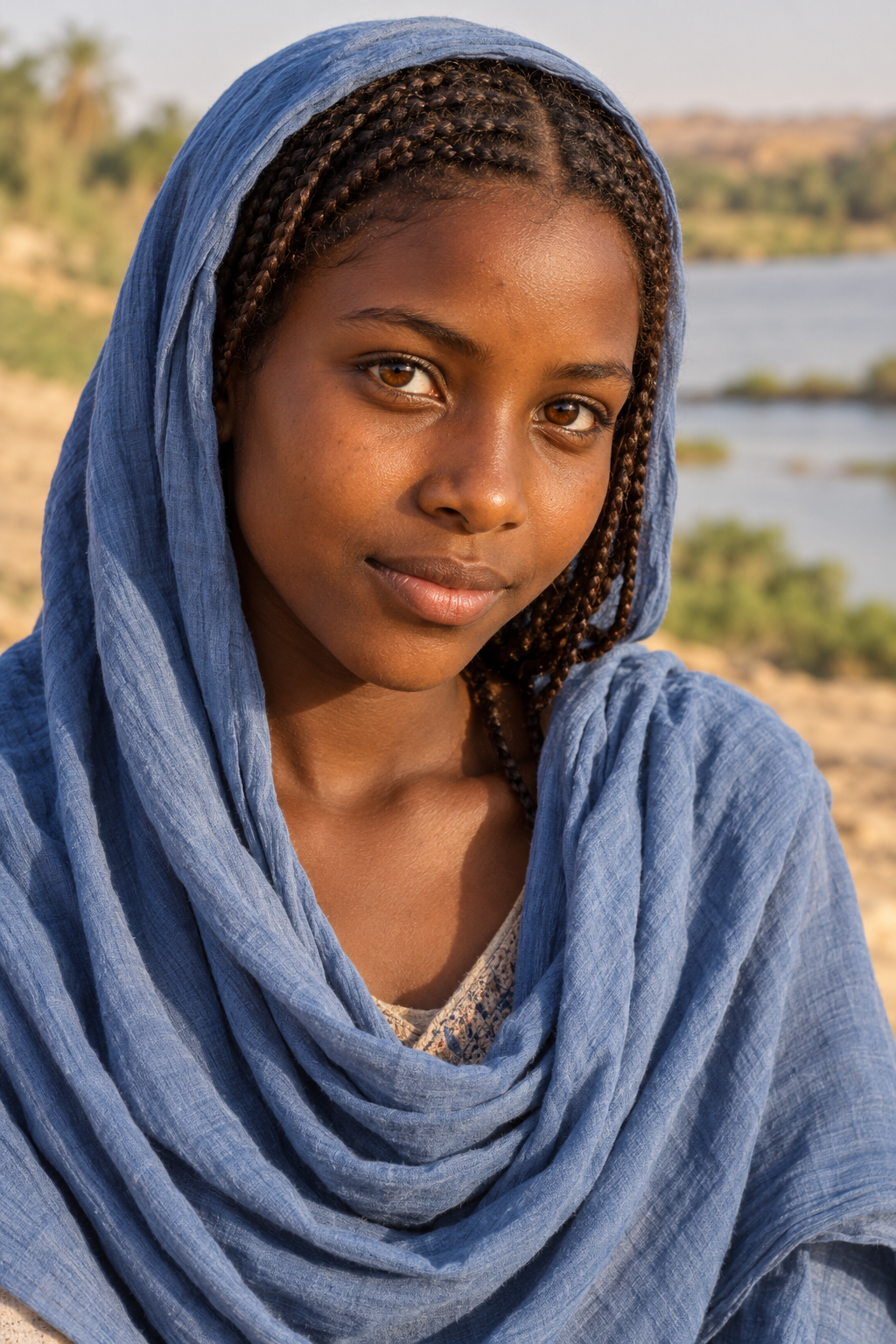
My name is Malika. I am fifteen. My hair looks black until the sun catches it; then the braids turn chestnut, and I wonder how something can look so different without changing at all. There are little copper-colored lines in my eyes, too. Mama has them, but you have to look closely. Sometimes I look at her face and try to find the parts of mine that were hers first. I know I have things from Lalla. When I am worried, I press my thumbnail into the side of my finger, and sometimes I notice her doing it beside me. I stop when I see. I don’t know why. There is nothing wrong with having her hands.
Lalla is my grandmother. Her mother was called Aïssata. I never knew her, but sometimes I wonder if she would have recognized something of herself in me. The little lines around my pupils. The way I hold my hands when I am worried. Lalla knows songs I have heard for as long as I can remember. Sometimes I know the next line before she sings it, although I couldn’t tell you when I learned it. I like sitting near her when she is singing. Mouna comes close, too; she is always finding a place beside someone. She can make me laugh with a little comment no one else hears, and then Mama looks over because she wants to know what we are laughing about. I love them. I don’t want Mama’s voice to grow tired because of something I’ve asked, or Lalla to look toward the doorway before she answers. Sometimes I wait until we are alone. Sometimes I decide I can keep the question until tomorrow.
But then tomorrow comes, and I still want to know. They say we are free now. I was born free. I try to understand what that means when someone else owns the house we sleep in and the goats that feed us, when Dada’s work depends on whether another man is pleased. Mama says there are things I will understand when I am older. I believe her; there is so much she knows that I don’t. Still, sometimes I want to ask her something and stay beside her while she thinks about it, without either of us being afraid of what the answer might be. I want to be a good daughter. I just don’t know what I am supposed to do when I have listened carefully, when I love the people telling me, and I still think they might be wrong.
What Lies Ahead
In 2002, fifteen-year-old Malika is legally free, but the descendants of the family that enslaved Aïssata still control her family’s home, work, and the goats that feed them. When Yahya, a son of that household, rapes her, the women who hold and comfort her urge her to remain silent. They know what his family can take away. A midwife tells her she has the right to speak, but reporting the rape exposes Malika to prosecution for sex outside marriage and threatens the survival of people she loves. As family, community, and authorities give competing meanings to what happened inside her own body, she begins to doubt her right to name it at all. Storymere grows more compelling, while an inherited song and fragments of a lost family history draw her toward a question no one has prepared her to ask: what if the life she has been taught to endure is not the only one possible?
How Their World Began
The personal beginnings of Storymere and the research behind the novel.
Includes personal accounts of childhood sexual abuse and discussion of the novel’s themes.

