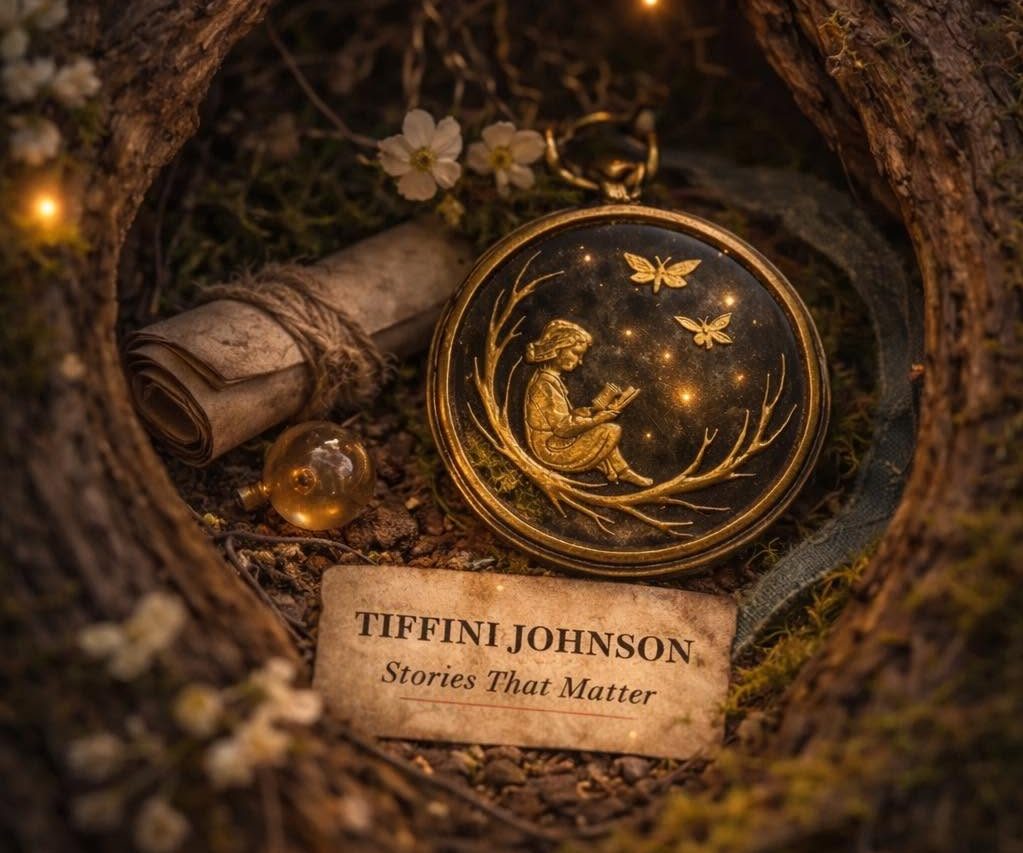
Our Inheritance
Some things are placed in our hands. Others, we learn to carry.
What We Hold
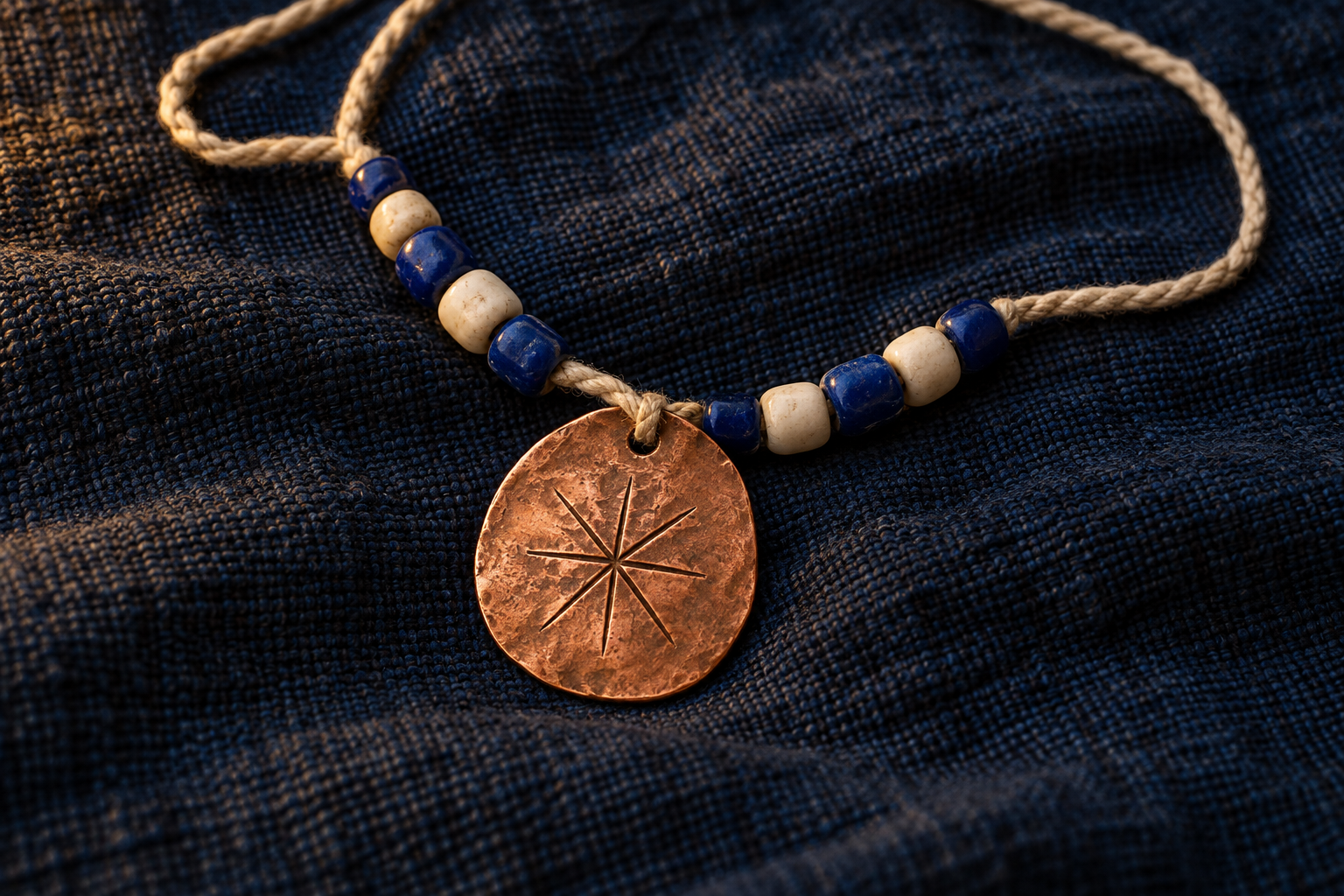
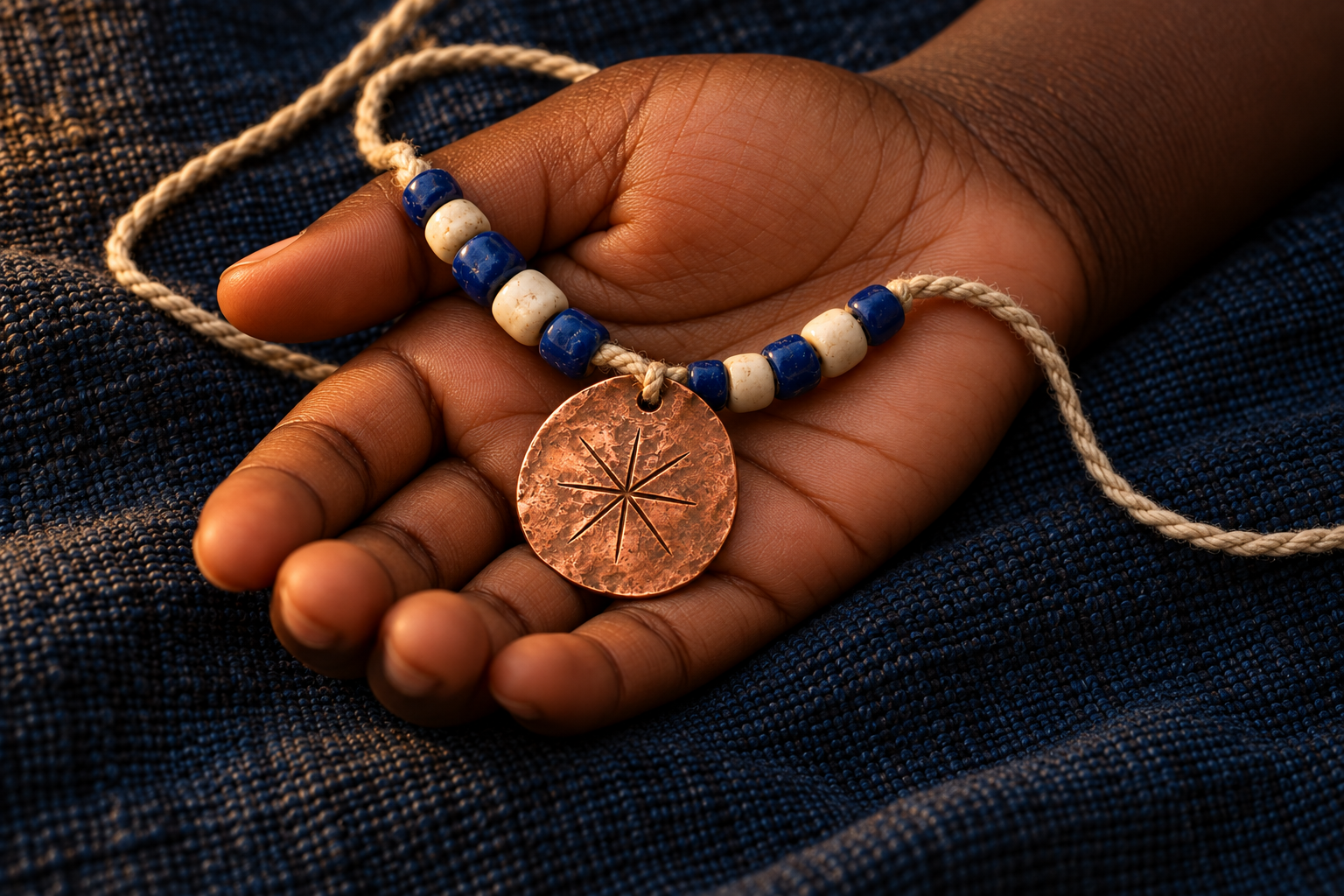
A small piece of copper. A scratched star with one arm shorter than the others. Before it becomes an inheritance, it is a father giving his daughter something to hold when he is away.
From Aïssata’s story
“So when you miss someone who is far from you, look up. You may not know where beneath it they are. You may not know which road they are walking. But you know this: they have not left the sky above you.” He pauses, then moves his hand, holding the copper toward me. I take it. One of the star’s eight arms is shorter than the others. “This one is broken.”
“That one is copper,” Baaba says. “I told you about the ones in the sky.”
I stare at him. His mouth twitches. Carefully, he closes my fingers around the copper star. “The copper made me think of you. Your eyes have the same star in them as this has. Right now, in the fire, the copper looks almost warm, almost red, just like your eyes do in the light.”
“Awa says they’re like mud,” I say dryly.
He chuckles. “Maybe in the hut. But not in the light. You’ve got lines that go like this.” His finger taps the copper; I look at its star. “In the light.” He pauses, letting the silence stretch. Finally, he pats my knee and says, “Come now. Fajr will come early.”
What We Sing
Aïssata begins turning Baaba’s story into a song, borrowing the melody of Neene’s morning praise song. When she cannot find the next words, Awa sits beside her and helps. Generations later, Malika knows songs she cannot remember learning.
The Story
The girls sing their song for Neene and Baaba.
“What have you girls done since I’ve been gone?” Baaba asks.
Awa’s elbow nudges me, her eyes rolling skyward. “We made you a song. Aïssata started it but I finished it.”
Baaba’s mouth twitches. He scratches his cheek. “Well, I knew there were singers in my hut, but not songwriters. Let me hear this song you have.”
Our heads bump as we try to stand quickly, which makes us all laugh. Awa rushes to start but she doesn’t remember the first line, only the first two words, so she breaks off, squatting, and then bouncing back up. I grab her wrist to keep her still.
“Ready?” I ask.
She nods.
“Have you heard this?” Baaba asks Neene. She shakes her head.
“One sky above the ri-i-ver.
Hoodere, shine where I can see;
Allah guides the trav-e-ler.”Baaba’s smile grows and he claps. “This sounds like the story of the star.”
“Far from home, far from me,”
Baaba’s smile slips; the edges of his eyes narrow only just enough that I see. Does he not like that line? It makes my voice quiver as we sing the next verse, “still beneath the same sky.
When I cannot see your face,
I will lift my eyes.”It’s only for a second, but I see Baaba’s brow furrow.
“I came up with the ending!” Awa says, hopping as he and Neene clap for us. We bow so low Awa almost does a flip.
“Very well done, girls. Very clever, turning that story into a song.” Baaba’s smile is back, and his voice is the same mixture of play and tolerance.
Play the Song
One sky above the road,
One sky above the ri-i-ver.
Hoodere, shine where I can see;
Allah guides the trav-e-ler.
From home, far from me,
But still beneath the same sky.
Far from home, far from me,
When I cannot see your face,
I will lift my eyes.
How We Survive
Before she is enslaved, Aïssata wants to be useful because she loves her mother. She fetches water before anyone asks. She notices what needs doing. Her mother’s pleasure makes something settle inside her: she has helped; she has done well; she belongs. After the raid, that same attentiveness becomes a way of reading danger. She learns what pleases the people who own her, what draws their notice, and what might let a day pass without something worse happening. Her daughter Lalla grows up within that watchfulness. For her, order offers protection. Lalla’s daughter Mariem learns to keep peace, to lower voices, to consider what others will think before deciding what she can say. By the time Malika is born, these instructions have passed through generations of women who love their children and have learned how little love alone can prevent.
Some protection comes without instruction. When Aïssata cannot escape what is happening to her, another world begins appearing within the one that holds her. Storymere catches her attention: movement, water, a horse, someone living an ordinary moment elsewhere. Sometimes she loses the edges of what happened while she was watching. More than a century later, Malika sees another world, too, shaped in part by songs, stories, and fragments whose beginnings she does not know. No one has taught her how to find it. No one discusses it. Yet it offers somewhere for her attention to go when remaining fully present becomes unbearable. In this family, survival carries tenderness, silence, vigilance, and places no one else can see. Malika will have to consider which of those protections she still needs—and what it might cost to live differently.
What Still Holds Us
In 1896, Aïssata is taken from a free childhood into enslavement. Another household claims her labor, her body, and the authority to decide her future. In 2002, her great-granddaughter Malika is legally free. But the descendants of the people who owned Aïssata still control the house where Malika sleeps, her father’s work, the goats that feed them, and access to the land they need. The families have inherited different sides of the same relationship. One can withdraw the necessities of life. The other must consider that possibility before answering, refusing, or asking for anything to change.
When Yahya, a son of that household, rapes Malika, this dependence enters the room with the women who come to comfort her. Her mother and grandmother hold her, soothe her, and urge her to remain silent. They fear what speaking could bring upon all of them. A midwife tells Malika that what happened was rape and that she has the right to report it. But claiming that right threatens her family’s shelter and livelihood, while the authorities may turn her account into an accusation against her. What happened to her body becomes something everyone believes they can interpret. As Malika struggles to trust her own knowledge, the novel asks what freedom can mean when refusing one person may leave everyone you love without a home.

