The Body That Glows
Light has fascinated me for as long as I can remember.
I love watching as it dapples through the leaves of a Southern pecan tree or how it skips across the glassy surface of a lake. I was in elementary school when Mrs. Krutsinger gave us a Science lesson in which she said, “our bodies respond to light: our pupils dilate and contract with it.” I distinctly remember going home, standing in the bathroom, flipping the light switch on and off, watching as my pupils did exactly what she said they would. Shadows mesmerized me; creating figures on the wall sparked my imagination but it also went deeper than that.
The hippocampus sits in our brains. It is responsible for processing memories. Most of our memories are linear because the hippocampus is doing its job, sorting and time-stamping them so that they will be easy for us to retrieve later. For example: in April 2023, we took a 23 day trip to Europe. We visited Italy, Poland, Ireland, Switzerland, Netherlands, Greece, France and London in that order. My brain has stored the experience neatly. But I have other memories, too. In one, I can tell you that a blanket of a lion hung on the wall, but I cannot tell you exactly how old I was. I remember the smell of Marlboro cigarettes, but I can’t tell you what color shirt he or I wore. With striking, vivid detail, I remember feeling like I was gagging when he held my head pushed against him and the sight of blood is forever seared in me. Because, in moments of trauma, the hippocampus can fail to timestamp memories correctly which means that the experience gets encoded or stored in an untidy, disorganized manner. The amygdala processes sensory memories: sight, sound, taste, smell and touch and it can become overactive during stress. So the memories of rape are very vivid, super sharp, but without any sense of temporal order. It’s why the smoke of cigarettes can open the closet and release a flood of memories for me of rape. Since the memories are not timestamped, I can experience it as though it’s happening right now. This is classic flashback.
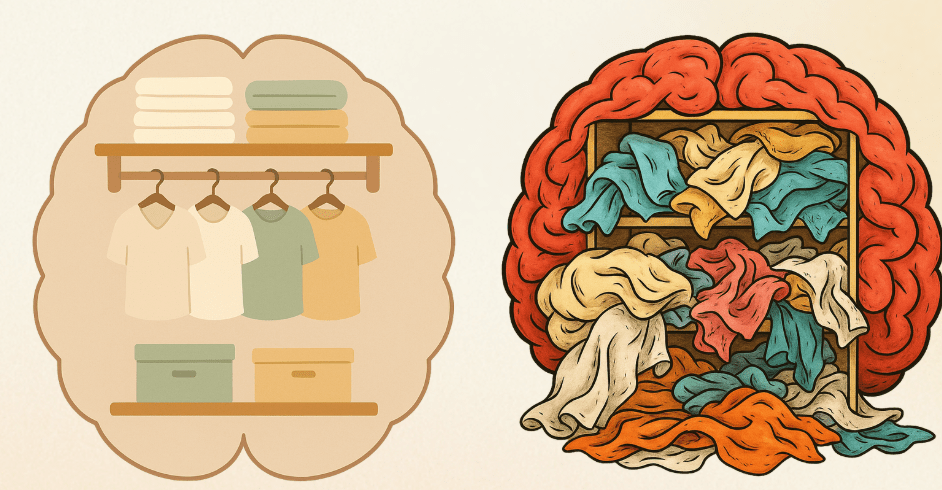
I see these messy, sensory heavy memories as a shadow. Light travels in a straight line so and the memories of abuse are chaotic – there are pieces of those memories everywhere – so when light collides with a traumatic memory, a shadow forms. That shadow can look like me seeking reassurance (“Did I do okay in that meeting?”), hiding away by myself, deliberately making myself smaller (“Oh, it’s a silly idea, never mind”), or overextending. I saw myself as the problem: if I could just … then I could avoid a flashback or keep them from making me feel overwhelmed. I was the obstacle that light couldn’t get through.
My hands would fold into themselves, and I’d lay on the bed, alone, shaking. Clenching my legs together, I’d turn the plaster in the ceiling into mountains and imagine characters acting out a new scene in whatever story I was writing. The stories were light that kept me from disappearing into a black hole of darkness. My characters were so real to me that I never really thought about where they came from: they were just there. And since it never felt like I had to work to see them, I never thought of them as things I created; I thought of them simply as my friends. As I grew older, the sexual abuse grew worse because it was sporadic: he would be imprisoned or he would disappear for weeks at a time. I never knew when he would be back or when he would leave so I lived in a perpetual state of hypervigilance. I controlled it through my body: tight shoulders, intense migraines, hands that were always folded into fists just tight enough that I could feel the nails in my palms. Even today, I measure my breaths: I’ll breathe in like a normal person but I breathe out so enough that I start to feel it in my stomach. One breath held and released in six small increments. As you can imagine, I had exactly zero grace: I was awkward and it took me a lot longer to do anything physical. Doing a cartwheel terrified me (legs open, body exposed: no, thank you). I broke my wrist at a skating center without getting on the rink. I didn’t go on dates, I didn’t go to parties, I convinced teachers to let me sit in their empty classroom instead of going to pep rallies, and I stayed in the art room for lunch each day.
And then there were the ants.
It was around ten or eleven when I first felt them. The sensation of things crawling inside tormented me; I remember taking a razor before I really started shaving. I wasn’t intentionally cutting my skin, but I was trying to stop the ants. I would go on to start picking at my skin, scratching my wrists. I wasn’t trying to hurt myself deliberately – I was trying to get rid of the sensation of ants crawling in me. It felt like proof that I was everything he said I was. Dirty. Ugly. Broken. Ashamed. My body was the thing that stopped light; it was a place only of shame and emptiness.
Around the same time, I read a book called The Holocaust: A History of the European Jews by Martin Gilbert. It changed my life. Written by a known expert in the field, it was nearly a thousand pages long and full of the most horrific things I’d ever heard of, written in an unemotional, documentary style. It recounted these horrors but also recorded what were unequivocal miracles. To the girl who felt like she was dying, to the girl who felt like she must be the most awful thing in the world, this book did two things: first, it told her she could survive. If there were survivors of Auschwitz, of the ghettos, then I could survive rape and two, it lit a fire inside of me to find more proof. I was a twelve-year-old kid who suddenly wanted more proof that I could survive. I started deliberately immersing myself in the worst atrocities of humankind… looking for the one story that said, see? Someone survived who shouldn’t have. See? That Nazi was kind to that Jew; it was possible. But I didn’t just start looking at world wide events, I started looking for proof in my own life.
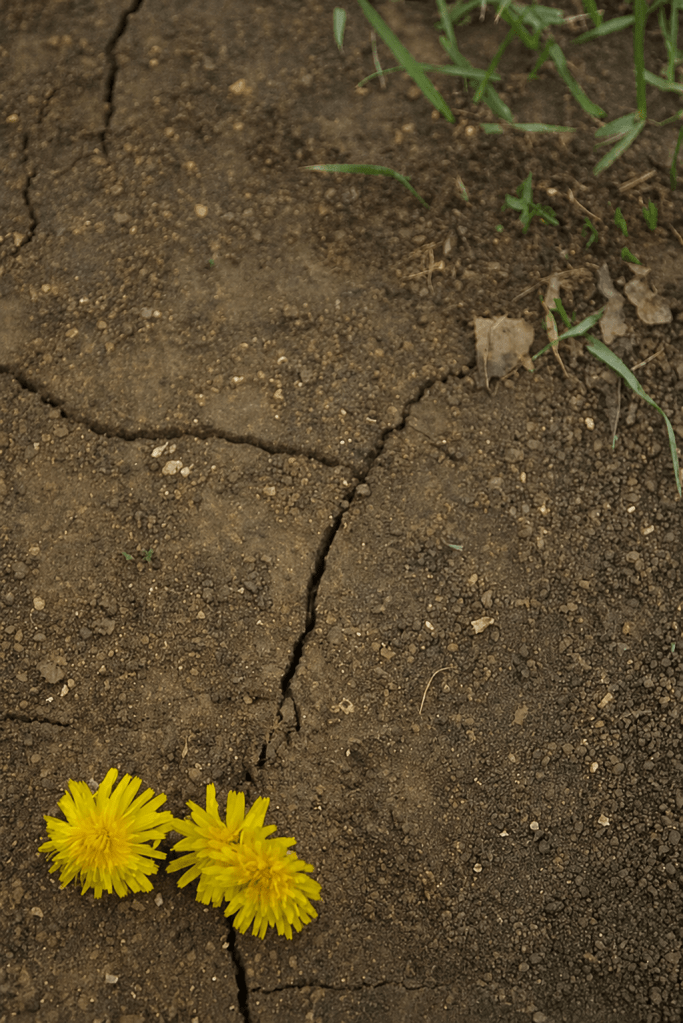
A stranger held a door open for me. Kids at school who I thought didn’t know I was alive hugged me when I returned for a brief visit. Publishers told me you’re not ready yet, but you will be if you keep writing. A homeless man named Joey taught me that joy was possible even when you had absolutely nothing. A girl who I was pretty sure hated me sang my story’s praises to a news anchor who came to do a piece on our school. I saw a daisy that was growing in the middle of dry, cracked earth, and it blew my mind so much I actually took a picture of it and nearly made that picture the cover of one of the first books I published. Because it told me that pretty things could grow in dead spaces.
Every piece of evidence was a beam of light I clung to. Anything that lit up sparked my interest: I loved chasing fireflies, I bought my daughter a glowworm when she was born, I slept every year in the living room beneath the Christmas tree, a tradition I still do, because the lights on the tree mesmerize me. Finding hope in the impossible allowed me to stand beside the miracle. It allowed me to see the light – it was almost as though I were peeking through the window of a locked door. I could see life on the other side, but I couldn’t stand in it because I was the obstacle light couldn’t get through.
Or so I thought.
But the more I studied light, the more awed I became.
Science taught me facts that I soaked in: what a “jiffy” was (how long it takes light to travel a centimeter in a vacuum – 33.3 picoseconds, otherwise known as a “jiffy”), that it was what made diamonds sparkle (I actually went to the jewelry store and stared at diamonds – only because I was trying to “see” the light ping ponging around in the shape trying to get out), that it only traveled in straight lines (this fascinated me endlessly: what does traveling in a straight line mean? Light doesn’t get “sidetracked,” it is steady), that it takes 8 minutes for sunlight to reach us (which means technically the sunrays touching my skin are old… if a sunburn came from light that was already “old” or “in the past”, then, my teenage brain thought, didn’t you already survive the sunburn?). Everything I learned about light was a rabbit hole that made me want to go deeper. It is necessary to life. It warms us. It illuminates our world.
Faith taught me more about light. I was a Junior in high school when we moved from Nashville to Memphis. I was crushed. I had people at that high school – teachers – who believed in me. School was my refuge. It was my one safe place. Leaving again the year that I felt most seen truly broke my spirit. And I did a word search in my Bible for the term “light.” And this is where my understanding of light became physical. Scripture says Jesus is the light. It says His word is a lamp. But it also says “You are the light of the world” in Matthew 5:14. Further, it says that Christians are called “to let your light shine.” It then said that we were made in His image – and it specifically calls Jesus a light.
My instinct was to reject this: nothing about me is a light.
Shame boils you from the inside out. It suffocates you. And it hides from view every decent thing about you. The only thing I thought I could do well was write. People praised my grades, but I said, “anybody can study.” People praised my obedience but I had been well-trained to believe that obedience was the only avenue to safety so of course I obeyed. I did not believe there was anything special about me.
But I believed in God. And His word said I was made in His image and called both Him and Christians ‘light.’
So I went back to science. I looked at animals that glowed. Fireflies. Glowworms. Creatures that live in the deepest parts of the ocean. Bioluminescent bacteria. And then I asked a teacher: can a person literally glow? The answer is yes.
Humans have UPE (which is basically weak photon emission). We do glow – especially around the cheeks, eyes and mouth and this glow is strongest in the afternoons – but we can’t see it with the naked eye. Every part of that sentence blows my mind. First, how? The answer is scientific and not the point but, basically, the glow comes from unstable molecules that are born when energy is produced in cells, especially mitochondria. When these molecules – called reactive oxygen species (ROS) collide with lipids, proteins and DNA, they give off energy as photons (light). Even more astounding is that the glow is correlated with stress — in other words, the intensity of the glow can tell you about your body’s overall health.
What I needed to know: we glow. The fact that we can’t see it with the naked eye is part of the beauty – we have to look for the light in order to find it. Fireflies don’t always glow. Lights are not always on. Pain is joy disguised because without heartache we cannot truly know happiness. I was drowning before I read that holocaust book and learned to treat pain like a treasure hunt. I could survive it if I could also believe that there was something good alongside it. I would lie on my back, with a weight I couldn’t hope to match holding me down, and stare at the ceiling, praying to see imaginary characters — because seeing them meant I didn’t have to be in that body on the bed. Rape stole more from me than this blog post can explain. I have written over one hundred books and almost all of the sixteen published deal with abuse in some way. I still hold my body tight. I still have nightmares. I still second guess myself and believe that no one cares about me, only about what I can give. So, make no mistake: the pain is very real. But writing, which was my body’s way of escaping the abuse, gave me friends. It gave me confidence that there was at least one thing I could do fairly well. As I grew, writing gave me a way to speak in public about abuse and that opened so many doors. It ultimately taught me that, no matter what I felt, I was never really alone. So, the joy is real too – and it and trauma co-existed in the same room.
So, of course we can’t see the glow of our bodies. If we did, we might take light for granted. But not seeing it doesn’t meant it isn’t there. The light is not external – it’s not a result of sunrays or vitamin D. It’s internal. It is produced by our own bodies… and light cannot live in darkness. It is literally the thing that drives out darkness.
If I accept the premise that God is real and His word is true, and that no two people are biologically exactly the same, then I must also believe that I am made in His image (because He says I am) which means I can reflect a unique part of His character. If I believe that, then it becomes harder to believe I am truly as worthless as trauma made (and sometimes makes) me feel.
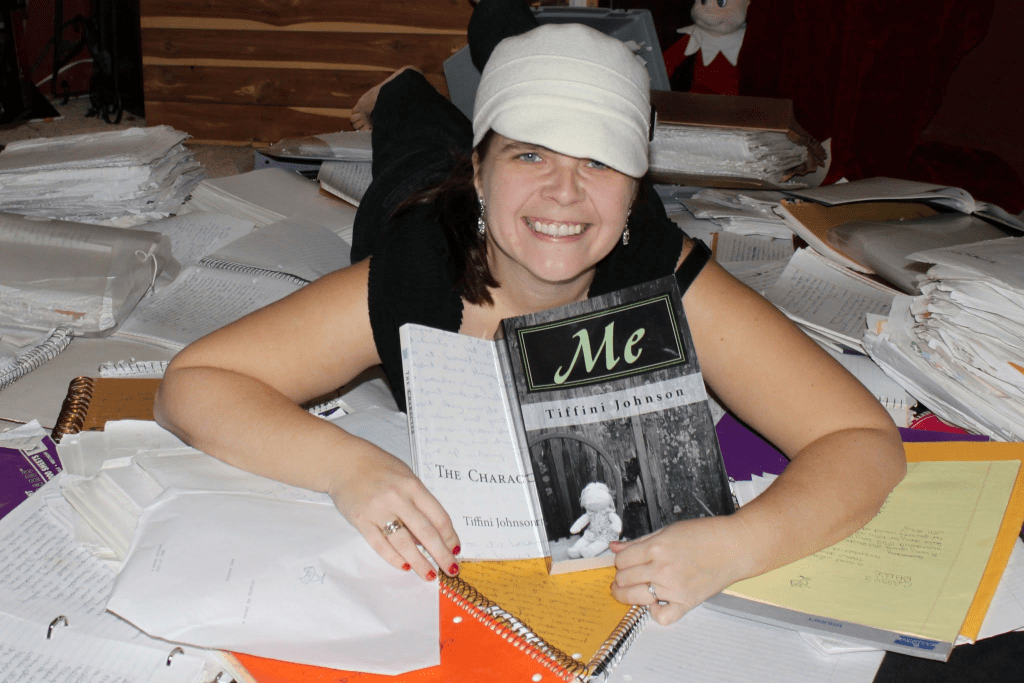
The Character was the first book written in first person. It was the first time I didn’t edit myself. Most of the scenes are straight up autobiographical – including some of the sexual abuse scenes. Releasing that book was terrifying. I still cannot read it cover to cover. It had been out for a couple months and I was working with truckers, training them on company policy when they were hired (strangely, I really enjoyed this). One day, I went to the break room and a woman I had never met, who worked in a completely different department, was also in there. Suddenly, she said, “Did you write The Character?” She did not sound friendly. She sounded angry. Anger is the fastest way to terrify me. I nodded. She threw a napkin in the trash and said, “There’s no way you could write something like that unless it happened to you too.” I remember my face turned red. I had not started speaking in public yet. I was still only a few years out from losing my entire family by telling. So, I just nodded. She pursed her lips, nodded, said, “Yeah.” Then she walked out. I had to really work to figure out who she was but, when I did, I emailed her, invited her to tell me her story.
Pain was in that break room – and a lot of it. But so was connection and recognition – and those things poke holes in the lie we each carried that said we were alone.
Breaking generational cycles of abuse. Raising healthy families. Prioritizing relationships. Choosing to wake up after the death of someone we love or the hardest heartbreak in our lives. Maintaining a job that provides for our loved ones. Sending a text to check on a friend. Holding a door open for someone at a gas station. The glow we emit might not be visible on our bodies but it is visible in our lives. Remember I said that, scientifically, we glow the brightest in the middle of the day. There’s science behind that but I think of course we do: because it’s in the middle of the day where we’re most likely working the hardest at doing all the things we do. Given the trauma of what we’ve been through, most of those mundane tasks are unlikely miracles and proof that hope still defeats evil.
You are glowing.
By nothing more than being exactly who you are.
Heartbreak didn’t extinguish your glow.
Your greatest loss – be that from death, disappointment, or betrayal – hasn’t stopped it.
Sexual violence didn’t choke it out.
Shame didn’t kill it.
I’ve written stories from around the world and stared unflinchingly at the most horrific human rights’ issues – everything from child abuse to genocide. A baby was born in Auschwitz — and survived the war. A woman lay buried under her mother’s decapitated corpse for fifteen days in Rwanda — and survived the genocide; another woman lives in the same village as her son’s murderer and calls him her son now. Dave Peltzer survived. Elizabeth Smart survived. I’ve spent my life assessing my worth by the actions done to me but none of those actions were strong enough to block the light from reaching me because the light was already part of me.

