Around the World: A Map of Stories
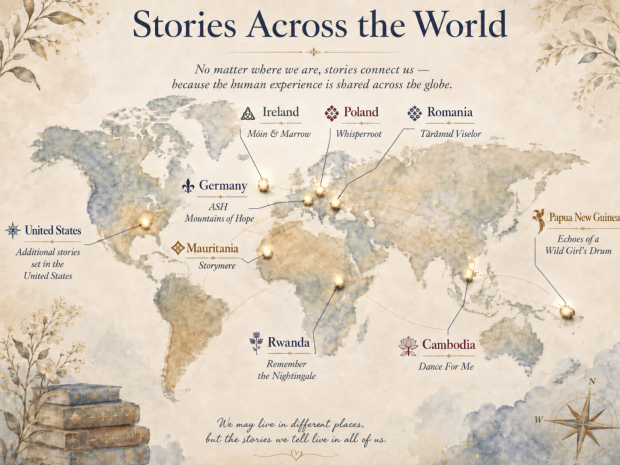
Jump to stories from Ireland, Poland, Germany Romania, Papua New Guinea, Cambodia, Rwanda, United States
Storytelling through the Ages
People have been telling stories for centuries. More than four thousand years ago, in the river valleys of ancient Mesopotamia, someone pressed a reed into wet clay and preserved a story. The names were Enmerkar and Gilgamesh. The cities were Uruk and Aratta. The world around them has altered almost beyond recognition, but the questions within their stories have not. What do we owe one another? What does power cost? What happens when someone we love is taken from us? How do we carry grief, and how do we continue when we cannot undo what has been done?
But that is just where written stories began.
Oral storytelling has no known start date but researchers concur that Aboriginal Australian traditions describe coastal geography that has been underwater for roughly 7,000–10,000 years — sea-level rise after the last Ice Age — with enough accuracy that geologists have used them as data. And then you have the whole Seven Sisters story. It’s about the Pleiades constellation and it appears in very similar forms across Australian, Greek and other cultures. Some researchers argue that, because the form is fairly consistent across cultures, it might have come from a common story told before people left Africa. That could be as old as a hundred thousand years.
Stories have crossed borders since before borders had their present names. They have traveled on clay, papyrus, parchment, paper, memory, breath, and song. Their landscapes change. Their human heart does not. Whether it’s looking up into the night sky and creating tales from the constellations or fingers racing across a keyboard while the rest of civilization sleeps, you might argue that storytelling is part of humans’ DNA.
The word story comes from the Old French word estorie and that means history. The word history comes from Latin historia which means “history” or “account” and, if you trace that, you find that in Ancient Greek, historia means “knowledge gained from inquiry.”
A story, then, originally was a way to share accounts of what happened: births, deaths, war. Births, deaths, war are events that shape who we are both as a culture and as individuals carrying a heartbeat. Births, deaths, war had life-altering consequences for our ancestors and produced the same emotions thousands of years ago as they do today: joy, concern, anxiety, fear, anger, passion, love, sadness. The accounting of these events had meaning to the listener. As stories evolved from a reporting of facts to narratives, they provoked thought, inspired real change (Uncle Tom’s Cabin is one readily available example historically; The Holocaust: A History of the European Jews by Martin Gilbert is a personal example of how a book can change a life), offered an escape from stress, and built connections that lasted long after the final page.
Reading has been foundational for me. Non-fiction works, such as that on the Holocaust, taught me to believe I could survive abuse because others had survived places like Auschwitz. Scripture has given me a lifeline and taught me that, even on my worst of days, I am loved. Early books like The Baby-Sitters Club series taught me that reading can make you laugh hysterically (um…Stacey’s Big Crush was about a girl who had a serious crush on her student teacher and I read this days after I sent a perfume soaked love letter to my teacher, so…) and cry with your whole heart (Claudia Says Goodbye made me think of my great-grandmother, Mama O). Later, Judith McNaught (especially Almost Heaven and Whitney, My Love) and Danielle Steel (The Ring in which Ariana experiences brutality by the Nazis and then falls in love with a Nazi. Light in darkness which is basically my whole universe in a nutshell) would lay out convincing arguments that helped me believe in good men. For a survivor of rape, that feat cannot be underestimated.
Stories matter.
The Map of Stories
Half of my current catalog features stories set in far away lands; half are set within the United States. Below is a brief context of the geographical location during the time of the story I wrote there. I hope it helps connect truth with fiction. This map follows some of the places my own stories have taken me, not because Rwanda is the same as Cambodia, or Poland the same as Papua New Guinea, but because human beings everywhere have loved, feared, endured, betrayed, protected, remembered, and reached for one another in the dark.
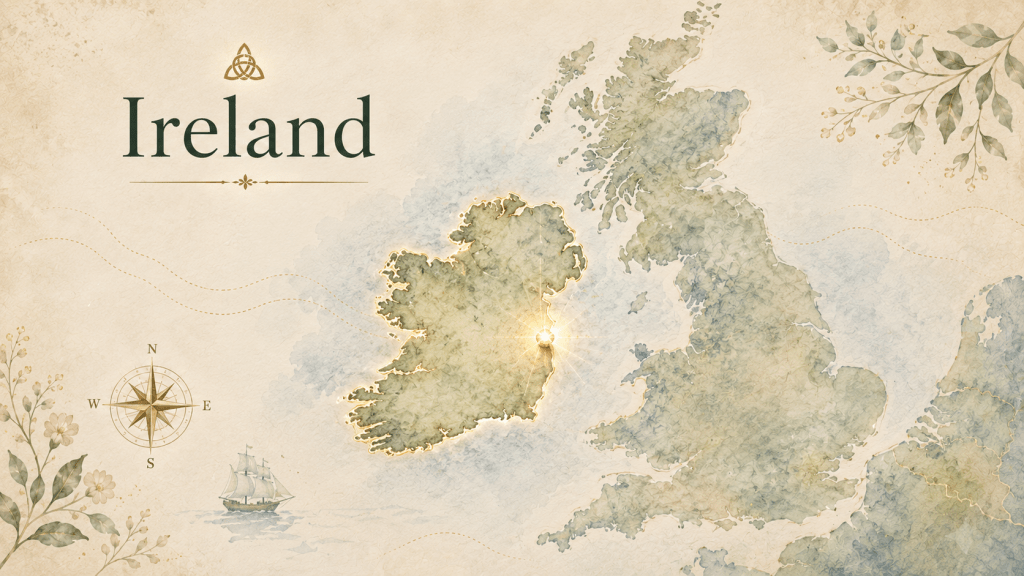
Ireland, around 1 BCE
A world measured in cattle, kinship and the price of a face
Ireland in the Iron Age was not one country.
There was no national government, no single throne ruling the whole island, no border separating north from south in the way we understand borders now. The land was divided among many small kingdoms and peoples, each bound to a territory, a ruling family, neighboring allies, inherited enemies and the long memory of who had harmed whom. A person belonged first to kin and place: to a household, a wider family group, a local ruler, a river valley, a grazing ground, a stretch of bog whose paths were learned so early they became part of the body.
Identity did not begin with the individual. It began with whose child you were.
The Ireland of this period was rural, agricultural and dependent upon animals, especially cattle. Cows supplied milk, food, leather and wealth; they could represent payment, status and security. Land mattered, but cattle moved through it, multiplied upon it and made power visible. A wealthy man’s importance could be seen grazing beyond his house. A poorer family’s vulnerability might be counted in the animals it did not possess.
Almost everything could be measured.
A field could be measured. A herd could be counted. An injury could be valued. A life could carry a price.
Much of what we call Brehon law survives in manuscripts written centuries later, largely during the seventh and eighth centuries CE, so we cannot lift those rules whole and lay them unquestioned over a woman living around 1 BCE. The law texts describe a later Ireland, shaped by older custom but also by centuries of change and Christian influence. They are a window, not a photograph. Still, the social world they preserve, one organized through kinship, rank, property, compensation and honor, likely grew from structures with much deeper roots.
There were few prisons waiting behind stone walls. Justice was often concerned less with punishment by the state than with restoring the balance between families. A wrong created a debt. An injury demanded compensation. The amount depended not only upon what had happened, but upon to whom it had happened.
Every free person possessed an honor-price, later called lóg n-enech: literally, the price of the face.
It represented reputation, standing and legal worth. The higher a person’s status, the more costly it was to insult, injure or dishonor him. Rank determined whose word carried weight, which agreements a person could make and how much compensation was owed when that person was harmed. Later law assigned women honor-prices connected to the status of fathers, husbands or guardians, although women with substantial property could possess greater legal authority within marriage. Even worth, then, was not entirely one’s own. It traveled through family lines, marriage arrangements and ownership.
The law could recognize harm done to a woman.
It could demand payment for assault, sexual violence or unlawful injury. It could permit separation under certain conditions. Some forms of marriage allowed a woman property and contractual influence; a woman who entered marriage with wealth might possess considerably more authority than one who brought little. Early Irish law was complicated, sometimes offering women protections unusual beside those found elsewhere, while still locating most women inside a deeply hierarchical and male-governed structure.
The existence of a remedy did not guarantee rescue.
A law could say a woman had been wronged while her father worried about alliance, cattle or reputation. A judgment could assign a fine while leaving her to sleep beside the man who had hurt her. A community might know what happened inside a marriage and still decide that keeping the household intact mattered more than what the household was doing to the woman inside it.
A price is not the same thing as protection. Two thousand years later, America has laws designed to protect those who are hurt within a home. However, some of those protections do not prevent the abused from being harmed even after naming the abuser and seeking legal protection.
In Brehon law, a price merely tells us what must be paid after protection has failed.
Affection may have existed. Desire certainly did. People laughed, flirted, quarreled, touched beneath blankets and chose one another when choice was possible. But marriage could also be strategy.
A daughter might strengthen a relationship between families. Her fertility might ensure heirs. Her labor would sustain the household: preparing food, tending children, milking animals, making and mending textiles, gathering fuel, helping preserve what had to last through winter. Her life was intimate and necessary, yet necessity did not automatically become authority.
A woman could be indispensable and still not be free.
Most people lived in small settlements or dispersed farmsteads rather than cities. Archaeology gives us a quieter Iron Age Ireland than the one later legend would paint, with its great warriors and blazing royal halls. Settlements have left fewer obvious traces than the island’s monumental earlier ages, while major ritual and political landscapes such as Tara and Rathcroghan continued to hold importance. The period’s surviving objects reveal skilled metalwork, imported goods, weapons, feasting equipment, horse gear and ornaments shaped by contact with wider European artistic traditions.
That contact matters.
Iron Age Ireland was an island, but it was not sealed away from the world. Objects, artistic ideas and perhaps people crossed the sea. Roman Britain lay beyond the water. Continental styles reached Irish craftspeople and were made into something distinctly their own. Gold, bronze and iron carried evidence of travel even when the people who touched them left no written names behind.
And everywhere, there was water.
Rivers were roads, boundaries and sources of life. Wetlands supplied reeds, fuel, food and passage, but they also occupied the border between safe ground and ground that moved beneath the feet. Bogs did not behave like ordinary land. They swallowed paths, preserved wood, darkened water and held objects for centuries without returning them.
People placed precious things into watery places: weapons, ornaments, tools, vessels, harness fittings, butter and objects whose value makes accidental loss difficult to believe. Bogs, lakes, rivers and shorelines appear to have held ritual significance, receiving offerings whose precise meanings are now beyond recovery.
Sometimes they received people.
Irish bog bodies bear evidence of violence: wounds, strangulation, cutting, mutilation and deaths that appear deliberate. Older interpretations often connect some of these killings with sacrifice, kingship, failed harvests or ritual boundaries, but every body does not yield one certain explanation. The peat preserves the result more readily than the motive. We can see what was done. We cannot always know why.
In October 2023, workers harvesting peat near Bellaghy in County Derry uncovered human remains.
The body had survived for roughly two thousand years.
Further analysis showed that the remains were likely those of a young woman between seventeen and twenty-two years old, approximately five feet six inches tall. Her throat had been cut. She had been decapitated, and her head was taken away. Her body was placed upon a mossy surface rather than sunk into an open pool; a woven item of plant fiber remained beneath or around her lower body. She is now known as the Ballymacombs More Woman because whatever name her mother once used, whatever name friends called across a field, whatever name she might have whispered when asked who she was, did not survive with her.
We know her age. We know her approximate height. We know how blood left her body. We do not know what made her laugh. We do not know whether she went willingly onto the bog, whether she was carried, chased, condemned, punished or sacrificed. We do not know whether someone mourned her, whether another person searched for the missing head, whether those responsible returned home and ate beside the fire as though an ordinary day had passed.
The bog kept her body.
History did not keep her name.
What makes this story different is that the past does not remain safely buried in the past.
That is where Móin & Marrow begins: in the space between evidence and imagination, between what history can prove and what story can restore.
Bréaca grows up among the Corcu Móinraige, the fictional seed of the bog, in a valley where cattle mark standing, kinship shapes possibility and a woman’s worth can be spoken as a number. She is tall, fast and wild enough to believe the cliffs belong to anyone brave enough to climb them. She gathers bog cotton, runs the riverbanks and has not yet learned that freedom can be narrowed slowly, through marriage, explanation, reputation and the quiet agreement of people who insist they would help if helping did not cost so much.
When Éogan hurts her, he does not stand outside the order of her world.
He understands it.
He knows which bruises can be explained, which witnesses will look down, which relatives will choose the family name, and how easily a woman’s suffering can be turned into a domestic disagreement that respectable people need not enter. Bréaca’s world has laws. It has judges. It has compensation and rules intricate enough to assign value to nearly everything.
What it does not give her is certainty that anyone will come.
So the river remembers what people forget.
It remembers the child racing beside it before obedience entered her body. It remembers the woman learning to watch a man’s jaw for weather. It remembers every time she stood near the water and imagined that movement might still be possible.
We have always told stories. Before books, before paper, before written language, we carried them through voice, ritual, memory and the objects we left behind. Sometimes the body itself becomes the final page.
Bréaca’s story is fictional, but the questions are not. Who was she before violence reduced her to remains? Who loved her? Who failed her? What did she fear, hope for, believe she might still escape?
The novel cannot give the real young woman back her name.
It can refuse to let her death be the only story she has.
You can follow the tide here
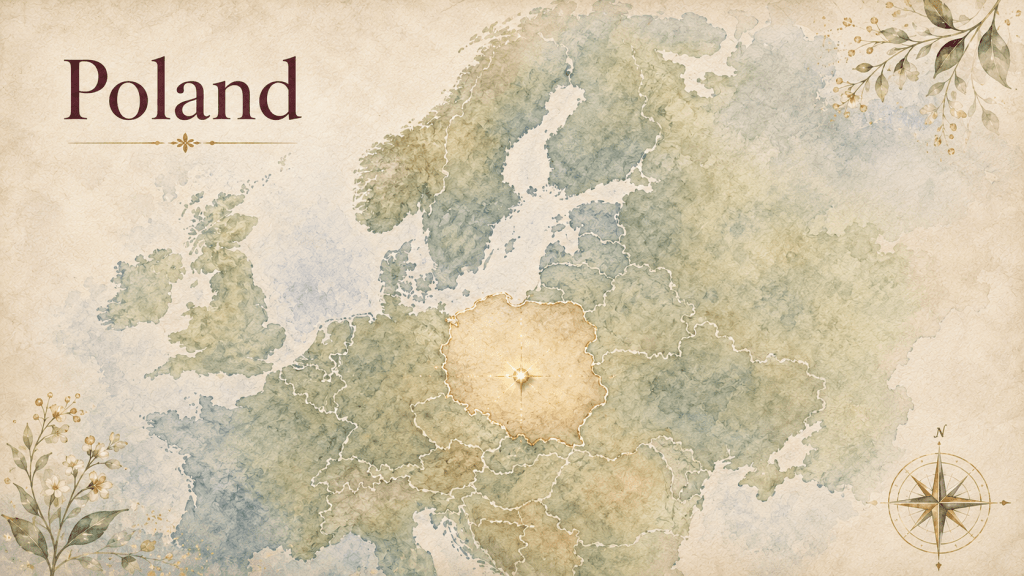
Poland, Late Nineteenth Century
A country kept alive without a border
In the late nineteenth century, Poland existed everywhere except on the map.
More than a hundred years earlier, its neighboring empires had divided the country among themselves, cutting the land into portions claimed by Russia, Prussia and Austria until, in 1795, Poland vanished as an independent state. A person could be born Polish, speak Polish, pray in Polish, sing the old songs and bury generations of family beneath Polish soil, yet carry papers declaring that she belonged to another empire. By the time Whisperroot takes place, no child living there had ever seen an independent Poland. Their grandparents might not have seen one either.
But a country does not disappear merely because someone draws a line through its name.
It survived in language spoken quietly at kitchen tables; in prayers, recipes, lullabies and stories repeated often enough that children could carry them after the adults were gone. It survived in Catholic churches and Jewish synagogues, in village customs, seasonal rituals and folk beliefs older than the governments attempting to replace them. It survived because ordinary people kept choosing to remember themselves.
The experience differed depending upon which power controlled the land. In the Russian partition, Polish political life was restricted and the Russian language pushed into schools and public institutions. In Prussian-controlled regions, Germanization sought to reshape language, education and ownership. Austrian Galicia permitted somewhat more Polish cultural expression, but it remained one of Europe’s poorest regions, where hunger, disease and migration pressed hard against rural families. Poland had been divided not only by borders, but by different laws, currencies, school systems and authorities. A family traveling far enough across its own homeland could cross into another empire without ever believing it had left Poland.
Industrial cities were growing. Railways stitched distant places together. Factories pulled workers from villages, newspapers carried new ideas, and modern political movements began asking what Poland might someday become. Yet beyond those cities, much of life still moved according to older rhythms: planting and harvest, births and funerals, feast days and winter stores, church bells and weather, the health of livestock and the condition of the road.
In a small town, everyone would have known whose cow had gone dry, whose daughter had failed to appear at Mass, whose husband drank too much and which family had begun watering its soup before anyone admitted there was not enough food. Privacy was thin. Reputation could become a kind of currency, and belonging often depended upon obeying rules that had never been written because everyone already knew what happened to those who broke them.
Especially girls.
A girl’s life was shaped by family, faith, work, class and the expectations fastened to her long before she was old enough to understand them. She helped tend younger children, carried water, prepared food, mended clothing and learned which subjects could be discussed aloud and which belonged behind closed doors. Education for girls was expanding in some places, particularly in towns and cities, but opportunity remained uneven, and in poorer or rural communities survival frequently required hands more urgently than it required schooling.
Silence could be mistaken for goodness.
Obedience could be mistaken for virtue.
And a girl who accused a respected man, frightened a powerful family or disturbed the fragile order of a town might discover that communities are often more willing to question a child than to dismantle the story they have built around an adult.
Late nineteenth-century Poland was also a place where the modern world lived beside the ancient one without ever fully replacing it. A train might pass a village in which people still whispered about restless corpses, cursed forests and the dead who returned carrying unfinished business. Newspapers from the period recorded villagers responding to cholera through beliefs involving vampires and disturbed graves, while Polish literature continued drawing deeply from folk customs, spirits, omens and the uneasy boundary between the living and the dead. These beliefs were not merely decorations arranged around a story. They were ways of explaining illness, grief, danger and injustice when official answers failed, or when official answers belonged to people who could not be trusted.
The forest, then, was never only trees.
It was shelter and threat, livelihood and boundary. People gathered wood, berries, herbs and mushrooms beneath its branches, but they also carried generations of warnings into it. Do not wander after dark. Do not answer when something calls your name. Do not disturb what the ground has chosen to keep. In folklore, the land watched human beings. It remembered promises. It punished violations. It gave shape to truths a village might refuse to speak.
And villages did refuse.
They refused because knowing created responsibility. Because naming a wrong might force someone to confront the person who committed it. Because the same man who harmed a girl might also own the mill, employ her father, sit near the altar or carry enough standing that accusing him threatened the entire architecture of daily life.
That is the Poland beneath Whisperroot: not one exact town preserved in an archive, but a fictional place built from the emotional and historical truths of the period. A country had been removed from the map, and its people had learned that what is officially erased can still remain alive beneath the surface.
In Myreska, the girls disappear and the town continues.
Doors open in the morning. Bread is carried home. Church bells ring. Neighbors greet one another and carefully avoid the shape of what is missing.
But the forest does not avoid it.
The whisperroot grows wherever truth has been buried because memory, like Poland itself, does not require permission to survive. It waits beneath the soil, holding every name the living have decided is safer not to say, until silence has been fed so much that it becomes its own kind of haunting.
You can explore Whisperroot: A Hushwood Tale here
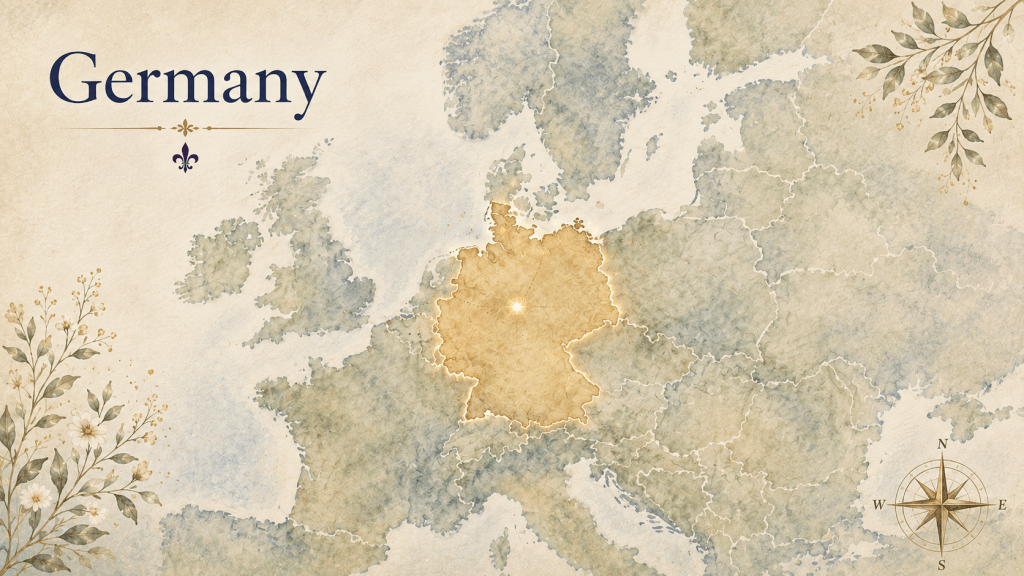
Germany, 1933–1945
It did not begin with gas chambers. It began with words. With speeches that made cruelty sound patriotic, newspapers that repeated lies until lies began to feel like common knowledge, and laws written in tidy black ink that told certain people they were no longer citizens of the country in which they had been born. Jewish professors lost their classrooms; doctors lost their patients; children lost their desks beside children who had once been their friends. Businesses were marked, books were burned, windows were shattered, and neighbors learned to look away. Between 1933 and 1939, the Nazi government issued more than four hundred decrees and regulations restricting Jewish life, stripping away rights one piece at a time until persecution no longer looked like an interruption of ordinary life. It had become ordinary life.
That is one of the most frightening truths of the Holocaust: it was not born fully formed.
It grew.
It grew through old antisemitism given new permission, through propaganda repeated from radios and podiums, through fear, ambition, obedience, resentment and silence. It grew because human beings were separated into categories, because ancestry was entered into ledgers and measured through grandparents, because the word Jew was rewritten not as a faith or a culture but as a supposed stain in the blood. Once a person could be reduced to a classification, it became easier to take away a profession, a home, a name, a body. Easier, at least, for those who had decided not to see the person standing there.
War widened the machinery. Germany invaded its neighbors, occupied much of Europe and carried its racial policies across borders, aided by allies, collaborators and people willing to benefit from what was being taken from someone else. Jewish families were forced into ghettos, crowded onto trains and deported to concentration camps and killing centers. Millions of other people were also persecuted, imprisoned and murdered, including Roma, disabled people, Poles, Soviet prisoners of war, political opponents, gay men and others the regime declared dangerous, defective or unwanted. By the time Nazi Germany was defeated in 1945, six million Jewish people had been murdered, nearly two out of every three Jews in Europe.
Auschwitz became the largest and most recognizable wound in that history, although it stood in German-occupied Poland, not within Germany’s modern borders. It was a concentration camp, a forced-labor complex and a killing center, a place where people arrived after days pressed into railway cars and were divided within minutes: useful for labor, or marked for death. Children were pulled from parents. Husbands disappeared from wives. The elderly, the sick and many mothers holding small children were sent toward rooms disguised as bathing facilities, told to undress, told they would be disinfected, and murdered with poison gas. At Auschwitz alone, the Nazis murdered approximately one million Jewish people, along with tens of thousands of Poles, Roma, Soviet prisoners of war and others.
But even those numbers, necessary as they are, can become another form of distance.
Six million is too large to picture. One million is too large to hold in the mind. So we must make ourselves remember what every number contained: a person who had a favorite song, a person who argued with a sibling, a child who hated a certain food, a mother who knew exactly how her daughter’s hair curled after rain. They were not born prisoners. They did not enter the world as photographs behind museum glass. They had homes, jokes, tempers, prayers, schoolwork, recipes, unfinished letters and plans for years they believed they would be given.
The Holocaust was an attempt to erase not only their lives, but the evidence that those lives had ever mattered.
And still, within the machinery built to destroy them, people shared bread. They whispered prayers. They protected children who were not their own. They made music, preserved photographs, told stories and sometimes used the final strength left in their bodies to lift another person from the ground. A baby was born inside Auschwitz only weeks before liberation, so small and silent that her mother could hide her beneath scraps and refuse, feeding her in secret until the gates finally opened. One man escaped a camp carrying its wounds across his body and, when he reached a German farmer whose help he desperately needed, displayed those scars and declared himself the suffering Christ, turning the evidence of what had been done to him into the very thing that persuaded another human being to hide him. Years later, elderly women gathered through a survivors’ club in New York for a beauty pageant, dressing carefully and stepping forward to declare, with lipstick, laughter and the unapologetic fact of their continued lives, that the Nazis had not taken their worth, their womanhood or their beauty. Hope did not defeat the fences or silence the chimneys. It did not undo what had been done or return the people who had vanished. It did something quieter and, perhaps, more defiant. It survived. It grew beneath rubbish in a barracks, crossed a field inside the scarred body of an escaped man, and decades later stood beneath bright lights in the faces of old women who had once been marked for extinction and were still here to be seen. These were not proof that darkness had been conquered. They were proof that darkness had failed to take everything.
That is the world beneath Mountains of Hope and ASH. One story follows a girl whose courage pulls her into danger; the other follows a girl from whom almost everything has already been taken, including her name. Both enter a period in which loyalty could become a death sentence, imagination could become shelter, and keeping one small piece of the self alive could be an act of resistance. I began researching this period as a young teenager. That research changed my life–since then I’ve talked with survivors, visited Auschwitz and spent twenty years finding all the ways the human spirit is stronger than evil.
The history is not important because it belongs to another country or another century. It matters because none of it was done by monsters from outside the human race. It was built by human choices: the choice to invent a lie, the choice to repeat it, the choice to obey, the choice to profit, the choice to remain silent, and, sometimes, the choice to reach through the dark and refuse to let another person disappear.
You can explore Mountains of Hope (my first published work) here
You can explore Ash here.
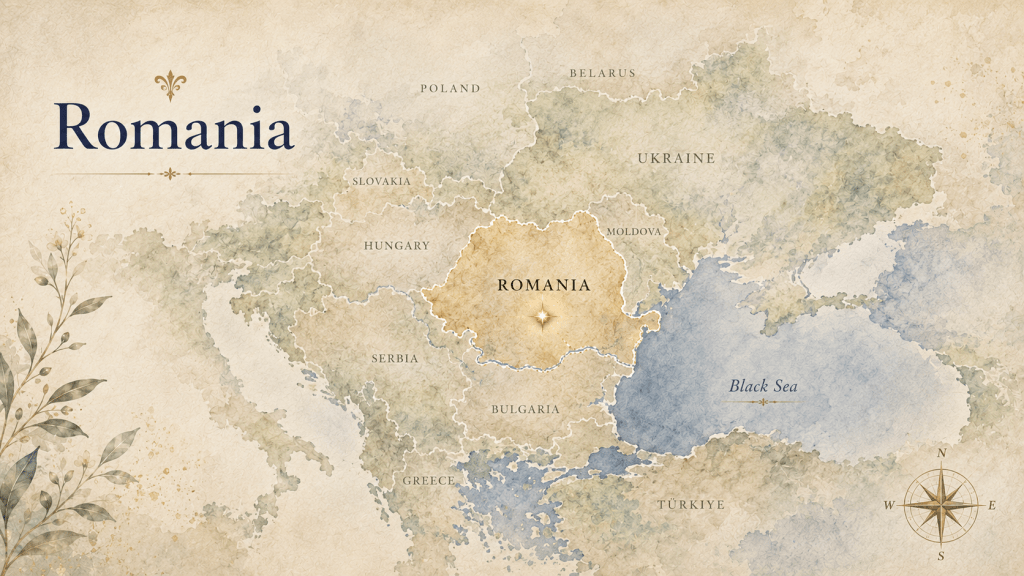
Romania, 1966–1989
The children the state demanded, then decided it did not want
It began with a decree.
In 1966, Nicolae Ceaușescu’s government decided Romania needed more people: more workers for its factories, more bodies for its economy, more children who would grow into citizens useful to the state. Decree 770 sharply restricted abortion and access to contraception. Divorce became more difficult. Women were subjected to intrusive monitoring, and adults without children could be taxed for failing to reproduce. Motherhood was no longer merely personal. Pregnancy had become an instrument of government policy.
The birth rate surged.
But a government can command that children be born without creating enough food to feed them, homes to shelter them or families able to absorb the consequences. It can praise motherhood from a podium while leaving mothers alone with poverty, disability, illness and more children than they were permitted to choose. When families could not manage, the state offered institutions as a solution. Doctors sometimes encouraged parents to surrender children who were disabled, medically fragile or simply difficult to support, promising that trained professionals and government resources could provide what a struggling household could not.
Many of the children who entered Romania’s orphanages were not orphans at all.
Their mothers were alive. Their fathers had names. Some parents intended the separation to be temporary, a desperate pause until the child was older or the family less poor. They believed they were placing a son or daughter somewhere warm, somewhere fed, somewhere supervised by people who knew how to help.
Instead, the children disappeared behind walls.
The system sorted them.
Infants entered institutions called leagăne, or cradles. At certain ages, children could be transferred again, sometimes without warning and without the familiar adults, beds or small routines through which they had learned to understand their world. They were evaluated not according to who they were, what frightened them or what might help them grow, but according to what the state believed they might someday produce.
Some were called recoverable.
Some were partially recoverable.
Others were declared irrecoverable: children judged incapable of becoming useful workers, children whose bodies or minds supposedly placed them beyond education, investment and hope. That label could include children with profound disabilities, but also children with treatable conditions, speech differences, blindness, hearing loss, epilepsy, cerebral palsy, the effects of malnutrition or the developmental delays caused by the institutions themselves. A child could be neglected until she stopped responding, then classified according to the silence the neglect had created.
By the 1980s, Ceaușescu had imposed punishing austerity measures in an effort to repay Romania’s foreign debt. Heat vanished from buildings. Electricity became unreliable. Food and medicine grew scarce. The shortages reached ordinary households, hospitals and institutions, but children hidden inside residential facilities had few people beyond their walls able to notice what was happening to them, and fewer still with the power to intervene.
In the worst homes, children lay in rows of metal beds.
Their heads were shaved. Their clothes were shared or absent. Some were tied to bedframes or restrained inside their own garments. Some rocked for hours because no one held them; struck their heads against walls because pain was at least a sensation they could create and control; stared through crib bars long after they had learned that crying did not summon a face. Baths could mean several bodies pushed through the same filthy water. Hunger weakened bones. Untreated illness became disability. Minor injuries healed incorrectly. Children who could have walked remained in beds until their muscles forgot the possibility. Older children sometimes learned the violence used against them and passed it downward because cruelty, too, can become a language when it is the language spoken most often.
There were too few caregivers, too little training and, in some institutions, almost no meaningful caregiving at all. A bottle might be propped rather than held. Diapers might remain unchanged. A room might contain dozens of children and no one who knew which child feared thunder, which one swallowed too quickly, which one needed a hand laid gently against her back before she could sleep.
These were not small omissions.
A child’s brain develops through relationship. A baby learns that the world is survivable because hunger brings food, fear brings comfort and a cry brings someone near. When those responses do not come, the absence does not remain outside the body. It enters development itself. Later research involving children raised in Romanian institutions documented profound effects on attachment, cognition, emotional regulation, mental health and brain activity, while also showing that placement in stable, responsive family care could improve outcomes, particularly when it happened early.
The tragedy was not merely that the children lacked toys.
They lacked witnesses.
No one learned the private language of their faces. No one gathered the small evidence of personhood most children accumulate without noticing: the nickname used only at bedtime, the food they pushed to the edge of a plate, the story they asked to hear again, the particular shape their hand made when reaching for someone they trusted. Some children were given numbers. Some shared clothes, beds and histories so thoroughly that individuality became almost an act of rebellion.
And then, in December 1989, the regime fell.
Ceaușescu and his wife were executed after a brief trial. Romania opened, and cameras entered places the outside world had scarcely imagined. Images crossed the former Iron Curtain: rooms crowded with skeletal children, vacant faces behind rails, bodies distorted by starvation and untreated conditions, infants who did not cry when strangers approached because they had already learned the uselessness of asking. The world called them Ceaușescu’s orphans, although many still had living families and had been made parentless not by death, but by policy, poverty and separation. Estimates vary, but roughly 100,000 or more children were living in Romanian institutions when communism collapsed, and many hundreds of thousands may have passed through the system during the regime.
The photographs shocked people because the children appeared to belong to another world.
They did not.
They belonged to Europe at the end of the twentieth century. They lived behind doors maintained by a modern state, inside a system built through legislation, budgets, medical classifications and administrative signatures. No single villain stood beside every bed. The harm accumulated through policy, scarcity, indifference, fear and the repeated decision that certain children required less because they were believed to be less.
More recent investigations have estimated that over 15,000 minors died in communist-era residential institutions, many through neglect, starvation and untreated illness. Their deaths were not accidents wandering loose in a broken system. They were the foreseeable consequence of placing vulnerable children where suffering could remain unseen and where the people responsible for them expected no one to ask their names.
But the institutions did not succeed in making the children empty.
Some protected one another. Some stole food and divided it. Some learned to read another child’s noises when adults heard only disruption. Some invented games with nothing to play with, families among children who had been separated from their own, and futures in places they had never seen. Even rocking, so often photographed as evidence of damage, was also evidence of a child trying to comfort herself when no one else would. A body left alone searched for rhythm. A mind deprived of tenderness made what shelter it could.
That is the Romania beneath Tărâmul Viselor.
Alina, Auner, Ekko and Alizabet live inside a home for children deemed unsalvageable: a word that reveals far more about the adults who used it than about any child forced to carry it. Alina cannot see. Auner has one arm and bears the lasting effects of polio. Ekko has a damaged hand and a voice that does not move easily through words. Alizabet is quiet enough to be underestimated, and imaginative enough to build an entire country where the others might survive. They are children born to women oppressed by the regime, then abandoned to one of its most abusive institutions, where Alizabet tells them of a place filled with talking animals, healing birds and safety.
Tărâmul Viselor means the land of dreams.
For the children in the novel, that land is not childish fantasy. It is resistance. When every authority around them insists that their bodies are defective, their futures already calculated and their lives worth only what they might produce, imagination allows them to make one dangerous claim:
There may be somewhere else.
There may be something after this.
There may be a world in which blindness is not uselessness, disability is not guilt, silence is not emptiness and a child does not have to prove her value before someone agrees to keep her alive.
Romania’s institutional system tried to reduce children to diagnoses, labor potential and ledgers. The children remained larger than every category written beside their names. They adapted. They attached when given someone safe enough to attach to. They learned, loved, built families and carried lives beyond the walls that were supposed to contain their entire meaning.
That does not redeem what happened.
Light after darkness does not make the darkness necessary.
It proves only that even after a government attempted to manufacture children for the state, discarded those it considered inconvenient and called the most vulnerable among them irrecoverable, the final judgment did not belong to the state.
The children were never beyond recovery.
They had been placed beyond care.
You can explore Taramul Viselor here
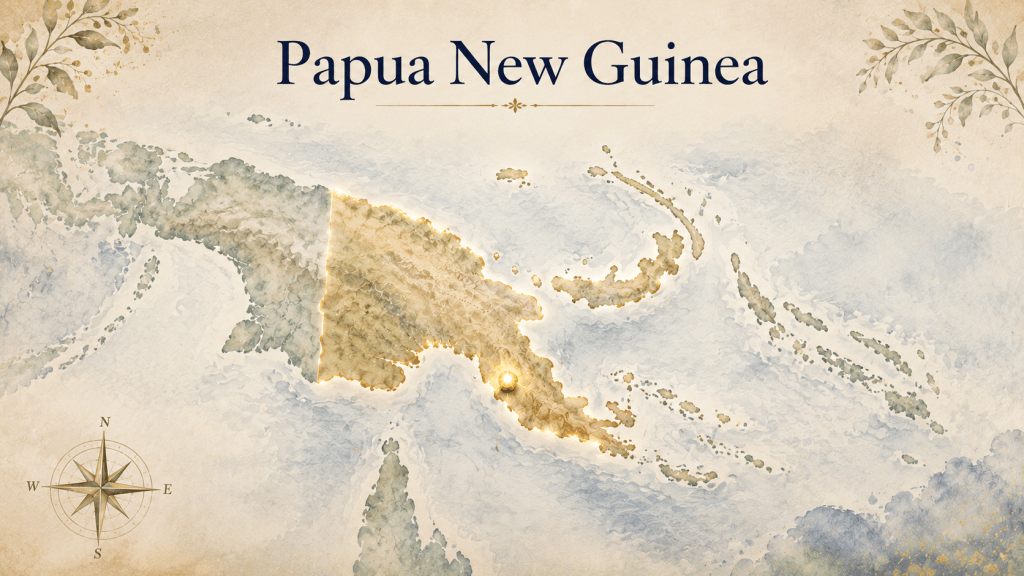
Papua New Guinea, late nineteenth century to the present
When fear chooses a body to blame
Papua New Guinea does not hold one culture, one language or one way of understanding the world.
It holds hundreds.
Mountains divide communities that may live only a short distance apart yet speak different languages, follow different customs and carry different explanations for illness, death, weather, fertility and misfortune. In the Highlands, steep ridges and dense forest allowed societies to develop with considerable independence from one another. Kinship held communities together. Land was inheritance, identity and survival. Gardens fed families; pigs carried wealth and obligation; exchanges created alliances; oral histories held what other societies placed into books.
The village remembered through people.
A child learned who she was by listening: to the names of ancestors, the laws of the clan, the stories attached to particular trees and rivers, the warnings repeated beside a fire. Knowledge passed through bodies and voices. A drum could announce death, danger, gathering or celebration. One rhythm might carry farther than a shouted name, making sound into language and the person permitted to control that sound into someone capable of shaping what the entire community understood.
The land now called Papua New Guinea was divided between European powers during the 1880s, with Germany claiming the northeast and Britain controlling the southeast. Yet a flag raised on a coast did not mean distant Highland communities knew they had been claimed. Many people living deep within the interior would not encounter Europeans or colonial officials until decades later. A government could color their land on a foreign map while remaining almost entirely absent from the paths they walked each day.
That distance matters to Echoes of a Wild Girl’s Drum.
Its world is not meant to represent every Papua New Guinean community, nor to suggest that violence defines a country containing extraordinary cultural, linguistic and human complexity. The village is fictional. Its practices are shaped for the story. Its time is deliberately blurred, carrying the textures of a remote Highland community in the late nineteenth century while reaching toward a terror that did not remain there.
Because the accusation at the center of the novel is not purely historical.
In many societies, human beings have searched for a person to blame when death arrives without explanation. Papua New Guinea has its own varied traditions concerning sorcery, spiritual power and the unseen causes of suffering. Belief alone, however, does not inevitably produce violence. Violence emerges when grief becomes accusation, when an influential person claims to know who caused the misfortune, and when a frightened community decides that punishing one body will restore order to everyone else. Researchers describe these accusations as causal stories: narratives that give illness, death or disaster an identifiable human source and then prescribe who must be confronted, expelled or harmed.
The person selected is rarely the safest person to accuse.
Women are frequent targets. So are widows, older people, outsiders, people without powerful relatives, and those already considered difficult or different. Once an accusation takes hold, ordinary evidence may lose its meaning. Denial becomes proof that the accused is hiding something. Fear becomes guilt. Surviving torture can be interpreted as evidence of supernatural power rather than innocence.
A story closes around the victim until there is no answer she can give that allows her to remain human.
That is what happened to a child known publicly as Justice.
Her mother, Kepari Leniata, had been accused of sorcery after the unexplained death of a child and murdered by a mob in 2013. Four years later, the accusation crossed from mother to daughter. In 2017, villagers imprisoned Justice for days, suspended her by her wrists and ankles, and tortured her with heated machetes while demanding that she confess to causing another child’s illness. She survived because people entered the village and removed her while she was still alive.
Her survival did not make what happened smaller.
She liked Frozen. She gathered fallen frangipani blossoms and turned them into tiny decorations. She laughed. Those details matter because accusation tries to replace the person with a symbol: witch, danger, source, curse. To remember what she enjoyed is to return her to herself. It is to insist that before she became a case reported across the world, she was a little girl with favorite things, private habits and a life that belonged to her.
Justice became part of Soryelle.
Not her biography. The story is fictional but it begins instead with the question Justice’s story leaves burning behind it:
What must happen inside a community before adults can look at a child and see evil?
Soryelle is four when her mother burns. Seven when the village turns toward her. The accusation has already been waiting because fear is often inherited more faithfully than truth. Her mother’s supposed guilt enters her name, her touch and her blood until the villagers no longer need evidence. They need only a sick child, a failed crop, a rumor and someone whose suffering will cost them less than questioning the system that taught them to be afraid.
Maikel grows inside that system from the opposite direction.
He is protected. Trained. Given a place beside the drum and taught that rhythm keeps the village safe. The rules make sense to him because the rules have not yet selected his body for punishment. Then Soryelle is tied to the stake, and the beat he has been taught to play becomes the sound of people agreeing that she should die.
So he changes it.
Only for a moment.
Only enough to break the rhythm and reach her.
But systems built upon obedience are threatened by a single missed beat because one interruption proves that the pattern was never inevitable. Someone was always choosing to continue it.
That is the history and the present beneath Echoes of a Wild Girl’s Drum. The novel lives in a fictional past, but its central violence reaches forward into 2017 and beyond. Sorcery accusation-related violence remains a serious human-rights concern in Papua New Guinea, especially for women and girls, while local advocates, faith leaders, researchers, survivors and community organizations continue the dangerous work of intervention, education and change.
The distance between Soryelle and Justice is more than a century.
Violence echoes. So does refusal.
And sometimes history changes because, in the middle of the rhythm everyone else has accepted, one person strikes the wrong note on purpose.
You can explore Echoes of a Wild Girl’s Drum here
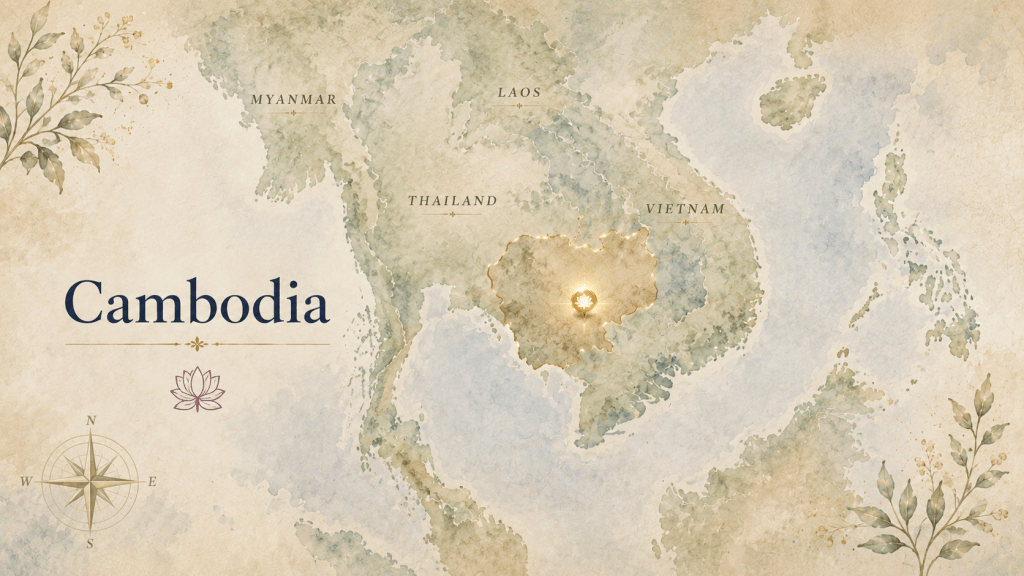
Cambodia, late twentieth century into the present
When a promise of rescue becomes the door to captivity
Cambodia entered the modern era carrying absences.
Between 1975 and 1979, the Khmer Rouge emptied cities, separated families, outlawed religion and individual expression, and forced millions of people into agricultural labor. Nearly two million Cambodians died through execution, starvation, disease and exhaustion. Parents lost children. Children were removed from parents and placed into labor brigades. Teachers, doctors, artists, religious leaders and people suspected of education or disloyalty were murdered, leaving not only graves but ruptures in the systems through which a society protects, teaches and remembers itself.
The regime fell. Its consequences did not.
Civil conflict continued. Landmines remained beneath fields and paths. Families rebuilt with missing generations, limited resources and grief that could not always be spoken because nearly everyone had suffered and survival required attention to what had to be done next. A country can be liberated from a government in a day and still spend decades trying to recover the people, institutions and trust that government destroyed.
Children grew inside that recovery.
Many lived in rural communities where family life revolved around fishing, farming, markets, younger siblings and the work required to keep everyone fed. Poverty did not mean an absence of love. It meant love was forced to make decisions beneath pressure. School fees, medical care, transportation and one failed harvest could become impossible weights. A child’s labor might help the family survive. An offer of work in the city might sound less like abandonment than opportunity.
Traffickers understand the difference between taking a child by force and persuading a family to open the door.
They offer domestic work. Education. Money sent home. A respectable employer. A future wider than the village. The lie succeeds because it is shaped like hope.
Children may be recruited through strangers, brokers, employers, acquaintances or people already trusted by the family. Poverty increases vulnerability, but poverty alone does not traffic a child. Someone chooses to exploit it. Someone identifies the medicine a family cannot afford, the debt it cannot repay or the daughter it believes might be safer working elsewhere, then turns that desperation into profit.
That is the world beneath Dance For Me.
Maelea is eleven years old. Before she is trafficked, she fishes with her father, helps her mother prepare food, cares for her younger sister and dances around the family’s hut. Those details matter. She is not introduced as a victim waiting for a terrible thing to happen. She is a child already living a complete life.
Then Srey becomes ill with dengue fever.
Her father leaves to find help and returns with a doctor and a woman who promises Maelea work as a domestic servant, along with the possibility of school. The offer appears to solve several problems at once: medicine for one daughter, employment for another and relief for a family with too few choices.
Instead, Maelea is taken to a brothel.
The distance between those two places, the promised household and the locked room, is the distance trafficking depends upon. By the time the truth becomes visible, the child has been removed from everyone who might recognize her fear. Her documents may be controlled. Her movements are watched. Violence teaches her that resistance has consequences. Shame is placed onto her body until she begins carrying responsibility for crimes committed against her.
Child sexual exploitation is sometimes described with language that makes the violence sound transactional, as though a child has entered an adult marketplace and made an unfortunate bargain.
She has not.
A child cannot consent to being sold.
She cannot owe sexual access because someone transported, fed or housed her. She does not become responsible because money changes hands, because an adult calls the abuse work, or because survival eventually requires her to stop fighting every time.
Cambodia became internationally associated with sexual exploitation in travel and tourism as increased mobility, tourism and uneven law enforcement created opportunities for offenders and traffickers. International and Cambodian organizations have worked for years to strengthen laws, train investigators, support survivors and prevent exploitation, but children continue to face trafficking, sexual abuse, forced labor and newer forms of online exploitation. UNICEF notes that violence often occurs in the very places children should be safest and at the hands of people they know or trust.
That betrayal is central to the harm.
The stranger in the brothel is not the first person Maelea has to make sense of.
Her father placed her in the woman’s care.
He believed the promise, or needed to believe it, or allowed desperation to speak more loudly than danger. Whatever his intention, Maelea is left to reconcile two truths that do not fit easily beside one another: she loved her family, and the path away from them led directly into captivity.
Children often build explanations that protect the adults they need.
Perhaps Papa did not know.
Perhaps he is coming.
Perhaps she has not been good enough.
Perhaps surviving today will allow her to go home tomorrow.
Traffickers exploit that hope, too. They may promise release after a debt is repaid, then increase the debt. They may threaten siblings or parents. They may alternate cruelty with small kindnesses until gratitude and terror become tangled. The child learns that every apparent exit may contain another room.
The title Dance For Me carries that corruption.
Dance belonged to Maelea before anyone commanded it. It was joy moving through her body, something spontaneous and entirely her own. Trafficking takes what belonged to the child and forces it to serve someone else: her body, her movement, her obedience, even the expression on her face.
For two years, Maelea survives a world built to reduce her to usefulness. Survival may not look graceful. It may involve silence, compliance, dissociation, anger, bargaining or the careful conservation of one private thought no one else is permitted to touch. A child does not have to remain visibly defiant to be resisting. Sometimes resistance is simply the part of her that continues to know there was once a river, a sister, a mother’s cooking and a version of dancing that required no command.
The history surrounding Dance For Me is therefore not only Cambodia’s history of political violence or its continuing struggle against child exploitation.
Some promises become traps because the person making them never intended to keep them.
Others become rescue because someone finally does.
Maelea’s story asks what remains after a child has been treated as though every part of her can be purchased, and whether she can reclaim a body that has been made into a place of labor and terror.
Before the room, there was a girl dancing beside the Mekong.
After the room, she is still there.
You can explore Dance For Me here.
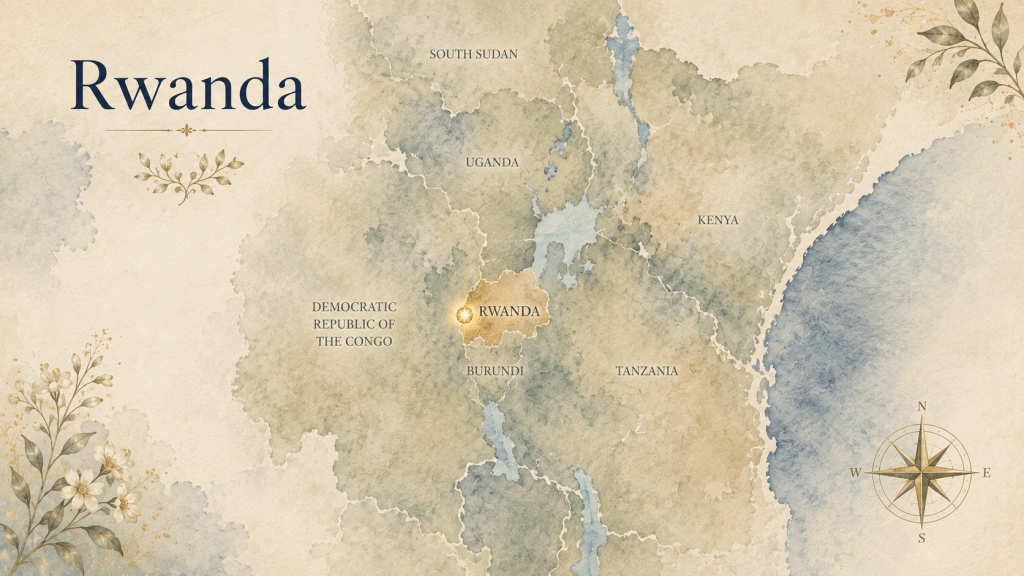
Rwanda, 1994 and the years after
When the person holding the machete already knows your name
Rwanda is a small country.
That matters, because the violence of 1994 did not unfold across distances large enough to make strangers of everyone involved. People lived close together. They shared roads, markets, wells, churches, schools and fields. They knew whose cattle had calved, whose child was sick, whose daughter danced beautifully and whose family needed help carrying the harvest home.
Then, for one hundred days, familiarity became a weapon.
The genocide against the Tutsi did not begin on the night the president’s plane fell from the sky. The assassination of President Juvénal Habyarimana on April 6, 1994 became the signal extremists used to begin the killing, but the machinery had already been built: years of political division, organized militias, lists of names, propaganda and repeated language that taught people to see neighbors not as human beings, but as an infestation that had to be removed. Tutsi people were called inyenzi, cockroaches. Moderate Hutus who opposed the killing were marked as enemies too.
Words prepared the ground.
Then the roadblocks appeared.
Identification cards exposed ancestry. Houses were searched. People were pulled from cars, hunted through fields and killed inside the places where they had once expected shelter. Churches, schools and government buildings filled with families who believed walls, priests or international observers might protect them. Some of those sanctuaries became massacre sites. Entire families were killed together, and women were subjected to systematic sexual violence intended not only to injure individual bodies but to terrorize, humiliate and destroy a people.
The weapons were often intimate.
A bomb can fall from a sky without knowing the name of the person beneath it. A machete is held close.
In Rwanda, many people were murdered by neighbors, local officials, militia members, acquaintances and sometimes relatives by marriage. The killer might know which path the family would take, where they kept food, which child could not run quickly and what lie might persuade them to open the door. Approximately 200,000 people are estimated to have participated directly in carrying out the genocide, although there were also Hutus who hid, defended or attempted to rescue Tutsis at terrible risk to themselves.
Between 500,000 and one million people, overwhelmingly Tutsi, were murdered in roughly one hundred days. The number is almost impossible to hold. It becomes easier to say than to understand.
So it must be returned to people.
A girl who had spent the morning carrying milk.
A boy who knew every step of a dance.
A mother with one child tied against her back and another holding her hand.
A friend who had once been welcomed through the same doorway he later entered as an executioner.
That is the Rwanda beneath Remember the Nightingale.
Evariste is fourteen years old in April 1994. She is Tutsi because the world around her has decided that ancestry and cattle can determine what a person is allowed to be. Her family keeps twelve head of cattle, giving them comfort and standing, but also placing them more visibly inside a category that extremists intend to destroy. She loves sunlight, dancing, stories and the quiet choreography of ordinary life. Gaeton is Hutu, three years older, practical where she is fanciful and shaped by earlier violence that took his father and brother. He has known loss. He has also known Evariste nearly all her life, protecting her dreams because her ability to imagine beauty makes his own world larger.
Before the genocide, they are not symbols.
They are two young people who have grown beside one another.
He gives her a rattle, a flower crown and one night in the city to watch the Intore dancers. She gives him a version of himself that is more than grief, anger or the label assigned to him at birth. Their families have managed what the country increasingly insists should be impossible: relationship across the line between Hutu and Tutsi.
Then the line becomes a blade.
Genocide does not merely ask whether Gaeton loves Evariste.
It asks what love is worth when protecting her may require him to oppose his community, betray expectations placed upon him and risk being killed beside her. It asks whether history can enter a relationship so completely that one person becomes both beloved and dangerous to the other. It asks what happens when survival demands a decision no human being should have to make, and what remains when that decision injures both the person who makes it and the person he cannot save.
The killing ended when the Rwandan Patriotic Front captured Kigali and defeated the extremist government in July 1994. But an ending on a calendar is not the same thing as an ending inside a person. Survivors returned to villages where houses were empty, fields had grown wild and the people responsible for the deaths might still live nearby. Many did not know where their relatives had been buried. Some perpetrators fled. Others filled prisons. The justice system faced hundreds of thousands of suspected participants and a country in which nearly every community contained the wounded, the guilty, the grieving and those who belonged to more than one of those categories at once.
Rwanda responded through several forms of justice.
The International Criminal Tribunal for Rwanda prosecuted senior organizers and produced landmark rulings, including the first international judgment recognizing rape as a means of committing genocide. National courts tried other cases. Rwanda also revived community-based courts known as gacaca, where local judges heard testimony, survivors sought information and accused people could confess, show remorse and request reduced sentences. More than a million cases moved through these courts before they closed in 2012.
Gacaca meant that justice often happened in the same communities where the crimes had occurred.
People sat within sight of fields where bodies had been buried. Survivors listened as someone described the final moments of a parent or child. A perpetrator might name accomplices, identify a grave or ask forgiveness from the family whose home he had entered. For some, the process uncovered truth and made burial possible. For others, it reopened terror, exposed them to retaliation or offered answers too incomplete to resemble peace. Gacaca could impose judgment.
It could not restore the dead.
Forgiveness, therefore, could never be simple.
It could not mean pretending that the machete had not fallen, that rape had not been used as a weapon or that a person should be welcomed home merely because the country needed to move forward. Forgiveness could not be demanded without becoming another violence. Reconciliation could not require survivors to erase themselves so everyone else might feel healed.
That tension lives at the center of Remember the Nightingale.
Years after the genocide, one person is released from prison. The other lives ostracized, impoverished and no longer able to trust the dreams that once came so easily. The gacaca trials are ending, and the story turns toward the idea of Jubilee: a time associated with release, restoration and debts set down.
But some debts cannot be repaid.
Some losses cannot be returned.
So the question is not whether love makes atrocity disappear.
It is whether anything human can survive after history has torn through the center of it.
Rwanda’s story after 1994 contains extraordinary acts of rebuilding, remembrance and endurance. Survivors raised children, created organizations, preserved testimony and returned year after year to memorials where the bones of the dead remain visible because forgetting would offer the killers one final victory. Orphaned children became photographers and later interviewed perpetrators, using images to seek understanding without pretending that understanding meant absolution.
That is where the nightingale belongs.
A nightingale does not sing because the darkness is imaginary.
It sings inside it.
Its song does not undo the grave, silence the memory or return the person whose absence has rearranged every remaining life. It proves only that something living remains capable of making sound.
Remember the Nightingale is rooted in Rwanda, in the specific history of the genocide against the Tutsi and in a country forced to ask how victims and perpetrators might ever occupy the same landscape again. But its deepest question crosses every border on this map.
What do we do when the person who wounds us is not a stranger? How do we remember without allowing hatred to become our only inheritance?
And when darkness has taken almost everything, can love still be something more than the last beautiful thing we lost?
Explore Remember the Nightingale here.
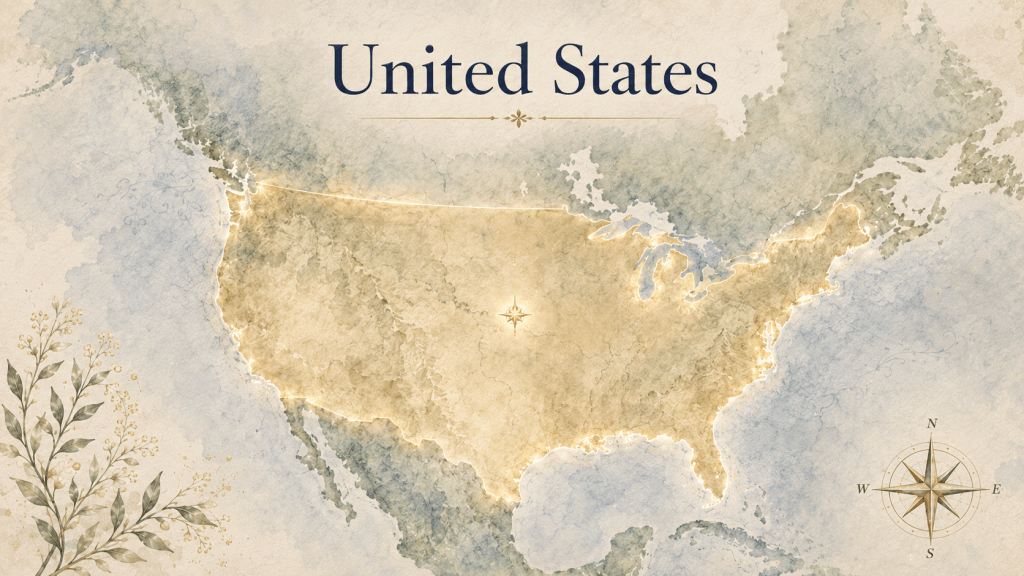
United States, 2000 to the present
Stories without a pin
Some stories arrive already fastened to a place.
A bog body belongs to Ireland. Auschwitz belongs to the map of occupied Europe. The orphanages of Ceaușescu’s Romania, the villages of Papua New Guinea and the river communities of Cambodia carry histories shaped by land, government, culture and time.
These stories are different.
They take place somewhere in the United States, but often not somewhere that can be neatly marked. The town may have a name, the house may sit beside train tracks or beyond a stretch of woods, and the characters may travel through schools, hospitals, farms, churches, libraries or quiet residential streets, but the state itself is not always important. The absence is intentional.
Because Haven could live in Florida.
Taya could attend school in Tennessee.
Jessie could sit untouched in a classroom in Ohio. Anna could hide her pain behind the front door of a house in California. Michael and Mary Beth could listen for the change in a parent’s footsteps in Texas, while Aria carries her mother’s songs along an unnamed road somewhere between one temporary home and the next.
Move the pin, and the story remains possible.
The United States of the twenty-first century is enormous, divided into states, counties, cities, suburbs and rural communities that can appear to have very little in common. A child in a small Southern town may grow up within a world far removed from one living in a northern city. Race, poverty, faith, disability, family structure and access to help shape what danger looks like and whether anyone is likely to recognize it. Yet harm crosses every boundary we draw. Abuse occurs in apartments and farmhouses, behind carefully landscaped lawns and inside homes where the electricity is about to be disconnected. Domestic violence can live beside family photographs. Loneliness can sit in a crowded classroom. A child can be surrounded by adults and remain unseen.
The new century has given us faster ways to speak to one another than any generation before us possessed. Phones carry photographs across the country in seconds. A confession can be posted before the person writing it has decided whether she wants anyone to answer. News travels instantly; strangers gather around grief; survivors discover language for experiences they once believed belonged only to them.
But connection is not the same thing as being known.
A child can have a device in her hand and no safe adult to call.
A teenager can be watched by hundreds of people online and still believe her disappearance would make no difference. A family can perform happiness for a camera while learning to recognize the precise silence that falls before violence begins. Contemporary America is full of stories being broadcast and stories being carefully hidden, often by the same people at the same time.
That tension moves through these books.
In River’s Rowan, five girls live within the familiar architecture of an American small town: football, popularity, school journalism, family reputation and the dangerous confidence that everyone knows everyone. When they disappear, the community’s ordinary life becomes camouflage. Their kidnapper does not emerge from a distant wilderness. He watches, plans and builds his violence beside people who would recognize him. The story asks who receives sympathy, who is called a bully, who is believed to be innocent and what a town must overlook before its secrets become a place where someone can be hidden.
In Holding Home, Michael and Mary Beth grow up inside domestic violence, sharing not only a house but the private vocabulary children develop when danger is routine: the sounds that mean leave the room, the moods that mean become quiet, the secrets siblings keep because telling may make everything worse. Home is supposed to be the first place safety is learned. For them, it becomes something they must hold together while the adults fracture it around them.
Haven and Poppy build forts, rescue birds and hang wishes from a willow tree. Their childhood contains beauty because abused children do not stop being children. Haven gathers dandelions and tries to turn them into medicine for what she cannot name; when she realizes her younger sister may be in danger, she attempts a rescue with the heartbreaking logic available to a ten-year-old. Her bravery is real. So are the limits placed upon it by every adult who should have noticed first.
Jessie, in Forget Me Not, is eight years old and never touched. Her story lives inside a different kind of absence: no hand held at a crossing, no comforting arm when she is ill, no ordinary affection through which a child learns that her body can exist safely near another person. She asks not where she is, but whether anyone will see her before time runs out.
Anna survives abuse in The Character and finds something resembling rescue through Ash, a mysterious storyteller. The connection matters because stories can become a bridge where ordinary language has collapsed. A child unable to explain what is happening may still recognize herself in a character, a metaphor, a scar placed onto someone fictional enough to discuss and real enough to love.
In The Storyteller, a girl loses her voice for fourteen years after witnessing her mother’s murder and enduring abuse from her father. Her movement toward safety begins not with a grand institution but with an injured dog, a farmhouse, colored glass, rescued horses and fairy tales. The story understands that safety is often learned through accumulation: one meal made carefully, one night without terror, one person who does not punish fear, one story that permits a different ending to exist.
Taya’s story in Broken begins near its ending. She is fifteen, bullied and abused, and no longer believes she possesses enough courage to continue waking into the same pain. Her voice exposes one of the cruelest misunderstandings surrounding suicide: the idea that a person dies because she has not tried hard enough to live, rather than because suffering has narrowed her world until death appears to be the only remaining door. The novel holds her not as a lesson or statistic, but as a girl who deserved to be reached before hope became something she could no longer imagine.
Aria, in Sing Me Home, loses her mother, passes through relatives and abuse, and carries music as evidence that tenderness once existed. When violence takes her ability to sing, the search for home becomes larger than finding another building. Through strangers, friendship, faith and remembered song, she begins asking whether home might be created wherever a person is finally allowed to become whole.
These stories do not need separate pins because the map is not trying to claim that every American community is identical.
It is saying something more unsettling and more hopeful.
No location possesses all the darkness. No location possesses all the light.
The circumstances change. One child is touched only in ways that hurt; another is starved of touch entirely. One girl loses her voice; another leaves behind a final written one. Some children protect siblings. Some are rescued by strangers. Some build families from animals, stories, songs or other wounded people because the family they were given did not keep them safe.
Still, the need beneath each story is recognizable.
See me.
Believe me.
The United States section belongs on this map not because these books reveal one particular region of the country, but because they reveal how little distance protects us from one another’s experiences. A reader may never have lived in a village in Rwanda, walked beside a Cambodian river or stood near an Irish bog, but she may recognize Haven gathering dandelions, Michael listening through a wall, Jessie flinching from a hand or Taya trying to leave behind an explanation.
That recognition is where geography begins to loosen.
Stories connect us not by pretending every life is the same, but by allowing one life to become real inside another person. They cross state lines without needing to name them. They enter houses we have never seen and ask us to care about children we have never met. They remind us that pain can hide anywhere, but so can the person who notices, the sibling who reaches back, the stranger who offers shelter, the dog who leads someone home, the story that gives a silent child enough language to begin.
There is no single pin for these books.
The point is not where they happened.
The point is that they could happen near any of us, and that once a story has crossed the distance between us, near becomes a word we can no longer use only for geography.

