Come ‘mere
I love the shape of words.
I remember being in elementary school and consciously thinking about how my tongue and lips were working together to form words.
The entire idea of language fascinates me, honestly. Being understood, the idea that the whole experience of life could be described, the possibility of change coming through the understanding words provide…these are wildly ambitious concepts.
I have two favorite words. The first is susurrus. It means a soft rustling or murmuring sound. When you say the word out loud, all those ses together sound like someone rustling or shh-shhing you. It’s fun to say. But that’s not the reason I love it.
I love it because it’s a reminder that quiet things can be heard—when I sit outside at a creek, the babbling of water over stone soothes me; the chirping of the birds brings a smile. Even the distant rumble of car engines doesn’t bother me because the cars hold people. Some of them are loud. And some of them will never speak up.
I was 19 or so and a Junior Achievement volunteer. This meant I spent 6 weeks teaching classes about economics. At the end of every class I gave every student a hand written letter and a unique, one of a kind story, also hand written and dedicated to that particular student. And there was a 7th grade girl who never spoke. The teacher told me not to call on her. When I gave her the letter, she trembled and her entire body tensed like a live wire when I touched her shoulder. She wasn’t making a sound… but she was speaking volumes.

The word susurrus reminds me to look for the quiet ones. I don’t want to be so loud I can’t hear the ones who can’t find words and are, instead, whispering through life. I will whisper until I shout to amplify their voice.
My second favorite word is part of a favorite phrase: come ‘mere. I’m from the South, the Bible Belt specifically, and we invent words, phrases and entire sentences subtext conversations for sport (bless your heart being a very good example). We don’t have time to say come here (unless we’re mad) , so we say come ‘mere.
This phrase gets me like a direct arrow to my heart every.single.time.
Because I hear an invitation.
From as far back as I can remember, I never believed my presence mattered or was desired. I truly believed I created friction, that there was something innate about the essence of who I was that no one would want to see or be around. And I relied, depended, on my characters to be the exception. So, when someone says come ‘mere, I hear, I want you closer. And it need not be romantic. A parent can say it a child she hugs; a friend says it when they invite you somewhere.
The concept of being wanted, of my presence meaning something, tells me it’s okay to be .. whatever I am because whatever I am isn’t stopping someone from asking me to come ‘mere.
The word mere is interesting.
Originally, it has 3 separate words that are spelled the same but mean different things. The most interesting to me is mere. Originally, this word meant: pure, complete, whole. Some linguists say it could have derived from marmarein, which is Greek for glimmer.
So, a person might have said, a mere child and meant “a whole, complete child; one who glimmers.” Today, we say things like a mere child and mean it as less than or unequal to. Today mere is limiting, a qualifier. It somehow went backwards from being whole to less than.
Susurrus means a whispering sound.
The ocean’s not loud, it’s merely susurrous. Here, merely reduces the volume of the ocean to a whisper, a murmur.
But when someone tells me to come ‘mere, they aren’t usually shouting it. It’s usually said quietly. Here is wherever the speaker is; if the speaker is in a garden and says here, here then refers to that specific garden. If the speaker is in Timbuktu, here refers to Timbuktu. The point is: come here (come ‘mere) is an invitation to share a specific environment, to leave my surroundings and join another’s. There’s an intimacy and a promise inherent in such an invitation because sharing your space means you want to narrow the gap between you.
Some people go their entire lives believing that others seek to increase the distance, to move away from, them. A susurrous invitation is a quiet one… and usually much more affecting for being such.
You do not have to be loud to be heard.
You do not have to be loud to matter.
As a support specialist for a crisis hotline, I can tell you that many people believe the opposite.
These are things I hear every week:
I didn’t scream.
I said I did not want to, but it wasn’t really loud; I don’t think he heard me.
I didn’t say no the right way.
But the thing is: you were sharing space. You don’t have to be loud to matter. You don’t have to be loud to be heard.
I like the 14c definition of mere better than today’s. We can reclaim it by using it in the sense that it was originally intended: You didn’t merely say no (current, limiting usage); you merely said no (whole, complete: no is a full, worthwhile sentence without any qualifiers needed.
You may have heard me say this once (or twice or, you know, a lot) but Storymere feels like a story I’ve been waiting to write half my life.
I think part of this is because of the way the idea came to me. I was writing a completely different novel – halfway through only the first section- when Malika started following me.
I knew she was a survivor of FGM. But that was not enough for me to give her space because I was a little overwhelmed by the prospect and not certain I wanted to go there.
And then…
A long time ago, there was a character named Landon. He made a cameo appearance in Sing Me Home.For a long time, really until I wrote Clayton, Landon was my favorite character. He is a take-me-or-leave-me cowboy, who was abused as a child and grew up to run a ranch for children in need. Out of the clear blue sky, I saw him and he said two words: “Come mere.”
Those two words were truly instrumental. I instantly knew what the story was about really at its core because when I was younger, I was in the middle of being hurt, and those words were said by character on the ceiling and an entire world played out in front of me that kept me from truly feeling… an unsurvivable moment.
Coming from Landon, an imaginary character, come ‘mere was an exit; it was an escape route. If I looked where he wanted me to look, I didn’t have to be trapped on a bed where I couldn’t breathe, in enough terror to feel the world dimming around me and simultaneously, excruciatingly sharp.
So I knew that whatever Malika’s story was… I wasn’t just going to use dissociation as a coping mechanism during trauma as I have done before. The book itself was going to examine dissociation and the different forms that it can take.
Eventually, after a lot of research, I realized that this was a very unique book for me in a lot of ways. For one it is set in West Africa, which I knew very little about. For two, it is dealing with a larger theme of what it means when someone owns a body and that introduced slavery. But my girl, Malika, was in 2002 dealing with inherited dependency. In order to understand that, I had to go back… A long way… So I went back 100 years and found out who our great grandmother is.
And all the different ways that a family passes down different things; ways to survive are passed down; traditions are passed down; physical characteristics are passed down. And sometimes – coping mechanisms. Storymere is a world that both Aissata and her great granddaughter believe they each invented.
It is not fantasy. It is an answer to the question, “when the world is unsurvivable, when you are held down and you cannot escape, when pain of any kind feels like if might kill you if you endure one moment more—where do you go?”
…
I have spent the last two weeks working on three pages for the website to introduce the story. They are different than any of my other book pages. The title page shows ceiling and you can click it to reveal something new. Because ceilings were my entry into “Storymere” (which is a phrase that incorporates stories because that’s what dissociation was for me and also holds Landon telling me to “come mere”).
“Painted with the Same Star” introduces you to Awa, Aissata and Malika: what they are like, what they love and where their stories go.
“Our Inheritance” allows you to see things this family has passed down for a hundred years. There is a video on that page under “What We Sing” section. It starts out as a story a loving father gives his daughter, becomes a song the girls create using a melody from their mother’s morning praise song and eventually it will fragment by the time it gets to Malika into lines or just the melody.
It talks about how a girl’s genuine character trait of wanting to be good and be like her mother whom she loves morphs into “be good so you don’t get whipped or raped” becomes, for later generations, “just go along: we can’t afford to make trouble even if we are ‘free.’” Which begs the question: what is freedom?
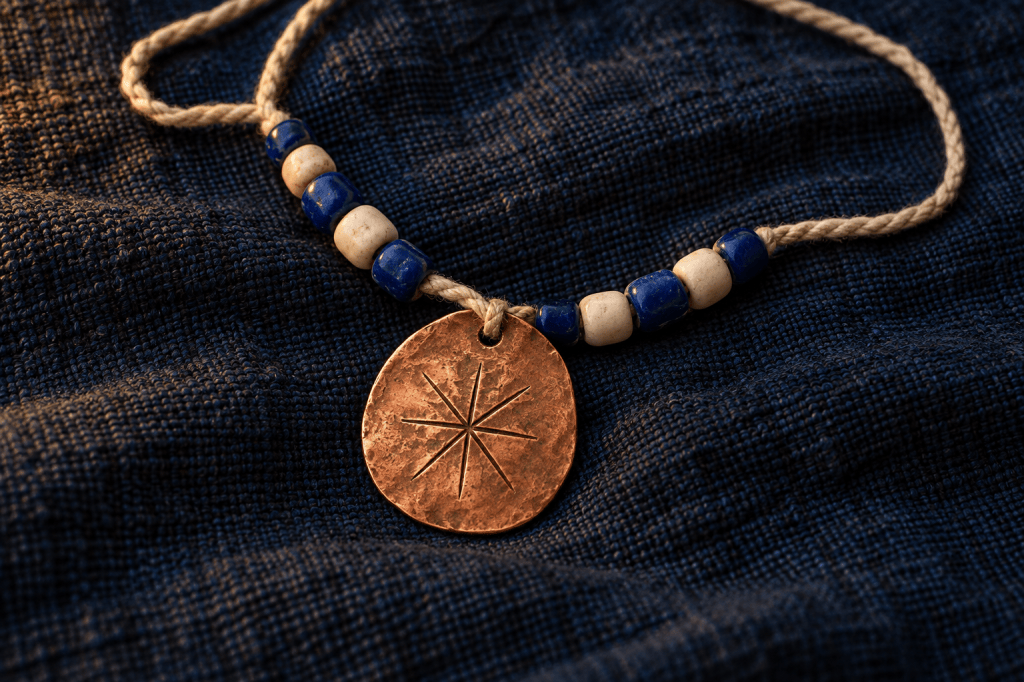
If you look carefully, and read with attention, the starburst in their eyes is a physical trait. Some of the girls have very pronounced starbursts, some have very little. But it connects them to a heritage, people who have known unspeakable evil while also loving with their whole selves.
I love this story.
And I cannot wait to talk about it. Because you’re in this story, too. You’ve inherited things, too. You’ve been hurt, too, and you’ve found ways of surviving, too.
I’ve spent much of my life believing the little girl who was held down, who was raped and then taught to believe that that rape was punishment for existing, didn’t have the right to speak up.
And I was quiet for 22 years.
Quiet, but not silent. I was writing stories. I was profoundly lonely because I felt like an alien around other girls. I was susurrous. But I was not insignificant. Neither are you. You are merely a child of God. Exactly as you are.
For now… come ‘mere; explore a few more pages. Click around to uncover images that change, a song passed down, and portraits of some of the most precious characters I’ve ever written.

