
The Price of a Face
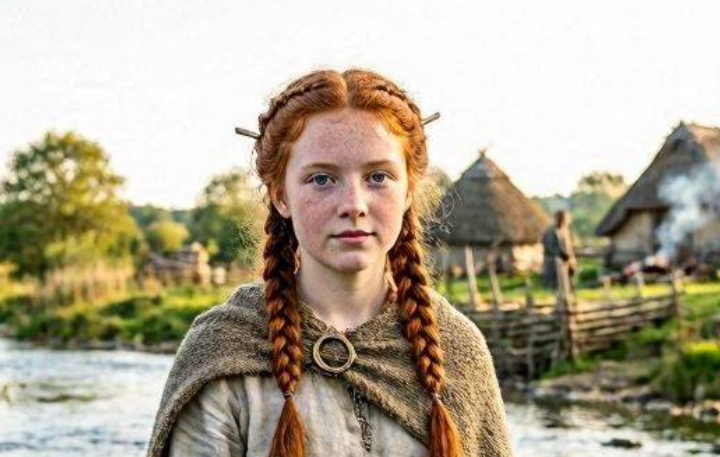
The Worth of a Girl
I did not know, when I was little, that my face had a price.
My mother never counted me in silver. My father never spoke numbers when he looked at me. They measured me in other things: in the trout I could catch with cold hands, in the bog cotton I carried home, in the stories I remembered after the fire had died low. I thought that was how worth was measured.
I was wrong.
The law already knew my value long before I did. It had weighed my voice, my blood, my promises, even the space I would one day occupy in another man’s house. Before I had lived enough years to understand the shape of the world, someone had already decided what I was worth if I were struck, if I were stolen, if I were killed.
We called it the price of a face.
The world of Brehon law, and the ledger that held me
Before there were prisons, there were prices.
In the world into which I was born, a person was not simply alive or dead, free or unfree, loved or unloved, because none of those things told the whole of what the law believed a person to be; beneath the names we were given, beneath the bloodlines we carried and the stories told about us beside the fire, there was another measure, quieter and harder, a number fixed to each life that determined how loudly a person’s pain would be heard.
They called it lóg n-enech.
The price of a face.
It was the worth carried before others, the value placed not upon the soul but upon the standing of the person who wore it, and from that price came nearly everything the law was willing to protect: the weight of a promise, the force of an oath, the compensation owed for injury, the amount a man must surrender if he struck, shamed, or killed someone whose face was worth more than his own.
Injure a king and the debt could empty fields.
Injure a lord, a poet, a bishop, or a man whose name had been carried cleanly through generations, and cattle would change hands, kin would gather, and the law would speak with a voice no one dared ignore.
Injure someone whose price was small, and the payment shrank with it.
Injure someone whose face held no price at all, and in the eyes of the law, perhaps no injury had occurred.
I was born with a small price.
I spent the first ten years of my life not knowing it.
Who kept the law
The law did not live behind stone walls, and no iron door closed upon a man who broke it, because there were no prisons waiting at the edge of our world, no king’s men who came riding to seize the guilty and carry them away; the law lived instead in memory, in the mouths of men trained to hold generations of judgment inside themselves, and in the careful weighing of what one person owed another.
They were called brithemain, the brehons, and they learned not merely rules but stories, exceptions, arguments, old decisions, and the long paths by which one wrong might become another if it were not stopped. They remembered what had been decided before we were born and spoke as though memory itself were a kind of authority.
Their judgments passed from one generation to the next until, long after my time, they were gathered into collections such as the Senchas Már, the Great Tradition: an immense attempt to name the worth of things, to measure loss, to decide who owed cattle, land, service, protection, apology, or blood.
It was a world determined to place a fair number upon every wrong.
It was also, if you look closely enough, a map of every threshold a woman could see but was not always permitted to cross.
The price of a face
Honor was measured in cattle and in cumals, a word that once meant a bondwoman and later became a unit of value, as though the life of one woman could harden over time into arithmetic.
A cumal was reckoned at roughly three milch cows.
A king’s face was worth a herd.
A lord’s was high, as was the face of a master poet or bishop, because some voices were believed to carry farther than others and some wounds were thought to darken more than one life.
A freeman’s price was smaller but steady.
A woman’s face was rarely counted as fully her own.
I stood first beneath my father, and then beneath my husband, and had I lived long enough, perhaps I would have stood beneath a son, because the law understood a woman through the man to whom she belonged, as though she were a reflection and he the body casting it.
Her worth was commonly reckoned as a portion of his, often half, and her power to act alone narrowed to the same measure. She could not always make a binding agreement, swear an oath with the authority of a man, or be believed without the shelter of a male name standing behind her.
For much of what the law cared to recognize, a woman was a dependent clause in someone else’s sentence.
I did not learn this all at once.
No one sat me beside the fire and told me my life would be measured in fractions.
I learned it the way a person learns the depth of cold water, first at the ankles, then the knees, then the waist, until the current has already taken hold and there is no moment you can point to and say, Here. This was where I stopped belonging to myself.
The kin
No one in my world stood alone.
Every free person belonged to a fine, a kin-group, and the kin were not merely family in the way a child understands family, as the people whose voices she knows in darkness or whose hands pass food across a fire. They were protection, reputation, inheritance, obligation, and law gathered into one body.
Land belonged to the kindred.
Honor belonged to the kindred.
So did disgrace.
A person carried the name of the whole kin wherever she went, and when one life was marked by shame, the stain did not remain upon that person alone, because a wrong could become a debt and a debt could travel through blood. This is the arithmetic beneath much of my story.
A woman who left her husband did not simply walk from one house into open country. She walked toward the people who had given her away and hoped their door would open again. She asked them to bear what she brought back with her: the failure of the marriage, the anger of her husband’s kin, the questions of the community, the possibility that others would say her family had raised a disobedient daughter or accepted back a wife who should have endured more quietly.
My father had a name to keep.
His father had carried it.
His father’s father had carried it.
To open the door for me might have meant taking my fear into his house, but it might also have meant allowing my shame to enter with it, and a kindred measured itself by the cleanliness of the name it passed forward.
That is not the same as saying there was no cruelty in refusing me.
It means the cruelty did not belong to one man alone.
It belonged to the ledger.
It belonged to a world in which the protection of a name could weigh more than the body of a daughter asking to come home.
The law was not only a cage
This is the part people do not expect.
The law did not deny women every door.
In the Cáin Lánamna, the Law of Couples, marriage was not described only as obedience, possession, or the joining of one life beneath another; it also accounted for property, for what each person brought into the union, what each managed, what each was owed, and under what circumstances a wife might leave and carry something of herself back out.
A husband could fail in the eyes of the law.
He could fail to provide.
He could lie about his wife or shame her before others.
He could abandon her for another woman, enter holy life, or prove unable to father a child.
There were conditions under which she might leave without losing everything, conditions under which the law recognized that the husband had broken the marriage before the wife stepped outside it.
On parchment, I had exits.
That matters because a world with no door is cruel, but a world that builds a door and then bars it only when a particular woman reaches for it has made a choice.
If the law worked for one wife, then its failure for another was not simply the hardship of an ancient age.
It was betrayal.
The world knew how fairness might be made.
It did not always choose to make it.
The blow that leaves no mark
The law reached even into the violence of marriage, but only as far as it could see, and that boundary, the line between what could be witnessed and what could be hidden, became the narrow place where my husband learned to live.
A blow that left a lasting blemish upon a woman’s body could require compensation. A visible mark could restore to her something of the honor that had been taken, and under certain conditions, it could help open the way for her to leave.
The law could see a scar.
It could count a broken bone.
It could name a wound that remained when the brehon came to look.
But pain that faded before morning was harder to weigh.
A bruise beneath a tunic could be concealed.
A hand pressed where no one would see might leave no evidence anyone cared to name.
A man who wished to keep both his wife and his good standing did not need to stop hurting her.
He needed only to learn where the visible ended and the hidden began.
Éogan learned.
He learned the places clothing covered and the injuries that softened before another person could ask about them. He learned how to use the walls of a house, the hours before dawn, the privacy granted to a husband, and the language of accident. He learned to measure harm with the same precision the law used to measure honor. He lived just beneath the line.
Everyone knew.
No one could price it.
And in a world where wrongs were counted by what could be proven, a thing without a price could become a thing that had never happened.
This is what my carefully explained bruises were in the eyes of the ledger.
Not injuries.
Weather.
A careless step.
A low beam.
A pot dropped badly.
A fall upon wet ground.
The world accepted each explanation because accepting it cost less than asking what lay beneath.
Beyond price
There was one thing in my world no brehon could weigh, no kin-group could inherit, and no husband could claim.
It carried no honor price.
It could not be married, bartered, sworn over, or put aside.
It moved through the valley before any of us were born, passed beneath the shadow of the cliffs, widened into wetland, and continued toward the sea whether men praised it, feared it, polluted it, prayed beside it, or tried to hold it still.
Water did not ask who my father was. It did not lower its voice because my husband stood nearby. It did not care what price the law had given my face. It carried the rain, the soil, the fish, the roots, the blood, the words spoken above it, and the words no one dared speak aloud.
Everything in my world could be measured except the one thing that remembered me without first asking what I was worth.
The water.
Everything could be priced except the thing I finally ran toward.
A note on the history.
The woman in the bog was laid on the moss some two thousand years ago; the law texts that survive were set down in the early Christian centuries that followed, closer to us than to her. But those texts preserve a far older world — a tradition carried mouth to mouth long before it was ever written — and they remain our clearest window into the customs that shaped a life like Bréaca’s. For readers who want to go further, Fergus Kelly’s A Guide to Early Irish Law and Charlene Eska’s edition of Cáin Lánamna are where this world opens up.

