A Baby In the Forest : An Echoes Excerpt
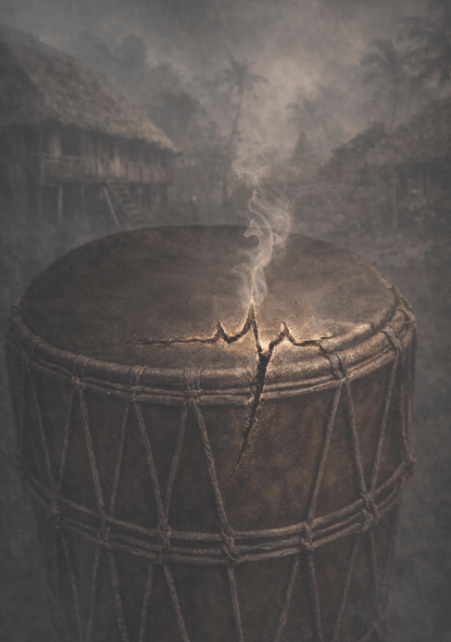
Echoes of a Wild Girl’s Drum is the upcoming novel that will be released this Summer.
Born beneath the shadow of a witch fire, Soryelle learns early that in her village, fear is more powerful than truth.
After watching her mother burn, she grows up on the edges of a remote Papua New Guinea highland clan, surviving on scraps and silence. When the villagers accuse her of carrying the same curse, only one boy dares to see her for what she is: not a witch, but a wild-hearted girl who still believes in hidden places, healing roots, and the possibility of love. Together, Soryelle and Maikel create Kavaru, a secret refuge deep in the forest where the world cannot reach them.
But Maikel is the village drummer, bound to the very rhythms that condemn her.
When Soryelle escapes into the jungle, she is forced to become something both fierce and untamed. The forest raises her. The village continues to hunt her. Years later, she returns carrying a child born of violence and a growing determination to expose the truth buried beneath the clan’s sacred traditions.
As suspicion rises and the feared glasman tightens his grip, Maikel must choose between obedience and the girl he has loved since childhood. To save her daughter and shatter the lies that have ruled their world, he will have to break the rhythm of the drum once and for all.
A sweeping tale of survival, forbidden love, and the courage to speak when silence has become law, Echoes of a Wild Girl’s Drum is a haunting and unforgettable story about the cost of fear and the fierce, stubborn beat of hope.
For me, writing this story has been a whirlwind of intense research into a fascinating country full of amazing creatures (my daughter says the tree kangaroo is one of her favorite animals now!) and heartbreaking superstitions. This excerpt opens section two, The Hollow Drum. Soryelle is 16 here and has lived 9 years in the forest alone.
Please be careful: this excerpt does contain material that could be triggering. Please make sure you are safe before you read.
—
The third strike brings the spark. Quickly, I lay tiny twigs and leaves around the spark, feeding it.
I am very careful about where I build fire. The sound of shouting men; their running feet made thunder in the ground. “Smoke!” I was little then. Little enough that I didn’t think about the villagers seeing smoke. We’ll cover our tracks to show the dragon’s home respect; we leave it as we find it. The memory of Maikel raking dirt over our footprints was the only reason I thought to do the same. I ran, and ran, trying to outrun the villagers. Through branches, their spears looked long and sharp.
I ran to the waterfall… but I knew Bigman would want to search the woods to find who built the fire. He might see other footprints. And, if they had caught me… so I gripped the mossy log with both hands, eased up on it. Holding my arms out on both sides, I edged my way out over the water. I’m right here. Maikel’s voice pushed me to walk. I fell off the log, and almost panicked. I stayed close to the log, using my fingers to grip it and pull myself forward, kicking my legs because it was the only thing I could do.
Somehow, I made it to the other side.
Crawling out of the water, soaked, I looked across the waterfall at the darker woods of Kavaru. I could hear the men, so I tried to find a place to hide. The glade felt more open, brighter, than the woods of Kavaru; walking through it, my head lifted, my eyes widened… I felt seen. Until I found the cave. Deep, dark and small. No signs of markings; animals had not claimed it. So, I did.
I hid there.
No one crossed the log; no one saw footprints I forgot to hide. Except one. You think you’re so smart; they will kill you when they find you. But they haven’t. And now I build fire by the cave. Even he isn’t sure where the smoke comes from. They think it’s villagers of a neighboring tribe traveling. It’s not, is it? I never answer.
I don’t speak at all anymore.
I left my voice at the stake.
My breath curls white in the air. The dew soaks the grass and numbs my feet. Fire before daybreak is worth the risk in the dark. The wet season means I am rarely dry, the ground is rarely dry, and I shiver until daybreak without the fire.
I breathe in sharply, quickly, through my nose, my hand curling around my rounded stomach. The pain grows stronger. When the sun disappeared, it was not like this. The clenching makes me grunt, my eyebrows furrow across my brow. Instead of fifty breaths, they come now every thirty.
It is coming.
But not here. My babe will be born in Kavaru.
The fire crackles, sparks flying into the night air. I pluck a leech off my arm. When I stand to place a log onto the flames, another cramp attacks. The pain makes me lock my elbow against my stomach, doubling over. The tools. The tools are in Kavaru. That was twenty-seven breaths. Panic rises. Instead of placing the log on the flame, I gather handfuls of dirt, throwing it into the fire. It only takes me moments to choke the flames.
The rushing of the waterfall grows louder as I walk quickly across the wet, muddy ground towards it. The openness of the glade shrinks the closer the waterfall gets. I close my eyes, staring at the log, inhale deeply and slowly, through my nose. I can hear my heart.
I know the risks.
The pain may come while I’m on the log; it may be strong enough to knock me into the water. I pull my bottom lip between my teeth, glance behind me towards the darkened glade, then look across the dark water towards home. I’m safe here. I can do this here. Your mother used this, he said that as he passed a handful of ginger. And you’ll need these. The sharpened bamboo blade. These lie at the base of Kavaru.
I step, the moss cool and slick against the soles of my feet. I cross this log many times—the glade has banana trees and guava. Sugarcane grows by the waterfall on that side. I can cross it now.
Twenty.
The pain feels sharper, almost like wild pigs charging through my belly instead of a vine being twisted. Fifteen, sixteen, seventeen… I grunt, my shoulders curving. You will never do that again, do you understand? The force of the blow to my face knocked my head sideways. I didn’t bite him on purpose; my jaw just locked, my teeth trying to keep him out. I shake my head once, hard, push my feet to keep moving. The moment my toes touch the wet ground, relief bursts through me.
Home.
The wet months mean the whole forest is a muddy landslide. Climbing up the small embankment makes me slip and slide down to the bottom. I notice the duiker’s prints: they look fresh. I glance around, but the animals hide. Kavaru is darker than the glade; the canopy thicker, moonlight streams in broken beams through rare patches.
Thirteen. The pain rips through me like a python squeezing until I cannot draw a breath. It pushes me to my knees, my fingers digging into the wet soil beneath the Kavaru tree. The strong cord I pulled from bark lies nearby, the sharpened bamboo blade he bought, and the small woven bilum. It’ll need to travel. Fear collects in the pit of my chest, spreads through my whole body until I feel both cold and flushed. His hand pushes inside, hard, again and again, and I twist, trying to get away but there’s no where to go, so I use my fist to hit his shoulder, pounding the white scar as many times as he pounds me.
The urge to push swoops through my body like angry birds. It isn’t just fear that shoves me forward, my belly contracting with the strength of my push. Something is inside me; something as always been inside me. My fingers shake as they move inward, trying to feel what’s happening to me. I can’t count my breaths anymore because they’re coming so fast, one after the other, fast like my heartbeat. The waves hit me like the waterfall in flood season; they are impossible to stop.
To keep from screaming, I twist my head sideways and bite my upper arm. The very center of my body feels swollen and on fire. It feels like I’m being pried apart. The worst of the pain comes as I bear down, pushing harder, biting my skin until the metallic taste of blood swells on my tongue.
Something shifts in the trees. Two round eyes shine from the branches above me. A cuscus clings to the tree. Its stillness makes me want to scream: how can something be still when my insides are on fire? She watches as she watches everything: still, quiet, curious.
I fall back, my eyes feverishly looking for the patch of sky. There – there it is; three stars tonight. I stare at the brightest, pushing again and again, holding my breath, my elbows cracking the earth beneath me and then…just as suddenly, my palm feels something. Wet and round, small enough my palm curves around it entirely.
My breath catches. I force myself to bear down, hard, harder than ever before, my breath held between fear and awe. My fingers move as the baby slides out, all at once, into my hands.
I tremble, tears blur my eyes.
The baby doesn’t cry. I hum, using one hand to pat the ground. I know it’s here, I saw it where was it? Panic stills my thoughts, as I hold the baby’s head between my legs with one hand and use the other to frantically search. When my fingers hit something smooth and sharp, I breathe. There it is: the bamboo blade.
I lay the baby on my skin, grasping the vine connecting us. It’s thick, as thick as my finger, and pulsing like a small, frightened heartbeat. It’s thicker than I thought it would be, warm and slick. When I press the bamboo blade to it, the fibers, tough as a wet vine, resist, push back. My body tightens, as though it can keep him out. The sharpened blade slips against my wet hand. The baby still doesn’t breathe, so I saw faster until it gives way with a soft, rubbery snap.
My fingers drop the blade, and I pick the baby up, hoisting to my chest, panic surging through me. The joey didn’t cry. Hidden beneath the brush, the tree kangaroo licked its face again and again. I sweep my fingers through the baby’s mouth, turn it downward and pat its back while my fingers tremble. Its skin is wrinkly, the color of dry dirt. Suddenly, I hear it: a tiny, wobbly cry. When I turn the baby over, my eyes sweep down.
A daughter.
My baby is a girl.
Something shifts deep inside of me.
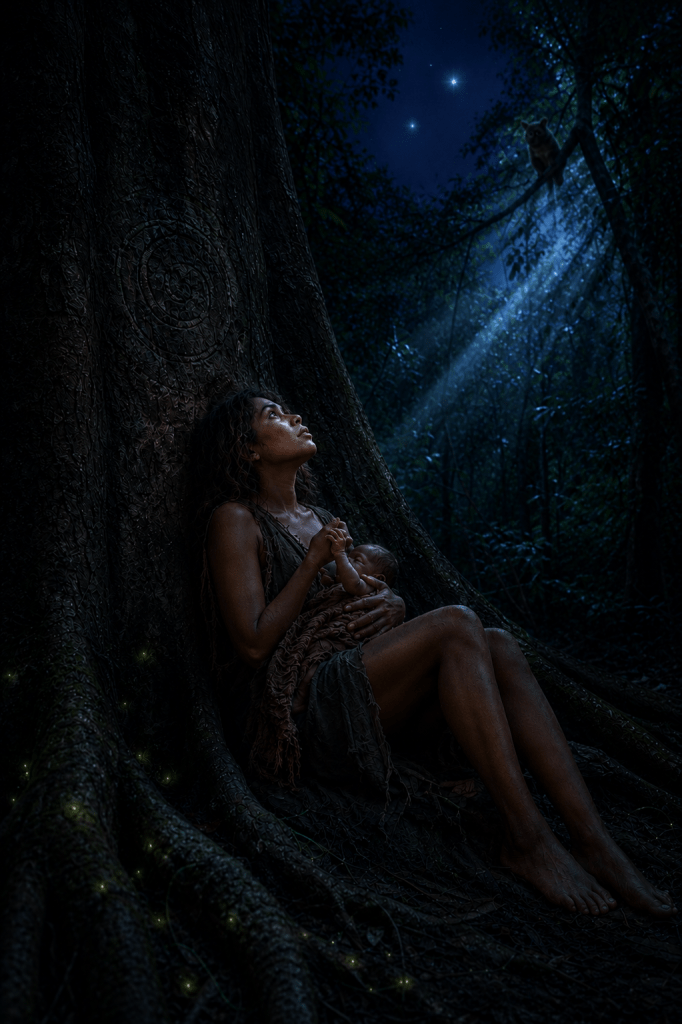
The cry becomes stronger. Gently, I offer her my breast. Wet mucus still clings to her; I’ll clean her like the tree kangaroo cleans her young. When she latches on, I feel her tiny fingers curl against my breast, and my heart skips a beat. Pulling a banana leaf near, I wrap her in it, then I pull the bottom of my dress up. It’s blood-stained, darker at the edges with fluid, but it will give a little more warmth. Leaning against the Kavaru tree, I tip my head back. The faint outline of a spiral catches my eye.
I glance down at her again just in time to see her eyes open. They are brown like wet chestnut bark, round and…alive. They glisten, and in them I see something I’d forgotten until this moment.
A small girl with black hair and wide eyes jumps back, surprised, laughing out loud when the village’s dog leaps up, putting its paws on her shoulders and licking her face. A little girl laughing as a woman, her mother, nuzzles her neck with kisses. A girl’s midnight black strands whip across her face as she rises to her toes and spins; a boy watches her and says, “I wished for another dance.” A girl staring at the full night sky from the top of a tree, saying there were “a hundred million” stars.
My eyes blink. When I touch the tips of her finger, she wraps it around mine. The tiny finger curled around my dirty one makes my heart light up like the glow worms. I’ve told you – don’t touch my baby ever again.
She killed my baby!
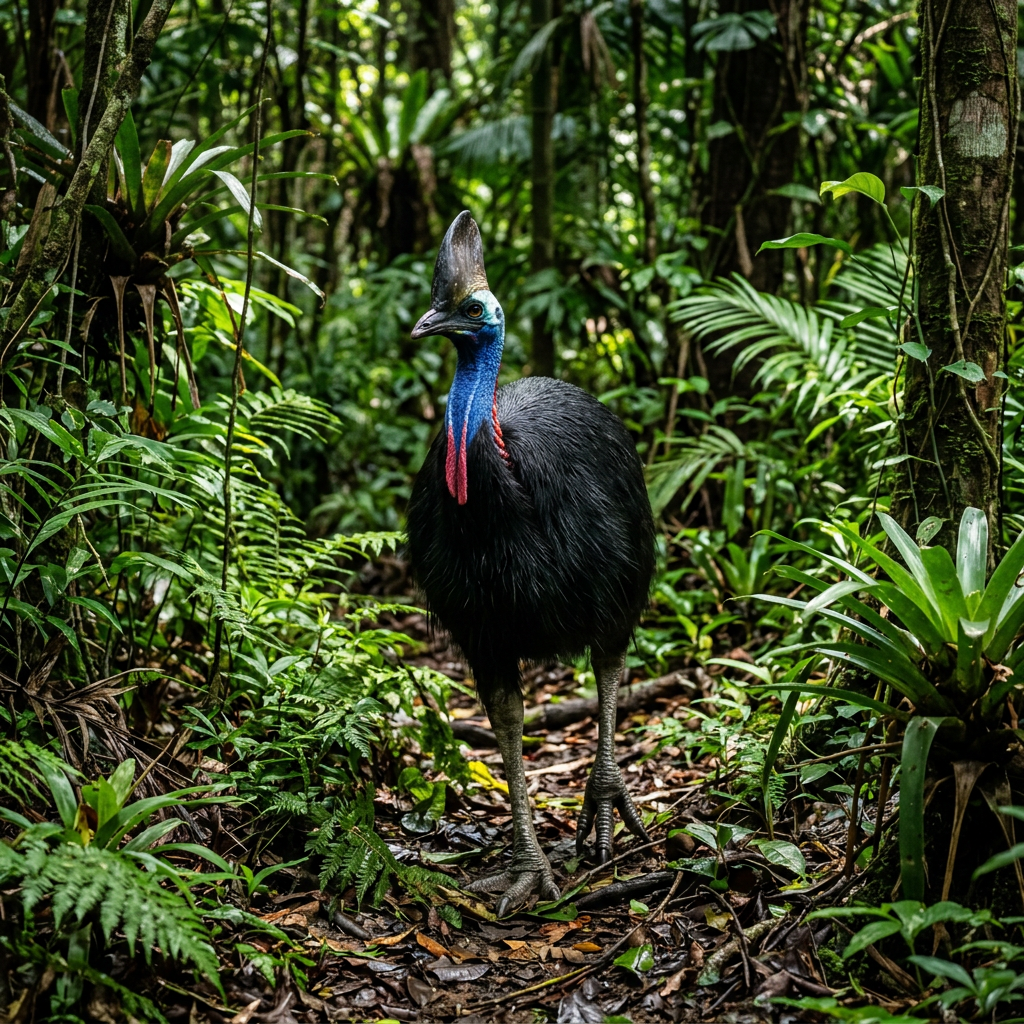
Fear spirals in my belly, but I can’t pull my finger from beneath hers. She has a small dent in the center of her chin, and no hair. I snuggle her closer, absently pat her back. The owl cries from somewhere deep in the forest; the cuscus slowly moves back against the bark, out of sight, and the crickets sing. I stay so still, and I stare at this baby long after she closes her eyes in sleep. When the owl makes its last call and I hear the distant boom…boomboom…boom of the Heartbeat call, I’m still staring at my daughter.

You’re of course not capable of being a mother. I’ll take it somewhere it will be safe when it comes. My foot taps rapidly against the soil. I hold her rocking back and forth, patting her bottom. I will not carry her over my shoulder. Slung over his shoulder, all I could see was his back and the ground. Dust disturbed as his meet lifted, fell. I want her to see the sky, not just the ground. He hasn’t come yet, but he will. He will. And, when he does, he’ll take her.
The sound of his laugh chills me. You’re shaking your head like you have a choice. This isn’t your baby. It’s mine. You’re just the way it gets here. This last time, his voice in my ear as he hurt me, turned soft. You want it, don’t you? The baby? Been a long time since you ate a baby’s heart, hasn’t it? Did I do that? Sometimes my brain feels like the early morning mist—foggy, and I can’t remember.
But it’s not foggy about some things.
Ash from when they burned Nángi still paints my toes. I don’t know where to go. The butcher doesn’t want me sleeping in the alley. The apothecary said it made villagers nervous when they saw me sleeping in front of the shop. The grass behind the Spirit House makes scary dreams, and the worn path by the village well smells funny. I saw a snake bigger than me there one time. I tried sleeping in the burnt circle, where the hut was, but it makes me cry too hard cause I can hear Nángi there. The meadow is too wet, and too open. It makes me shake like leaves when spaces are too big. The only place left is the here; the quiet patch inside the tree line.
I listen for wild pigs. Sometimes, I think I hear them, and then I run back into the village and sleep by the courtyard. Bigman says no, I can’t sleep there. He says if there was a raid on the village, no one needs someone in the way of the gate. It’s not safe, that’s what he said.
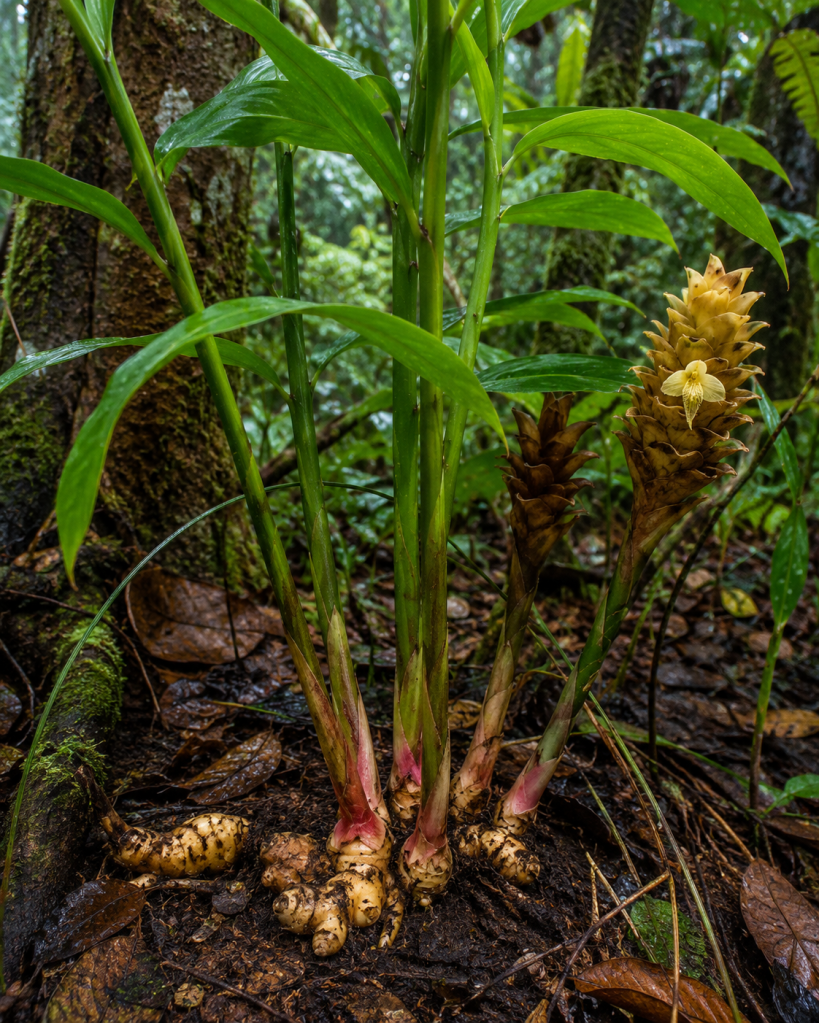
The foggy part comes back. My body fights to remember but what happened first or third or last is hard hazy. The forest is dark. Can’t even see streaks of the moon. Nighttime birds call; I call back. A hand – big, hairy, the hairs were black and not soft – pulls me deeper into the woods. You’re mine now, like your mama was. Smoke and dust heavy in the air. His face changes when I twist, try to pull away, and he jerks. “Better learn now—you don’t pull away from me.” He pulls away the strap that holds his woven covering. There’s ginger growing there. It’s low to the ground, as if it hides a secret. I stare at its wide and shiny leaves; they’re shaped like fat hearts painted with rain and smooth, like the skin of the frog. I can only see the flower because I’m lying on the ground.
How am I on the ground? Arm. Pulled. The flash of the canopy turning sideways above me. When he grips my chin, it hurts. I cry. His fingers dig into my skin. He says something but it’s muffled under the water in my brain. Water sloshes. Slosh, slosh, slosh. That’s what words sound like here. The leaves are louder. The crickets are louder.
When his fingers push under my dress, hurting me until I can’t see anything else, until I start screaming, “No, I don’t want to. Stop!” Does fire burn like this? He tells me to “…shut up” but I can’t, I can’t.
“Honeysuckle blooms where fear gets in, ginger for the shaking—”
My eyes find the flower again, the ginger. Ginver stops the shaking. Would it stop the shaking of my body? The way the damp soil rubs against my back, the way the trees bend and shake real fast while he grunts like wild pig. Wild pigs might eat me. The ginger flower don’t grow toward the sky.
It hides, round and chubby, like an animal sleeping with its mouth half open. Ginger is the a dark red but the blood is bright when he sticks me with something hard. I jerk my eyes off the ginger and scream again. He pushes his palm against my throat. I think he’s pushing me into the ground. Am I going to disappear into the ground like Nángi?
“Stop singing, stop screaming, just be still,” his voice sounds like rocks striking each other. “The ginger flower is like a secret cave.” I can’t find the ginger. I can’t find it. The air gets trapped in my throat; I can feel my heartbeat pulsing against his fingers. Then – there it is. The ginger again. “It’s a secret cave for fairies.” That’s what Nángi says. “Scratch the root, like this, and smell it—what’s it smell like?’ His breath is hot, heavy, and smells like dust and smoke. No. The ginger. Ginger smells spicy and warm. Peppery. I twist my head, trying to smell something other than dust, something other than the smoke of fire, but I can’t.
I shake hard when he leaves.
“Your blood – little witches like you need new blood. Yours is poisoned. I gave you new blood, so you’ll thank me.”
I scramble away, pulling the edge of my torn dress down, my eyes sticking to the blood soaking into the soil, staining between my legs. My blood is coming out. My breath hitches high, my heart pounds, and I start to scream. His hand comes down hard, clamps over my mouth. “Swallow it.”
I swallow hard, past the lump in my throat. Tears fall from my nose onto his hand over my mouth, I scoot back further, trying to breathe, but my grips the back of my head, holding me still. I think I’m dying.
Where do dead people go?
Will he eat my heart?
My mind drifts again, my eyes floating up, up, up to the treetops. Something moves in the branches; a spot of fur. I stare, trying to see it, his voice fading until all I can hear is the wind whistling in the trees. I don’t know what he says, but he leaves. I squeeze my legs together, tight until the muscles ache. If I don’t, more blood might come out. And I sing. I forget some of the words, though, but it helps slow the tears until I can breathe.
Hold me when the dark wind cries, little star up high
Little star, don’t go, stay where I can see
If the shadows… something, something… little star, hold me
Honeysuckle blooms where fear gets in, ginger for the shaking
Something,…she just walks, she just something, something
Hold me little star, little star up high, hold me.
My legs clench first, like they know something comes. Then my teeth grind, and my arms start shaking. When I look at my daughter’s eyes, I remember girl, trying to find ginger and honeysuckle. He will come. He will come and take her. And, if he takes her, I’ll never see her.
I step over branches, shielding her head with my elbow. I’ll take it somewhere. Where? He rubs me into the ground; sometimes he uses leather against my skin and, if I try to move, he squeezes my neck until the stars fall from the sky.
She cries.
I offer her my breast, but she doesn’t latch. I bounce my arms, humming. I can’t sleep. Every time my eyes start to drift, I worry about an animal finding us. Would a cassowary peck her? What if I didn’t hear the pigs in time? What if I don’t hear him?
When she cries, I split a short length of sugarcane with the bamboo blade and chew one end until it softens. When I press it to her mouth, a bead of sweetness touches her tongue. Her cries hitch, then soften into smaller sounds.
We’re very close now. I need her to be quiet.
There – there’s the Clan Mother’s hut. Smoke rises from her chimney as the sun begins its descent. The door to the hut is closed, but the window is open. I see her through the window, her arm pulling a basket off a shelf.
There were baskets in our huts. Baskets and bottles of herbs.
The baby wiggles, a tiny cry comes. I shift, offer her my nipple, rubbing it against her mouth until she opens, latches on, tugs. My eyes move back to the hut. The Clan Mother sits now. I can only see her face. I can’t see her hands, but I’ve watched her long enough that I know she’s sewing something. Or maybe mixing something.
Something makes her look up; I ease back, deeper into the forest, but where I can still see her. She shifts, stands. Opens her door and stares out at the woods. I barely breathe. Only when she turns and retreats inside do I close my eyes and exhale, my shoulders dropping.
My daughter’s hand flails in the air, lands against my chest. She clasps my finger in hers, gripping tight.
My own chin quivers.

I began this work before the rain came, before I felt her tiny movements in my belly. I pulled long strips of bark from trees and kept them inside the teepee until they dried. Weaving them together was harder than I thought it would be. Several pieces of bark snapped; so did pieces of the vine. Some animals, likely birds, stole other pieces of bark for nest building. I press large banana leaves into the basket, layering it for extra softness.
He came last night.
I held the baby close to me, and wouldn’t put her down. He told me to give her to him, but the thought of her in his arms broke something deep inside of me. I don’t want to lose her. My chest feels empty without the weight of her small head against it; my tender breasts feel heavy and ache unless she is fed. I thought I’d see him in her face, but I don’t. She is mine.
But I cannot keep her.
“Alright,” his voice was amused. “You can have her tonight. I’ll make arrangements. That will be better for the village. When I come back, she goes with me.”
I swallow hard.
My hands tremble as I lift her weight away from my skin and lay her gently in the basket I’ve made. She wiggles, fusses, but quiets when I hum and give her my finger to hold. My eyes fall to the strip of grey cloth. It’s the only part left of the grey blanket the Clan Mother laid before me while I was strapped to the stake.
Nángi stood close to the Clan Mother; they clasped hands.
I pick her up from the basket, let her rest against my skin, rising to my feet. She won’t be dirty like me. Her blood won’t be tainted. The pool feels like the sky melted into the mountains; cool enough to sting. Too cold for her. But I dip my hand into it, swirl my fingers, then lift and gently wash her tiny face. Her rounded cheeks, her button nose, the starlike mark that matches mine near her eye, the small dent in her chin. I hold her tiny fist in mine, gently pushing my finger between hers to open her hand so I can wash her palm. She gurgles, her feet kicking against me, her other hand flailing.
I lift the end of my dress, wrap her in it, dry and warm her. The sound of my rumbling stomach makes me wonder if she’s hungry; I don’t want her to be hungry. I tell myself it’s time but I think about the weather. When the sun dips, it becomes cool here. Will she be warm enough in the basket? She’s always had the heat of my skin. She’s never known a night without it. Since she was born, I’ve never known a night without her against me.
But building a fire in Kavaru is too risky.
People might see.
When we get back to the tree, I wrap her in layers of banana and pandanus leaves, tucking the edges around her. I hold her in my arms because I want to remember her weight and carry the basket with other hand. I’ve waited as long as I can. He can come back at any time.
Stepping out from the tree line makes my heart beat fast. They think I’m dead. I haven’t been out of the woods in nine winters. Only he knows I’m alive. Feeling the air rush across my skin, my eyes never stop moving. The sky cries, its colors spread across the horizon in orange, yellow, and purple. The Clan Mother lives apart from the village; no other hut stands beside hers.
I close my eyes, count my breaths: one, two, three.
I bend and sit the basket in front of the door. The baby’s eyes are closed. Her stomach full, her body bathed and swaddled. When I lie her in the basket, her head turns toward me, her hand rises in the air, searching. I reach my finger out and she grips it, as she always does, pulls it to her mouth. I pull my bottom lip between my teeth and almost pick the basket up and run back home.
But, if I do that, she will know him.
I clenched my legs together so tightly the muscles ached. I couldn’t sleep for fear that, if I drifted into slumber, my legs would loosen and I’d bleed to death.
No. The word feels strange, even in my thoughts. I don’t know its shape. But I know I can’t live without knowing where she is. Gently, slowly, I pull my finger from her grasp, bend down, and press my lips to her forehead. The sound of the Clan Mother moving inside pulls me upright. I turn, run.
Only when I am safely behind the trees do I take a deep breath and then make a guttural sound loud. “Boom. Boom. Boom.” I picture a cassowary stomping across the meadow and I wait.
When nothing happens, I call again—“Boom. Boom. Boom” — mimicking the cassowary’s loud, bellowing sound. It vibrates across the short distance from the tree line. I shift and start to call again when I see the Clan Mother in the window. A moment later, the door opens.
She stares down at the basket, looks up and around.
She steps out of the hut, walks two steps towards the woods. Carefully, silently, I move back. The baby’s cry turns her around. When she leans down, all I can see is her back; my breath catches in my throat.
One more glance, I beg silently. I just want one more glance. Please turn around. Then she does, and I see her cradling the baby as I have. She bounces it, her eyes looking out toward the trees. She pauses, then picks up the basket, and steps back inside. When she closes the door, I stare at the window, my breath held.
But I don’t see her—she doesn’t come to the window. I wait and wait until the sky darkens and my skin shivers. Only then do I turn to walk back into Kavaru. Only when I am near the tree again does a memory strike me like a drum: the missing last words of the lullaby: she just walks, she just booms.

