Portraits of a Character: The Loudest Scream
Over the last 35 or so years, I have woven together 130 books—novels, short stories, young adult narratives, and tales for children–the titles of which can be viewed here. From the very first character I can recall, a gentle spirit named Shelby, to the latest female protagonist, Evariste, whose transformation from sheltered and naive to resourceful and purposeful healed pieces of me deeply buried, these characters have sheltered my heart. Their presence acts as both a constant source of joy and also a numbing agent potent enough to keep me afloat.
I was sexually abused from a very young age and, during those moments, I found refuge in the vivid stories of imaginary figures who danced around me, performing clear and cinematic scenes destined to become a chapter in a book. Their stories softened the jagged edges of my pain. Sometimes, I only felt the physical pain after he left the room, so invested in the stories on the ceilings was I. Afterward, when I’d write, returning to the world I’d watched earlier, to the characters’ stories, I’d walk away from the pain of mine. Revisiting them, either by writing or reading it afterwards, made the anguish, the panic, and the terror of my real world fade, much like dew evaporating under a morning sun.
Creating stories was far more than a mere pastime; it was a lifeline, a tether to hope. I was in the fourth grade when a beloved teacher, Mrs. Krutsinger, first invited me to read one of the Mickey books aloud to my classmates. Mrs. Haymer, in the sixth grade, allowed me to do the same. Between 7th grade and 12th, I’d have three teachers who would read some of the novels I’d written. Sharing the stories revealed my innermost secrets out loud, with real people, and, when someone would talk to me about the characters or their stories, I felt seen, and heard. Years later, I’d be able to say really hard words like rape and abuse out loud because my characters had paved the road: they’d been saying those words for years. Characters like Abrielle in “Me” or Arianna in “Dreams of a Dancer” absorbed my pain, allowing me space to feel joy and hope.
And, so, this Portraits of a Character series allows me the opportunity to revisit some of my most beloved characters and what attributes they afforded me. The backstories to these characters can help pinpoint where I was at that time and what I needed others to know.
Daphne: The Sound of Silence
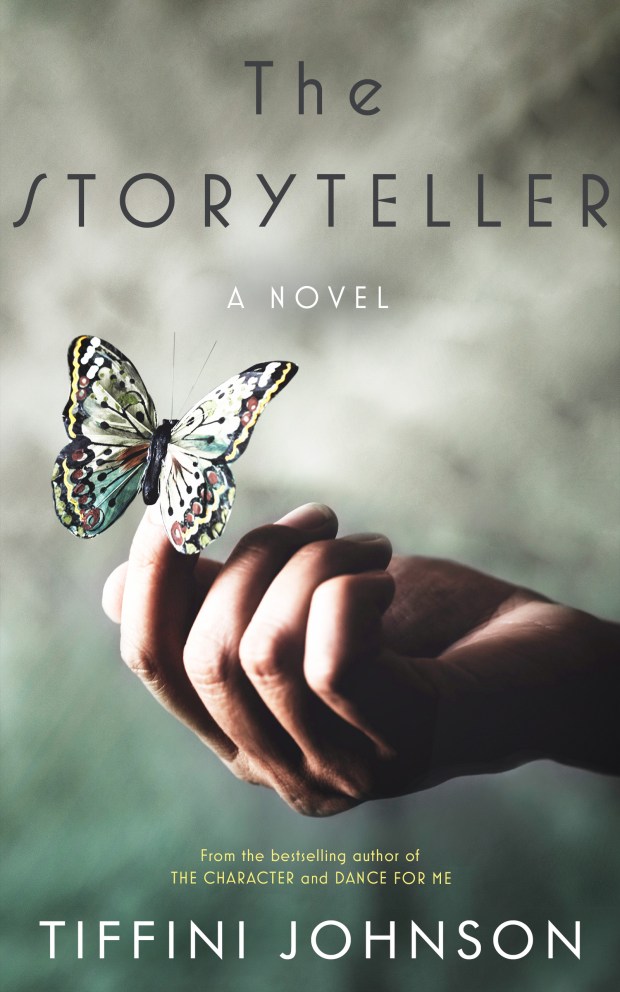
November 2021 saw the world recovering from the Coronavirus 19, a global pandemic. The total number of direct and indirect deaths attributed to COVID is over 3 million.1 I remember daily checking to see updated death tolls. My daughter became very sick with COVID early and, to this day, has not regained her sense of smell, has been through two bouts of pneumonia and has seen her asthma worsen since having COVID. In 2021, vaccines started arriving and becoming commonplace. In addition to recovering from COVID, a host of other global events rocked our nation and world in 2021 including: the Taliban returned to power, the United States capitol was attacked on January 6, Ethiopia’s civil war was in full swing (it ended in 2022), and Joe Biden was elected President of the United States. Amid this chaos, something else happened: The Storyteller was published, bringing Daphne’s story to life.
Born in Ginger Belle, a small Southern town south of Atlanta with a population of 385 people, Daphne lives in total isolation. Her mother, Dana, is a Harvard graduate who teaches English literature but feels stuck in a monotonous existence: she dreams of freedom, of not being tied to a paycheck, of a simpler way of life. Daphne’s father, Dusty, is a schizophrenic who sees a figure he calls “Black Owl”. Dusty hails from a family with an abusive father who talked to “fake people.” When Daphne is four years old, Dana decides she’s had enough of his drinking and lies. She tells him she’s going back to Nashville and, when he realizes she’s serious, Dusty snaps, murdering her while Daphne watches.
From this moment on, Daphne stops speaking.
Dusty never wanted children. He believes Daphne is out to kill him, so he locks her in a box. When the hallucinations and paranoia convince him that the only way to rid the threat is to clean her blood, he resorts to rape. Subjected to a multitude of horrendous abuses, including being tied up, forced to “beg” for food, and to endure outbursts of violence, he doesn’t kill her because he knows her mother, Dana, loved her and he fears retribution from spirits if he harms his wife’s dream. Daphne’s only comfort is a dog who lies besides her.
Eventually, when he doesn’t return home after several days, hunger forces Daphne to venture beyond the gulley. She and her dog go walking until they find a beautiful home with fruit trees and a large garden. She steals a sack of eggs and apples and kills a chicken to take home. The next time she returns, it’s because Dusty has injured her dog, and she wants the owner of the home, a doctor, to help him.
From this point forward, the story is one of redemption. Cole teaches her what stability is, teaches her to read, introduces her to fairy tales, and strengthens her confidence. What they don’t know is that their families are tied by a violent storyteller who charmed Cole as a child and then upended his life. Both of them have been scarred by violence and evil, and both hide behind walls of silence.
..
Silence is the most powerful scream.
Daphne doesn’t speak.
For fourteen or so years, she’s been mute.
Selective mutism gained publicity in 2007 when Seung-Hui Cho, the Virginia Tech shooter, was found to have been diagnosed with it 2. Studies link it to anxiety disorders, not necessarily trauma and most children who exhibit the disorder only have difficulty speaking in certain environments (i.e., at school) but speak well in other situations. 3 However, I first learned about selective mutism by reading Torey Hayden’s books (all of them) in high school. She was a special education, extraordinary teacher who worked with several extraordinary children who suffered abuse. One was a boy who hadn’t spoken a word in 8 years. With Daphne, I wanted to explore the symbolism of silence as it relates to abuse.
I didn’t tell. Not when I was five or eight or eleven or sixteen or twenty-two. I didn’t tell anyone. Not teachers I trusted. Not my sister or my mother. No one. I was afraid, yes, but it was more than that. One of the greatest lies of abuse is that it is your fault. Think about this. If you really, genuinely believe that rape is your fault — what would telling someone you trusted mean? It would mean that, for you, you’d be laying your worst self, all of your sins, out on the table for the people you love to see.
Social media proves no one likes to do that: we post the good stuff, the highlights, the Instagram-worthy moments of our lives. We post the stories that show our best characteristics, the pictures taken in the best lighting. We call people who post without make-up or post their dirty houses courageous because doing that means admitting they are not perfect. If we don’t even want to show our homes in disarray or our faces without make-up, why would we volunteer to tell someone something that we believe makes us dirty? Short answer: we wouldn’t. Not without strong incentive or really strong support systems already in place. Even with those things, disclosing abuse brings up feelings of shame and is scary. Silence feels like protection: we can’t get in trouble if we’re quiet and obedient, and we might not lose our friends if we show them how dirty, how bad, we really are.

Daphne believed she was evil. She’d been repeatedly told that the Devil lived inside of her. Only rape might cleanse her blood. She believed this. Minimizing herself, making herself as invisible as possible, controlled the evil. In the story, Daphne repeatedly worried about staining the carpet: she sat on the floor because she feared soiling the furniture. Dirtiness in sexual assault victims is not new. One study found that 70% of women experienced an urge to wash after an assault and 25% of those felt those urges up to a year after their traumatic experience.4 A study published by the National Library of Medicine found feelings of dirtiness were unique to sexual assault survivors compared to survivors of non-sexual attacks.5 That same study found higher levels of post-traumatic stress symptoms in women who felt dirty. So, in short, sexual assault can lead survivors to internalize feelings of dirtiness.
I would take two or three showers a day as a teenager. This feeling of being permanently stained, dirty in a way you can’t wash off, has followed me all my life. Sometimes it feels gritty like dirt. Other times, it feels like there are ants crawling deep inside my skin and, no matter how many times I try, I can’t get them out. The dirtiness stained everything around me. The image reflected in a mirror has always confused me because it has never matched what I see myself as. I used hairbrushes to make bruises on my body because bruises looked dirty. It more closely resembled what I felt I was really like. When I see other women, I feel less than, inferior, because they aren’t dirty.
To tell someone about the assault is about more than telling someone that you’ve been sexually assault. It is to tell someone that you believe you are permanently stained or, worse, that the abuse revealed who you are really are.
Why then is it surprising that, according to the Department of Justice, less than half of sexual assaults were reported to police (in 2024)?6
Silence is a powerful scream. It’s a scream that details the profound impact of sexual violation. Silence is a scream that voices the fear, shame, and mental anguish the survivor goes through. In The Storyteller, she watched her father murder her mother for daring to suggest she was going to leave the relationship. To her four-year-old self, words took away her world.
If the world would listen, they’d hear an agonized scream in the silence.
Talking to the choir, hero, I know you can.
This is my favorite line in any of my books.
When Daphne is ready to confront her father (which very, precious few of my characters ever do), she and Cole walk down the hall of the mental institution where he resides. Daphne begins to panic. She stops walking, contemplates turning back. When Cole steadies her, she takes a deep breath and mumbles, “I can do this.”
Cole smiles and says, “Talking to the choir, hero, I know you can.”
When I wrote it, it made me stop. Then it made me cry. I’ve never considered any of my female characters heroes. And I most certainly have never thought of myself as any sort of hero. But, if you do a word story on its origin, here’s what you find:
- 14th century, Old French heroe,
- that’s derived from Latin heros, “demi-god, illustrious man”
- This is derived from Greek hērōs – and this is of uncertain origin. One theory says it may originally have meant “defender, protector.”
I can (easily) slide down, oh, fifteen or so rabbit holes with this definition but, ultimately, what I really want to point out is that silence is a defense mechanism–it’s a way of protecting ourselves from outside threats, like the abuser, but also from ourselves. Our nervous system would literally rather us stay quiet than drown in humiliation and shame. What our nervous systems forget, though, or don’t know, is that, over time, silence contributes to the shame. After all, if we don’t have anyone to counter the beliefs, to tell us that it is not our fault, then silence can root that erroneous beliefs deeper until they become part of our identity story.
To have the foresight, the words, and the pure courage to speak up, to tell someone the truth, despite fear of retribution and our own bodies’ proclivity to silence, is defending the you who was attacked. For Daphne, it was defending the little girl she had always been. It’s protecting you from a deepening sense of guilt and shame.
Speaking up is heroic because it requires you to trust that you are not who the abuse said you were even if there’s a part of you that isn’t sure. It’s heroic because it’s choosing to believe that you deserved better even when you’re not sure that’s true. It’s heroic because it gives weight and shape and form to the scream that’s been heard only by your heart.
When Cole called Daphne “hero,” something in me shifted. Hero means she is capable of rescuing herself from the pain of screaming a scream no one can hear. Hero means she’s capable of recognizing her own pain–and daring to believe that she’s worthy of comfort, protection… and justice.
Worthiness
By the end of the book, Daphne had morphed into one of my favorite characters. Vulnerable because she’s carrying the weight of a lifetime of abuse. But, make no mistake, she’s also strong. She procured her own food when hungry, she protected her dog, she confronted her father alone and, when attacked, fought back, permanently disfiguring the man. She trusted Cole, which is something bigger than just trusting him. It means she trusted the idea that men could be good even when she had zero evidence to support that theory. And, in the end, she confronted her father a second time because she had been unable to say all she wanted to say to him the first time. She gave the silence a clear voice.
We are all made in the image of God. Every one of us. And we are all unique – none of us are exactly the same. For me, this means that every single living person has the ability to teach me more about God, to lead me into a deeper relationship with Him. As such, every single person alive has a story that matters to me and an intrinsic worthiness that cannot be erased by trauma.
Worthiness isn’t something we obtain. It is something we are.

Resources / References
- World Health Organization. “The True Death Toll of COVID-19: Estimating Global Excess Mortality.” World Health Organization, World Health Organization, 20 May 2021, www.who.int/data/stories/the-true-death-toll-of-covid-19-estimating-global-excess-mortality. Accessed 5 July 2025.
↩︎ - Kearney, C. A., & Vecchio, J. L. (2007). When a child won’t speak. The Journal of Family Practice, 56(11), 917–921. ↩︎
- Camposano, Lisa. (2011). Silent Suffering: Children with Selective Mutism. The Professional Counselor, Vol 1, Issue 1, 46-56. Accessed 28 November 2025. https://files.eric.ed.gov/fulltext/EJ1063047.pdf ↩︎
- Fairbrother N, Rachman S. Feelings of mental pollution subsequent to sexual assault. Behaviour Research and Therapy. 2004;42:173–189. doi: 10.1016/S0005-7967(03)00108-6. ↩︎
- Badour, C. L., Feldner, M. T., Babson, K. A., Blumenthal, H., & Dutton, C. E. (2013). Disgust, mental contamination, and posttraumatic stress: unique relations following sexual versus non-sexual assault. Journal of anxiety disorders, 27(1), 155–162. https://doi.org/10.1016/j.janxdis.2012.11.002 ↩︎
- Tapp, Samantha N., et. al. (September 2025). Criminal Victimization, 2024. Criminal Victimization. NCJ number: 310547. https://bjs.ojp.gov/library/publications/criminal-victimization-2024 ↩︎

