Grief: An Excerpt

This is an excerpt from Remember the Nightingale . In this excerpt, the war is over. Evariste has known for a hundred days that her family is gone but, in this 100 days, she’s experienced more trauma than she ever knew existed. She’s been forced to run, she’s hidden amongst the dead, she’s been raped, she’s seen friends murdered. She hasn’t had time to really grieve. She hasn’t had time to grieve.
Until the war is over.
When she realizes she can’t go home, she must start new. But she can’t do that without first saying goodbye to her family.
..

There are no birds.
The sky is anemic blue with small clouds blocking most of the sun’s light.
Bodies lay everywhere: in the middle of the path, in ditches, in the rivers, in the churches. She sees a small red sweater holding the ribcage of a decapitated child. She no longer flinches; she no longer scans the surroundings to find the missing body part, no longer thinks is that someone I knew? The smell of death rises from every inch of the ground and follows her. It doesn’t repulse her anymore because she doesn’t remember what the air smelled like before the war. Unsure where to go, but unable to stay still, Evariste walks. A barefoot woman whose dress is ripped walks past her but does not speak. Littered along the road are remnants of another time and place: scraps of paper ensnared in bushes preserve the thoughts of Tutsis destined to die, strips of fabric collect the dust as it rises in her wake, and broken pieces of water jugs jog distant memories of when going to the well for fresh water was the biggest concern of the day.
Evariste walks. The village market is eerily deserted of people and wares. Just stalls overrun with dogs’ feces, rats and straw remain. Banana peels lay rotting on the ground, the insides long ago eaten by a starving Tutsi. Or maybe by a bloodthirsty Hutu. Hangers that once held clothes handsewn hang empty. Evariste stops, staring at the empty stall that, just months ago, belonged to the baker. Her stomach rolls into knots as she tries to bring back the aroma of fresh bread. There’s no reason to meander around the empty market. She lifts her eyes towards the path, the one no one walks anymore, and takes a step away from the stalls when her eye catches sight of something. She stares at the tiny motes floating in the beam of sunlight bouncing off a silver object. I see the light only because it is scattered by the dust. The thought freezes her mind, and she stands, unmoving, unblinking, captivated by the tiny specks of dust floating randomly through the beam of light. Composed of hair and shed skin and pieces of dead bugs and all the things left rotting on the ground, the dust reminds Evariste of herself. She feels like those motes: directionless, massless, useless, unwanted.
She closes her eyes tightly. When she opens them, she bends to retrieve the shiny object. A bangle. You’ve got royal blood in your veins. Mamree’s face lit up with joy when the woman at this stall gave her the bangle showcasing the cattle. Evariste runs her thumb over the engraving of the cattle and slips the bangle over her wrist. She walks out of the stall, out of the market, and stares at the road ahead. From here, she knows how to get home. She traveled this path her whole life.
But why?
“Evariste?”
She spins around and squints at the sound of her name. She doesn’t recognize the woman at first. Sharp bone lines tell the same tale of starvation that Evariste’s own body knows. Only when the woman walks closer does she recognize Hannah, one of her mother’s friends.
“You’re alive.” Hannah says matter-of-factly, her wide eyes emotionless.
“So are you.”
“Your family?”
Evariste shakes her head, her eyes dropping to the ground.
“None of them?”
Evariste shakes her head . “Yours?”
“My daughter is alive.”
“Where are you going?”
“I’m s’posed to meet my daughter at our hut. There’s still Hutus everywhere. You?”
Evariste looks down the road. “I don’t know. Our hut…”
“Burned.”
“What?” Her eyes move back to Hannah’s.
“Your hut is not there. It’s gone.”
“Gone?” The word swims around Evariste’s mind.
Hannah nods, then says, “You could go to Gaeton’s. I think he’s been caught, though.”
“Caught?”
“They’re rounding up any of the militia who took part in the killings and holding them. Asking anyone who saw them do anything to come forward. There’s gonna be trials.”
“Trials?”
“To make them accountable for all this,” Hannah waves an arm around her. “We deserve justice, you know.”
Blankly, Evariste says softly, “Justice.” The sun starts to spin slowly; white dots dance behind her eyelids; her stomach clenches. She closes her eyes to steady herself and, when she opens them, she says, “When – when are the trials?”
“I don’t know. Probably not gonna be for awhile. But you could go to his hut. Muhira would let you stay with her.”
Evariste swallows. Muhira would let you stay with her. In other words, she doesn’t have a home of her own to return to. She has nowhere to go. Hannah says, “I’m gonna get to my daughter now. Good luck, Evariste.”
Evariste stares straight ahead at the hills. Gone. What does that word mean? Gone where? Her hut is gone where? Her parents and her sister are gone, but where? With nowhere to go, Evariste wants to see the ground her home stood on. She walks, shuffling one heavy foot in front of the other, towards the only home she’s ever known. She spent her whole life in that hut. Memories flash in front of her as she walks. Memories of her Ema’ma, and Papi, and Mamree. Memories of bribing a local boy carrying fresh bananas to market for one in exchange for a kiss. I’m not kissing anyone but Gaeton. The boy shrugged as he pedaled away on the bicycle. Then no bananas for you! Everything she pasts has a memory: that tree. It was the one Mamree climbed when the lion stalked her. He could have climbed the tree after her, but instead Papi found him circling the tree. Papi killed the lion but, even then, Mamree didn’t want to come down. It wasn’t until Evariste said, Mamree, if you won’t come down, I’m going to have to climb up after you and you know what happened the last time I climbed a tree. She fell and busted her wrist. Only when staying on the branch might have put Evariste in danger did Mamree climb down. The village well wasn’t far from here; on a whim, Evariste turns and begins walking towards it. Two bodies lay in the path, just feet from each other. A swarm of flies investigate the fresh carnage. Evariste doesn’t know the dead and averts her eyes. As she approaches the well, voices from the past haunt her. The village is small; everyone knew everyone. Tutsi and Hutu both used this well. Children ran around barefoot. Mamree and Evariste rested at the top of the hill, ate a packed lunch, before starting home again. It was a place to see friends and have a break from the monotony of chores.
Evariste sees a water basket lying on its side in the overgrown grass.
The village men took turns cutting the grass, but it was past her ankles now.
She walks to the well, drops the line down, hears the splash. Woodenly, she pulls it up and tips the water into the water basket. She cups her hands and brings some to her mouth. She drinks two handfuls before she feels the tears staining her cheeks. Suddenly, the thought of going home to see a burned piece of ground is too much. Never seeing her sister or her parents again is too much. She drops to her knees, the water basket spilling, and wraps her arms around her middle. Rocking back and forth, she cries. A trio of crows fly in a circle overhead; she knows they are circling the dead bodies she passed here. It makes her angry. The war is over. She grabs a handful of small rocks from the dirt and throws them upwards into the sky. Scrabbling to her feet, she runs, yelling at the birds until they fly away.
It’s nearly an hour’s walk to where the hut stood.
The sun sinks soon.
She fills the water basket again, puts it on top of her head, as she might have done before, and walks. Memories follow her of Mamree laughing, of helping her mother cook, of telling stories around a campfire with Papi. Gone. What does gone mean? If they aren’t here, where are they? Her legs tingle with exhaustion, the sun has burned her shoulders and her stomach aches with hunger by the time she reaches home.
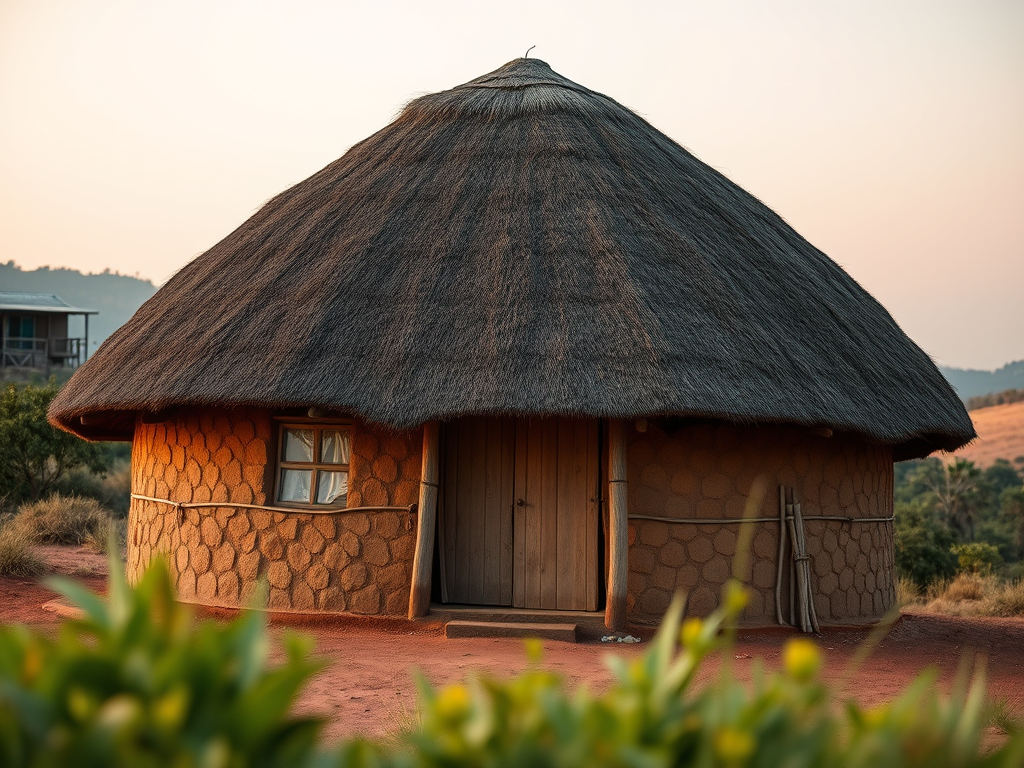
Home.
It was home.
But now, there’s a black circle where the hut once stood. The sky darkens quickly. She moves to stand in the middle of the circle. Where her feet are now was where she slept all her life on a mattress next to Mamree. She had a mattress. But what does she have now? She doesn’t have anything. No home, no mattress, no food, no friends, no family. Swallowing past a knot in her throat, Evariste lowers herself to the ground and lies on her side. Circular walls rise around her, a straw roof slides into place above her, and she tucks her face into her chest as she pretends the memories are real. Her mother, smiling, sits beside her, running a hand over Evariste’s face. I didn’t get to say goodbye. I didn’t get to prepare your bodies or bury you. Panic balloons in Evariste’s chest as she realizes her family hasn’t been remembered.
We show respect and mourn our dead with a remembrance fire, Papi’s deep voice comforts Evariste because it reminds her what to do. When someone dies, we light a fire and we remember them. Evariste rises to her knees, looks around. There are twigs and sticks everywhere. The last of the sun’s light fades while she works, gathering firewood and twigs and grass. Only when she’s got the base does she think, I don’t have a lighter.
Try again. Come on, that’s it, keep going, keep going. Gaeton’s voice whispers through her mind for the first time in hours. He taught her and Mamree how to make fire with nothing but a stick and a rock. The breath she pulls in shakes. I am in awe of you.
We show respect and mourn our dead with a remembrance fire.
Exhaustion curls through her, but the purpose distracts her from the pain.
She finds a rock, a good stick and sits down near the firewood.
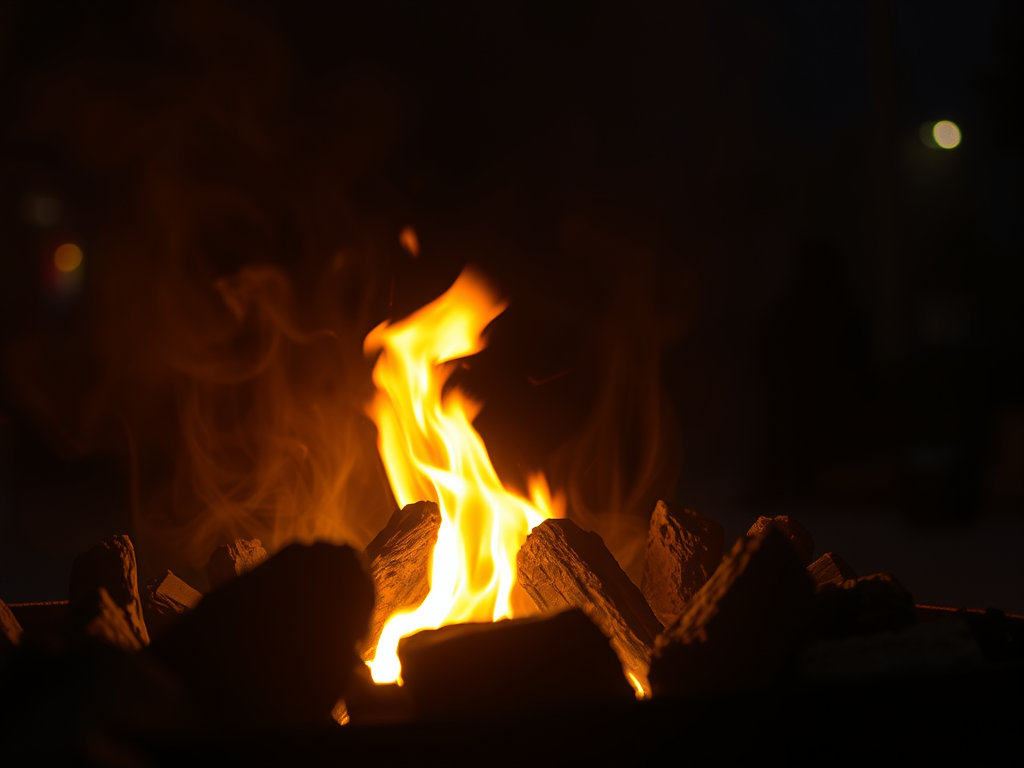
The sky tracks time. When she starts it is newly dark, with only a few stars twinkling. Her hands blister after an hour, but she doesn’t stop. A white and black dog saunters up. She stares at him, momentarily frozen by fear, but then screams and throws her rock at him. There’s nothing left here for him to eat. Her arms are numb by the time she sees a tiny wisp of smoke. Gasping, she struggles to keep focused, to keep calm so she doesn’t lose it. Soon, the smoke sparks a tiny flame. Tears burn her eyes and she bites a hole through her lip as proof of success climb higher.
She transfers the spark to the tinder and nurses it, blowing softly, adding tiny pieces of straw and grass to feed it until the fire roars. Sparks leap at her and she sits back, her hands bleeding and her heart raw. “Okay. Okay.” She whispers.
She starts with Papi.
“You taught me how to help birth a calf,” her voice cracks from unuse. “I watched you do it, and you helped me learn. It was because of you I was able to help Charlotte birth.” Memories of Papi laughing with her mother flash behind her eyes, and of him throwing Mamree in the air. He refused to leave. This is our home. We will not run. “We should have run, Papi.” She moans. “A hut wasn’t worth your life.” That Gaeton boy has to prove himself to me before you run off, you hear? Evariste stares into the fire. She can’t remember the last time her father hugged her, but days before the war broke out, he told her he was proud of her. He ran to help her when Pierre and his friends threw rocks at her. “You loved us,” she whispered. “It was hard to feel sometimes, but you loved us.” She swallows and adds, “And I loved you.” Ema’ma’s face appears and, shaking, Evariste wraps arms around herself, her nails digging into her side. “Ema’ma,” she whispers. “I need you.” Ema’ma at the market, showing Evariste how to tell which fruits were good and which were not. Ema’ma, angry, calling Gaeton a Hutu because no one would sell to her at the market anymore and she didn’t know how she would feed her family. When she started her cycle, it was Ema’ma who held Evariste’s head in her lap, stroking her back, telling her, the pain means you’re alive, child. “I don’t want to be,” Evariste whispers now. “Not without you.” Ema’ma came to the funeral of the cow Evariste loved. Ema’ma, you are Tutsi. You are powerful and strong and you will do this. When her mother birthed sleeping babies, and Evariste placed the dead weight in her arms to grieve, Ema’ma took her hand and said, I love you, my daughter.
When Mamree’s face comes, Evariste moans.
She was there when that girl was born. Mamree racing through the grass at sunset. Your feet, stand on your tip toes, like this, Evariste showed her how to twirl like a ballerina. Mamree taught her how to paint pictures. No, no, silly, like this, you gotta really think about what you’re drawing. “You liked to draw shapes. Triangles, squares, and circles inside of circles.” She was so excited when someone wanted to sell her painting. I’m gonna be an artist when I grow up. I’ll sell my art at the market and make so much money I’ll never run out of food! “You were so talented,” Evariste whispers, her voice breaking. “And you were so brave.” ‘ I’m staying, she said when Pierre’s group threw rocks at her. She didn’t want to leave Evariste alone, and didn’t, until Evariste needed her to get help. “Then you ran. I remember watching you run so fast.” She swallows. “Without you, Mamree, without you, I wouldn’t have had anything to eat. You put food in the cave. The cave was your idea. It was your safe place.” Sobs rack her and she covers her mouth with her hand. “You thought you were making it for you, but it kept me safe instead.”
She loved Gaeton.
I’ll keep you safe. I promise.
Mamree! There’s a younger sister, probably under a bed. Take her. This one is mine.
“I know you loved him,” Evariste says brokenly. “I’m so sorry, Mamree. I’m so, sorry.” Staring into the fire, Evariste tosses another stick, memories of her sister lighting up the night.
Let me go! They’re hurting her, Gaeton, let me go!
I’ll get Mamree, I’ll get her. If you promise me you’ll go to the cave, right now, Evariste, I’ll get Mamree.
Evariste lays on the ground, on the burned ground of her home, and stares into the orange and red flames of the remembrance fire.
Gone.

The sun breaking the horizon blinds her. Covering her swollen eyes with the back of her hand, she squints at her surroundings. Golden sunlight drenches the blood-soaked ground and soaks up the dew clinging to the ground. The fire faded before morning. Only ashes remain. She rubs the side of her face, looking around, and gasps. A Hutu stands fifty feet from her. She scrambles to her feet, fear coursing through her. He holds out a hand. “I – I’m not going to hurt you,” he stumbles. A stubble covers his chin, his cheeks are hollow. He’s hungry, she thinks.
“I’ve not eaten for a long time. I – I’m not – not part of the militia.”
“No one is now.”
He acknowledges this with a nod. “I – I’m not going to hurt you. I was just looking for food.”
She stares at him, unblinking, her heart racing.
“Can I have some water?” he asks, pointing to the water basket. When she doesn’t move, he takes a step forward. Evariste gasps again, stumbles backward. He stops. “I just need a drink of water. If you’ll give me that, I’ll leave, I swear.”
Tell me who did this to you, and I’ll leave.
“Do you know Gaeton?”
The Hutu frowns. “Gaeton?”
“Muhira’s son.”
The Hutu nods. “He was around in the beginning. He disappeared, though.”
“Disappeared?”
“He was with Pierre’s group and I heard he abandoned them.” His eyes fell to the water basket. “Water?” Evariste reaches down, grabs the water basket and holds it out. When he reaches out, she steps backward again. He grabs it, gulps hungrily, and then sighs heavily, pulling it down. He holds it back towards her.
“He’s been arrested.”
“For what?”
“He killed Pierre.”
Evariste swallows. “He killed Tutsi too.”
The Hutu says nothing.
“Like you did?”
“Thank you for the water.” The Hutu turns. Evariste watches him before she calls out, “Hey, hey, wait.” Stopping, he looks over his shoulder. “I heard that they’re asking people to come forward to testify.”
He nods. “They’re going to have gacaca trials, they’re trying to find the men to nominate to act as judges now.”
“Where – where does one go?”
He tells her a place near the village market, and then walks away. Evariste stares at his retreating back, wanting to feel angry, wanting to hurt him, but unable to do so. She can’t stay here. There’s nothing left here. She can’t survive near Hutus; the fear will kill her. She can’t survive around Tutsi because she knows her people: they will seek revenge.
Evariste carries nothing but the water basket with her when she leaves the land she grew up on. The stench of death clinging to her, she stares at the golden landscape, knowing she must find a new path, one she can’t envision, to be her own. Temperatures soar into the high sixties, then low seventies, as she walks. The past stalks her as she hums songs she and Mamree sang together, songs about families and true love. She passes people twice more: an angry Tutsi with blood on his face and a machete in his hands, and another skittish Hutu. The hunter now the hunted.
Evariste takes a melon she finds and bites into it, its juice running down her chin. Instead of going down familiar paths, she seeks something different, taking turns that lead to the unknown. She walks until the voices of confusion, fear and anger fade to wind whistles through leaves and scuffling of her feet over the dry dirt paths. Eventually, the dirt path ends and she steps through grass, making a path through virgin area. The grass tickles high on her calves. She spots a harmless snake and thinks about killing and skinning it, but she doesn’t have a knife and making fire took hours. Instead, she scavenges any berries she finds, honeysuckle, and greedily drinks the last of the water. Her face burns from the sun when she hears a babbling creek. She looks up and sees a bird fly north. She realizes she hasn’t seen a dead body in miles. Unlike the river water, which runs red with Tutsi blood, this isolated creek is clear. She uses her dress to filter the water and then she drinks more. When she looks up, something catches her eye.
A roof.
By the time she makes it across the field to the abandoned hut, she’s panting. Walking miles in the sun without food makes her dizzy. The hut’s door is ajar, broken at the top hinge. She pushes lightly on it. “Hello?” she asks. A large spider web hangs delicately in the corner of the hut, by the only window. Two small moths, brown and white and red colored, fly about the ceiling. A hole in the wall, about the same size as a machete, lets silvers of sunlight in. The floor is wooden, and dirtied. Blood stains, dust and dead flies mar it. But there’s an outhouse, she sees it from the window, and a stove. And it’s abandoned. The house tells the story: whoever lived here won’t be coming back.
Evariste stands in the middle of the hut. “Home.” She says the word aloud, but it feels like a lie on her lips. This isn’t home. Still, it will be for now. It takes her an hour to find a sturdy branch, to pull by hand enough twigs with leaves attached from trees, to tear her dress with her teeth and use the strip of fabric to tie the twigs to the branch. The rudimentary broom works. She sweeps the dead flies, the moths, and the dirt out of the house. The stale air makes her cough, so she pushes open the window. Once the floor is swept, she cleans out the spider web and finds a bolt of fabric in a wooden box seated at the back of the hut. She uses a square of fabric as a cloth and cleans whatever she can. A walk to the creek and back gives her water she not only drinks but uses to wash the floor. By midday, exhaustion makes her stop. She needs food, she needs supplies, but, tomorrow, she decides, she’ll fix the hole in the wall and the door. She tries it again: “Home.” It still doesn’t ring true.
As harsh sun starts to dip lower in the sky, she scavenges for food. She finds more berries and sage and honeysuckle. A banana tree not far has three ripe bananas; she devours those.
The sound of animals howling outside after dark remind her of her sister’s screams. He killed Pierre. He killed Pierre because Pierre raped, and nearly killed, her. He gave her sister’s location away knowing that Pierre and the others would rape and torture and kill her. She wakes in a cold sweat from a nightmare in which she was on the ground, rocks digging into her hip, screaming please stop, but they didn’t. She can still feel the penetration, the moment when they took from her what she can’t ever get back. She thought she was dying. She woke when her face was replaced with that of her sister’s.
Gaeton’s been detained.
They’re asking people to come testify.
Tell me who do this to you, and I’ll leave.
He killed Pierre.
I covered you before I touched you.
Mamree! There’s a sister in here, probably under a bed. Take her. This one is mine.
He killed more than Pierre. He killed Tutsi.
With cold sweat on her brow, between her breasts and along her neck, Evariste stares at the ceiling. She swallows hard. By the time morning breaks, she is determined a page has turned: she will testify.

