
Dear Survivor: 6 Things I wish you knew
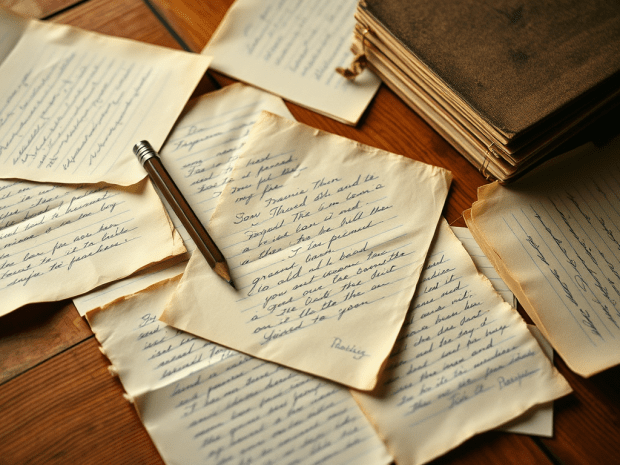
Dear Survivor,
I know that reading this is hard. When you saw the word survivor, you might have flinched, uncomfortable, because you think have I survived, though? Cause it don’t feel like it. Or you might read it, and felt your neck warm with a sudden flush of heat and you’re not sure if the heat was a result of anger or shame or both. Maybe there’s a voice whispering, you don’t deserve to be call that because how can you survive something if it was your fault? Or maybe you read Dear Survivor, and found the world suddenly blurry as tears stung the back of your eyes.
I see you.
Please let me share a little of who I am with you.
I am a space holder.
Every week, I spend hours upon hours talking with survivors as a hotline specialist for RAINN (Rape & Incest National Network). I am a current member of their Speaker’s Bureau, and have given my story before hundreds. I am a trained trauma-informed, compassion-led coach with over 500 hours of training who supports others in recognizing and shifting survival patterns into new, positive scripts. I design and lead workshops like HERO and ashRISE. I hold space for the stories of others.
But you might not care about any of that – or maybe it feels a little intimidating or a little isolating because you might think that’s too much, so I’ll share another piece of who I am with you.
I am also a survivor.
In 1985, I was a five-year-old little girl who loved baby girls, playing with dishes, and the story of Rapunzel. That was also the year when my sexual abuse started. It continued, on and off, until I was sixteen. As a space holder, I recognize that as trauma. As a survivor, I just remember being afraid of walking without gripping my legs together. I thought the blood meant I was dying. As a space holder, my training recognizes my need for control as a defense mechanism designed to protect me. As a survivor, all I sometimes feel is the haunting fear that I’m just “too much.” Too deep. Too broken. Too intense. Too much baggage. The ironic part is that while I am too much, I am also not enough. Not pretty enough. Not enough fun. Not enough sensual. Not sociable enough. Not normal enough. Those are what the space holder in me recognizes as the lies of abuse... and, yet, I still catch drifts of those ashes floating around in my life.
I lead a bunch of workshops. I coach. I speak in public — and I write books about the effects of trauma. But I don’t do any of this because I am transformed or better than or even because I’m an expert. I do it because the idea of you going one more day, hour, or minute truly believing the lies of abuse breaks my heart. See, I began speaking about my story to others because, as vulnerable as it made me feel, the very notion that you might be seriously contemplating giving up on life because you believe that no one understands you devastated me… because I understand. I didn’t have all the answers—I still don’t have all the answers–but I know what it feels like to have a weight pushing you down, holding you captive. I know what it is to realize, in a flash of clarity, that there is nothing you can do to stop the assault from happening. And I know what it means to panic in the middle of a grocery store because something mundane time-warped you back to the worst day of your life. The idea that you might hurt yourself or go to sleep dreading the next sunrise because you think you were the only one made me reach out, say, no, no, no: someone does understand. Let me show you.
From the first moment I stood in front of a crowd, so ashamed of the word rape that my face bloomed a bright red and I stumbled over the word, to today, when I routinely use the word without flinching, I’ve come a long way. And I’ve learned so much. After thousands of conversations with survivors, after reading hundreds of e-mails, leading others through various workshops, five certifications and hundreds of training hours–I’ve learned a few things. I’ve noticed a few patterns. Running deep in the marrow of my bones is a desire to share with you these things I’ve learned because it is how we build connection. Connection breeds trust. Trust brings revelation. And revelation births transformative healing.
There are many things I wish you knew, like really knew, like knew, in the deepest parts of you. But, if I were there with you, these are the five things I’d whisper over and over again, until your eyes shone again like the sun glistening off the ocean.

- You are not alone.
I know you know this. Intellectually. We know about the #metoo movement. We see the headlines: SO-AND-SO ACCUSES SO-AND-SO of SO-AND-SO. It’s the headline that makes you freeze because it names the nightmare. It’s the story you start to follow, even though you don’t want to, because there’s a part of you that needs to see if so-and-so will be believed…. or dismissed. You need to see if so-and-so will be held accountable… or released. So – you know you’re not alone.
But you don’t know that, not really.
But it’s different. I didn’t say no.
But it’s different. I shouldn’t have [fill in the blank: drank? wore that? gone alone? flirted with him?]
But it’s different; like I don’t know, it probably wasn’t even rape. It takes two to tango, right?
But it’s different. He wasn’t violent; it didn’t actually, physically hurt.
But it’s different. I’m just (a)n [fill in the blank for me: promiscuous? addict? worthless?]
But it’s different: he said he didn’t hear me when I said no, so he didn’t know I wasn’t into it.
But it’s different.
I have talked to thousands of survivors. Thousands. And feeling alone is one of the most normal emotions. Isolating you is what abusers do best. But no matter what the circumstances were, the common denominator is that you did not want what happened to happen. I don’t have your exact background. I wasn’t raised in your home, with your caretakers. I wasn’t taught all of the same beliefs you were. I don’t have the same friends you do. And I was not in that same room as you were in when you were assaulted, so I hear you. It feels like you are alone.
Bear with me for a moment as this will get a little statistical, but it’s important. Did you know:
a. every 74 seconds someone is sexually assaulted in the United States.
b. Every 9 minutes, that someone is a child.
c. There’s 86,400 seconds in 24 hours.
d. 86,400 / 74 seconds = 1,167 people assaulted per day in the United States.
e. 1,167 x 365 = 426,162 people per year are assaulted.
f. Between 50-70% of rapes are not reported. If we take the average and assume 60% are unreported, this means that the 426,162 number represents 40% of total rape in a year in the United States. So, how many total sexual assaults would there be if 100% of survivors reported?
1,080,405
You are not alone. There’s upwards of a million people every year who are sexually assaulted — and that’s just in the United States. But also: I was raped, on and off, repeatedly. I used to stare at the ceiling and pretend that the plastic was mountains – the air vents became caves or sewage drains that my characters – my fictional characters – played in while I was being torn apart. I woke sore with bruises on the insides of my thighs, on my arms, and deep bruising to my heart. I went to school and felt like an alien because I didn’t know how to play. I didn’t know how to play or make friends because I thought I was so worthless that I deserved rape.
I hear you. I know your experience was different than mine. It was different from that of the one million people who are assaulted, too. What happened on your worst day happened to you. I promise, I hear you. And, if you’ll let me, I’ll really listen to that story so that someone knows how it was different for you. I’ll hold your hand while you cry or rage, while you whisper or scream about how alone you feel. And then I will gently remind you of a simple, single truth: You did not want him to touch you the way he did. And because he didn’t listen and did it anyway you feel like something very important was taken from you. You are not alone in those things. - You are not broken.
The ashRISE workshop really goes into depth about this, but your body is designed to protect you. How you responded does not change what was done to you. We think we’re broken because a line got drawn in the sand—we were one way before that awful night, and then, afterward, we struggled to focus. We felt panicked when we were around others. We couldn’t sleep without our backs touching a wall, or the light on. Trusting someone became next to impossible. Being touched at all, even by people we love, suddenly made us freeze. We think we’re broken because we believed that the only way to survive that night was to go along with it, so we didn’t say no or scream or fight. We might have just laid there. Or maybe we actually participated because we wanted it over and, since he wasn’t going to stop, the fastest way to get it done was to go along. But going along means we now feel dirtied or ashamed. Hear me: how you responded does not change what was done to you. The response came after your boundary was crossed.
Your body is designed to protect you. It will burn the house down – it will do whatever it has to do – to keep you alive. Not happy, but alive. You say, he wasn’t going to kill me. I wasn’t in real danger. Did your body know that? You responded exactly the way you were supposed to because you survived it.
You are not broken.
You are not irreparably damaged.
You can heal. - Your voice matters.
And I don’t mean that in the “you should file charges” kind of way. I mean that in the you deserve to have someone hear you. Really hear you.
My faith is very important to me. And Genesis 1:27 says:
So God created mankind in his own image,
in the image of God he created them;
male and female he created them.
This says that we are made in God’s image. God is holy. He is perfect. He is merciful. He is all things good. These two things are simultaneously true:
a. Every human’s DNA is unique. No two people are chemically exactly the same.
Even twins have different fingerprints.
b. We are made in His image.
For both of those things to be true, it means that every single human being — which includes you — has the potential to help me deepen my understanding of and relationship with God. If that is true, then it means that what you have to say is very, very important.
If you don’t believe in God, that doesn’t change how important your voice is. Your voice deserves to be heard. Think of the last time you laughed — really belly laughed, like in the I’m free kind of way. It doesn’t matter how long ago that was. Can you remember who was with you then? What was their reaction to your joy? Others need your unique brand of humor; they also need your truth.
One of the things that has most surprised me about speaking of my story to others, or writing some of the traumatic things I write, is that there’s always one person who approaches or emails me to say, I needed that. It sounded like you were talking about my life. This is true even though I was just sharing my story, telling them about the time I spent writing Last Wills out as a college student who had absolutely zero to give to anybody or about how I’d leave my money in my dorm room and go stare at the food in the vending machines because I was deliberately starving myself. See, I thought others would think how stupid or she bought that on herself or it was just rape; she acts like it was the end of the world.
But when I actually spoke up—what I heard instead came from you, from survivors, who came to me with tear-streaked faces and said things like:
You just said what I didn’t think anyone else but me ever thought.
I used to do that too. I wrote down a Plan in case I couldn’t take it anymore.
#metoo.
And I was so stunned. Because, in speaking up, in using my voice just to lay myself out there, I slowly came to see things in a different way. It wasn’t about comparing pain; it wasn’t about getting attention. It was about reclaiming what had been stolen. I’ve since promised a very, very important little girl that she doesn’t have to be quiet ever again. Because connection breeds trust. Trust brings revelation. And revelation births transformative healing. And it all starts by using our voice.
Sharing what happened is so overwhelming. It’s hard. But you’ve already survived the hardest thing. This is a link to a packet I created that can help you plan, step by step, how to share with someone. It gives you full control. And, if you want to talk first, reach out to me. Because I will listen. And I will believe you. Because your voice matters. Your story matters. - Tomorrow is a promise, not a threat.
You deserve tomorrow. And tomorrow needs you. - You have a superhero power.
Once upon a time, there was a you who loved to [fill in the blank: run? sing? make art? knit? volunteer? teach? work? build things? write?]. That thing that you used to love to do, it is your superhero power. It doesn’t matter how good, or not good, you are at the thing. What matters is the spark that it breathes into your heart. If it challenges you, inspires you, motivates you…it’s there for a reason. I am very passionate about this because, without writing, I am not me. Without writing, I wouldn’t have had my characters distracting me from the amount of physical and emotional pain I was in on that bed. But I did have writing — and so I did it every day. It was the one thing that was mine. The one thing I did just because. I did it every, single day and I came to rely on it. The stories, at first, were just an escape. But, the older I got, they became my voice, my way of saying the things I had to say to be okay but didn’t know how to shape into an actual conversation.
First, writing offered an escape.
Then, writing held all the pieces of my shattered heart.
When I was ready, it gave it back — not as a smooth heart, not free of ash, but as a glowing thing.
Finally, writing connected me to survivors, and allowed me to redefine the ash as purpose.
You are not powerless. You can redefine any part of you. You can define or redefine whatever experiences you have. You can shape them into empowerment. - It is not your fault. Read that again: it is not your fault.
For a long time, I was so afraid of being hurt again that I would have rather blame myself than live with the idea that someone was able to hurt me like that. My mind felt like a battlefield lined with explosives. Everything around me was dangerous. Rolling the window down in a car might “earn” me “punishment.” If I didn’t answer a call fast enough, rape was justified. I have flashbacks sometimes. I also dream in nightmares. The worst is one in which I’m holding a kid — and then, as the room fills with water, I can’t hold him anymore and he slips out of my arms and drowns. That dream will wake me in a state of total fear and panic and guilt and shame. But I accepted the blame because “it takes two to tango” and I knew how to make it stop — but didn’t tell. So, if I chose not to tell, what right did I have to now complain about it?
But… the truth is… there was nothing I could do to stop it. That’s actually terrifying to admit because if someone could take that from me once, and there wasn’t anything I could do to prevent it, then how can I ever be safe?
I’m sharing that with you because the guilt and the shame is the number one lie of abuse. Oprah Winfrey once did an interview with confessed (and convicted) sexual offenders. It’s a really hard hour to watch. But, for me, it was helpful because they all said the same thing: they knew what they were doing and did it anyway. She asked, “How did you pick your victims?” and the answer was, “Trust. She trusted me.” The offender, no matter who it was, had their own agenda. Sometimes that agenda is as simple as I want it now and other times it’s about manipulation and power. But whatever the agenda is it doesn’t care what you want.
If it doesn’t care what you want, then it wouldn’t have mattered if you had done XYZ differently: the result would have been the same. My body was so afraid of being held down again, so afraid of feeling like I was choking, like I was dying, that it said, “it had to have been your fault. If you had just been a better girl, you could have kept it from happening. If you had just not been so sensitive, and cried so much, it wouldn’t have happened.” If there was something I could have done to prevent it, then maybe I can be safe now–all I have to do is be perfect and never, ever disappoint anyone. My mind told me that to protect me. Maybe yours did too. But remember: your body is designed to protect you, not keep you happy. It will burn the house down, it will come up with any idea necessary, in order to make the pain stop. For me, that meant giving me the illusion of control.
But it is not true.
It does not matter what the circumstances of that night were.
It does not matter who he was or is.
It does not matter what he told you.
It was not your fault.
In the end, I just want you to know this: you are seen, and you matter exactly as you are. Your trauma is a wound. Some days, its scab is ripped off, and it bleeds. Some days, the scab is thickened, and life seems almost plausible. Some days, the scab has been picked at: it’s still there, buffering the pain just enough, but also bleeding around the edges. ashRISE is free, and a new cohort starts every 6 weeks; we learn ways to stop the bleeding, you get a free workbook that’s 90 pages long with somatic exercises and more. It’s virtual, too. I also have Storynlight Circle where I can support you one-on-one and listen to your story, help you find patterns, and help you see through a lens of curiosity and compassion. And, if none of that works, RAINN has so many resources – including a 24/7/365 hotline / chat / WhatsApp where you can connect with specialists like me.
I believe you.
And you will rise.
 Tiffini Johnson