
The Forest People

This is a long excerpt from a forthcoming novel, Remember the Nightingale.
Harvesting coffee cherries takes weeks. Gaeton works alongside his stepfather, gathering only the ripest cherries, leaving the green ones to further develop. Coffee and bananas; these are two of the most important of the crops they grow. Plucking a red cherry from the vine, Gaeton eyes it, and rolls the plump, oval fruit tenderly between his fingers. Maybe because of the vibrant red, Gaeton thinks of Evariste whenever he harvests coffee.
Can I help? She was barely walking the first time she asked if she could help him gather the coffee cherries. Stricken, Gaeton frowned, shooing her away. No, it’s not a job for you. She tipped head to the side — without hair, her eyes always seem unusually wide –, she asked curiously, Why not? Gaeton made a cutting motion through the air with his hand. You’re a Tutsi. Evariste: and you’re not a Tutsi? Unable to strike the look of horror from his face completely, Gaeton scowled. No, I’m not. I’m Hutu. She shrugged, reached for a vine and plucked a few red cherries. Dropping them into his basket, she declared boldly, Well, then I’m a Hutu, too.
From then on, he let her help him.
She teaches him to not care, to not see the differences, said Akalisa, watching her young son teach the young girl how to harvest coffee. Wonder if that will always be a good thing, Muhira replied, half in awe and half in fear. Both women knew: Hutu and Tutsi had never, were not and would never be the same. That Evariste was innocent to the differences was both wonderous and frightening. And temporary.
Gaeton indulged her naivete until the revolution. Soon thereafter, she learned. She became his shadow, refused to leave his side, and walked with him to the market to sell his bananas and coffee. A tall, thinner man walked nearby; he frequently purchased large quantities of bananas from Gaeton’s family, and Evariste started to call out, to get his attention. Gaeton shook his head, stopping her, his eyes moving away from the familiar man.
But, Gaeton, he’ll buy all of these bananas. You’ll make a lot and –
I’m not selling to Tutsis.
That doesn’t make sense, Gaeton. You’re going to deprive your family of the money just because they’re a different tribe? I’m Tutsi, and you talk to me. She put her fingers against his arm. Hutu, Tutsi, does it really matter? Really? We’re all the same, we —
Jerking his arm from beneath her touch, he viciously spat, I am -not- Tutsi, I will -never- be Tutsi. He was there, I saw him murder my friends. Hutu will never be Tutsi. Don’t ever say that again.
Gaeton, I –
Go home.
But–
Leave me alone! Go home, Tutsi.
Regret stabbed holes in his conscience when her shoulders slumped and a new sadness crept into her eyes. A heavy and unfamiliar maturity crowded her as she bent her head slowly. I see. She replied quietly. I see. I won’t bother you again. The noise from the market faded, the brightness of the morning sun dimmed, and the day grew longer when she walked away. He wanted to run to her, to be the person she thought he was… but the world was not what she believed. She hadn’t been there when his father and his brother were brutally murdered; she hadn’t seen the look of panic in his brother’s eyes as he gurgled on his own blood. Believing there weren’t any differences between the tribes would only hurt her; it was better she understood the way things really were.
Gaeton never apologized, but Evariste acted as though he had. She never mentioned what happened at the market. She never asked him why he had called her Tutsi as though it were a disease, as though the radio ads calling Tutsis cockroaches were true. When he tried to explain, she shook her head, offered a smile that was not really an Evariste smile and said, Am I still your friend, even if I am a Tutsi?
Evariste …
Undisguised terror shone in her dark eyes; her bottom lip disappeared between her teeth, a sure sign she was nervous. The guilt punched him in the gut again, but an image of his brother followed. The guilt blossomed, but for a different reason. As confused as he felt, there was one thing he never questioned. Evariste, you will always be…my heart.
Then we don’t have to speak of it anymore.
And that was that. When she accompanied him to the market, she didn’t mention if she saw someone who used to shop his wares. When he visited her to find one of the Tutsi who lived in his nightmares chatting easily with her, helping with her cattle, he made small talk with the man. He worked peacefully alongside him in Evariste’s field. When his brother’s murderer approached them as they walked toward the river, though, it was Evariste who angrily called him such, and told him her family would never trade with his again. Gaeton remained calm and silent. But when a Hutu saw the two walking together and shouted he’s with that cockroach, look at that, Gaeton threw a punch. The offending Hutu sported two black eyes for a week. And so they both went on pretending nothing was changing, even if doing so was harder for Gaeton.
“Good day.” Evariste’s voice rings out, drawing Gaeton’s eyes from the vines to the edge of the field. The lazy white and brown spotted dog who stole sleep in a different field each night lags alongside her. In a faded tobacco-colored dress, with the morning sun shining on her, Evariste’s skin glows. Her smile lights up her entire face; her wide eyes sparkle. Gaeton arches a thin brow: a hint of mischief dances around her. The dog steps in front of her, nearly tripping her; she laughs, sidestepping around the animal. “I have an idea.”
Chuckling, Gaeton plucks another cherry from the vine. “Is it like the last idea you had?”
Embarrassment stains her high cheekbones but, true to form, she refuses to bow to it. Instead, she rolls her eyes. “How was I to know I was so good at hitting a ball with a stick? I wonder, how many things get broken in the West with them always hitting balls with sticks?”
Gaeton’s smile flashes before he can stop it. “I don’t think their balls hit grazing cows.”
“You have to admit, it was fun; the cow recovered.”
Gaeton looks back at the vine, stepping a bit further down the row.
“Anyway,” Evariste persists in a singsong voice. “No balls are involved in this idea.”
“Oh, but sticks are?” he teases, arching his brows.
Evariste laughs. “Well, yes, kind of. I heard Nirere from the forest say they are building huts for the new village today. I thought we might go help them.”
“Help the Twa women build the huts?”
Evariste shrugs. “Sure. It’s fun, and they usually have the storytelling afterwards.”
Gaeton bobs his head from shoulder to shoulder. “It will take hours; the coffee needs harvesting.”
“Would it hold one day?”
Gaeton says nothing; he continues to pluck coffee cherries dropping them into the bucket, until Evariste reaches out spontaneously and grips his arm. Surprise drapes Gaeton’s face, his thin brows arching high, his eyes dropping to her hand on his arm. She tips her head, smiling up at him, her own almond-shaped eyes widening. “Gae-ton,” she sings.
He winks. “Your ideas are fun.”
**** ***** *****
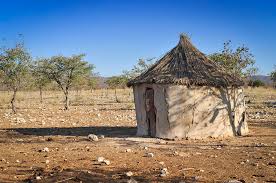
The forest is noisy when Gaeton and Evariste arrive. Niere nods her head and calls, “Good day!” She lays thick leaves across a long branch: the hut stands out. The forest is a never-ending faucet, dripping rainwater much of the year: mud keeps it out of the walls, palm leaves stop it from seeping through the roof. The smell of blood and smoke draw Gaeton’s eyes; near a small fire, a woman uses a sharpened flint to process a fresh kill. The deer will be dinner tonight. “So quiet today?” Gaeton questions curiously, noting that the camp is missing the usual noise of the Twa children. The women working on the huts do so without the customary greetings or smiles. The air feels thickened.
“The molimo.”
“Did you lose someone?” Evariste frowns.
“Yes. During the birthing.” Niere sighs heavily. “The mothers are milking the infant. But don’t worry: the men woke the forest up; Mother Forest fell asleep and wasn’t able to protect us from death, but the men woke her with the molimo horn.”
“The noise last night,” Gaeton’s face shows the dawn of understanding. While sitting in the grass near the edge of the fields, Gaeton heard the molimo horn and the shouts of men last night. “Tonight is the celebration, then,” he asks.
Niere nods. “Yes; we defeated the molimo; we woke Mother Forest and she’ll protect us again from loss. We need three more huts; can you two help over there? This one is almost done.” She nods to the side where a group of women are slapping mud onto the circular frame. The sun climbs high in the sky, bringing light even to the forest floor. Gaeton’s arms are full of sticks when Evariste cries out. His head swivels, his eyes searching for and finding her just in time to see her fall to the ground. She clutches her hands low in front of her, her head and shoulders bent forward in pain.
“Evariste?” Concern knots his stomach; he drops the load of sticks and jogs to her. Her legs are bent, and he can’t see her face. “What happened? How did you fall?” He reaches down, puts an arm between her shoulder blades. A few others start towards them, asking after her. Worry darkens his eyes: she’s not speaking. Once, she fell out of a tree and broke her arm: she got quiet then, too. “Evariste?”
Just as he went to touch her arm, her head lifted and, before he processed the smile on her face, her fingers, light and healthy as can be, spread mud from his forehead, down his nose, over his lips and to the edge of his chin. Laughter chimes through the forest as streaks of sunlight dance across the forest floor. The women gathered around to ensure she was safe laugh, turn towards each other and began to talk about being that young again. Tilting her chin up a notch, she pulls her bottom lip between her teeth, waiting for Gaeton’s response. When he rocks back on his heels, observing her quietly, a hint of fear drifts into her chocolate colored eyes.
“You look quite handsome covered in mud,” she offers, shrugging her shoulders, giggling again, her eyes wavering between mischief and appropriate remorse. “But you might need to bathe…. I’ll show you to river after dinner.”
A reluctant smile pulls at the corner of his lips. “You would do no such thing.” Rising, he watches her dust herself off, moving to her bare feet. “You’re not supposed to touch me, cherie.”
“Oh, I’m not?” Her eyes widen in mock surprise. Completely disregarding all propriety, her smile fading, she lifts her shoulder and admits softly, “I suppose I just couldn’t help myself.”
Gaeton’s mouth opens, and closes on a smile. “Get away from me, heathen.”
Evariste laughs again before his arm snaps out, smacking her on the backside. Chagrined, she gasps. He winks, explaining, “I’m the man and you tricked me into thinking you were hurt; I’m perfectly able to discipline you and, obviously, you deserved that.”
“Did I?” she scrunches her nose, dances her shoulders.
When the women playfully ask if they intend on helping any more with the huts, Gaeton and Evariste move back to work. Gaeton watches her stack sticks, layer mud and leaves and forgets about the aching in his muscles from the labor. The graceful curve of her long neck, streaks of bright light playing on her caramel colored skin, and the frequent laughter that reminds him of nightingales singing draw his attention. By the time shadows instead of light curve on their skin and a cool wind replaces the heat of the day, Gaeton’s spirits are high.
The small fire burning when they arrived grows larger, and the smell of fresh meat cooking over the pit causes stomachs to rumble. As the men return from gathering wood, and children race into and out of the newly formed huts, the typical noisy Twa excitedly share stories from the day. The women tease Evariste and Gaeton, who sit on a log beside each other. The flames climb higher into the night sky, the crackling logs join the cacophony of voices, and the whistling wind and nighttime animals scamper through the leaves. Bowls that had been hand formed out of clay hold the meat and vegetables; they eat until they are full.

Niere’s husband, a tall man with curly hair and a thick beard, is the first to start rhythmically clapping. Soon, people moved. Men wearing only bark cloths around their waists begin moving around in a circle, swaying their bodies, and clapping. Women join. Gaeton dances along with them, but his eyes train on Evariste: dance transforms her.
Her face shines with a smile so wide it’s all he sees; she claps and stomps; her body sways; her eyes flash. She rocks her head from side to side and, when the group chants, she raises her voice with theirs. Joy oozes from her. Song and dance goes on for what feels like hours; Evariste is one of the last to collapse, sitting again on the log and folding herself over to lean on him. Relaxed, Gaeton allows her to do so, moving his arm around her shoulders until she sits upright again. When she looks at him, seeking reassurance, he smiles at her, moving his arm back to his side.
A few of the children chant, nightingale, nightingale. The noise quiets when one of the men mimics the call of a nightingale. Another man answers back, adding a bit of a whippoorwill’s song, with a long whistle. The first man returns a slightly different song, this one made up of trills and the tremulous mocking of the whippoorwill. Enchanted, Evariste and Gaeton watch in awe as the bird calling continues unabated to a captivated audience with a third man joining the chorus, mimicking the nightingale and the African firefinch’s high pitched whine.
Niere’s father is the band’s elder. He lifts a hand and the birdcalls quiet. Children stop fidgeting; the thick canopy of branches and leaves above them sway, gently blowing a breeze across the heated night. Movement catches Evariste’s eye and she turns her head in time to see a bushbaby scamper up the side of a nearby tree. Its distinctive muddy orange eyes and long fuzzy tail make her smile.
The elder tips his head back as if he’s looking to the treetops. “The nightingale is a song prowess. When the world was new, molimo grew jealous of the African Flycatcher. The little bird with the dark blue head, black tipped wings, light underbelly and long, ringing song with those beautiful hollow notes was able to charm even the belly sliders with its song. The bird was smart and bold, attacking even humans who came near its territory. Molimo thought it clever that they used spiders’ webs to bound their nests together. In addition to being smart, bold and beautiful in sight and sound, the bird also had flight: something molimo has always wanted.
One flycatcher especially drew Molimo’s wrath. Molimo used fire to destroy the bird’s territory, forcing him to find another… and then another…. and then a third. The bird grew tired of flying; his wings grew trembled as he hid as high as he dared in the trees. Fighting Molimo was no use; he’d never win. One day, he flew to the mockingbird’s nest.
The nightingale is the protector of the dead. The dead who have been loved in life are guarded carefully by the nightingale until the spirits come to take them to the afterlife. The flycatcher whined high and long.
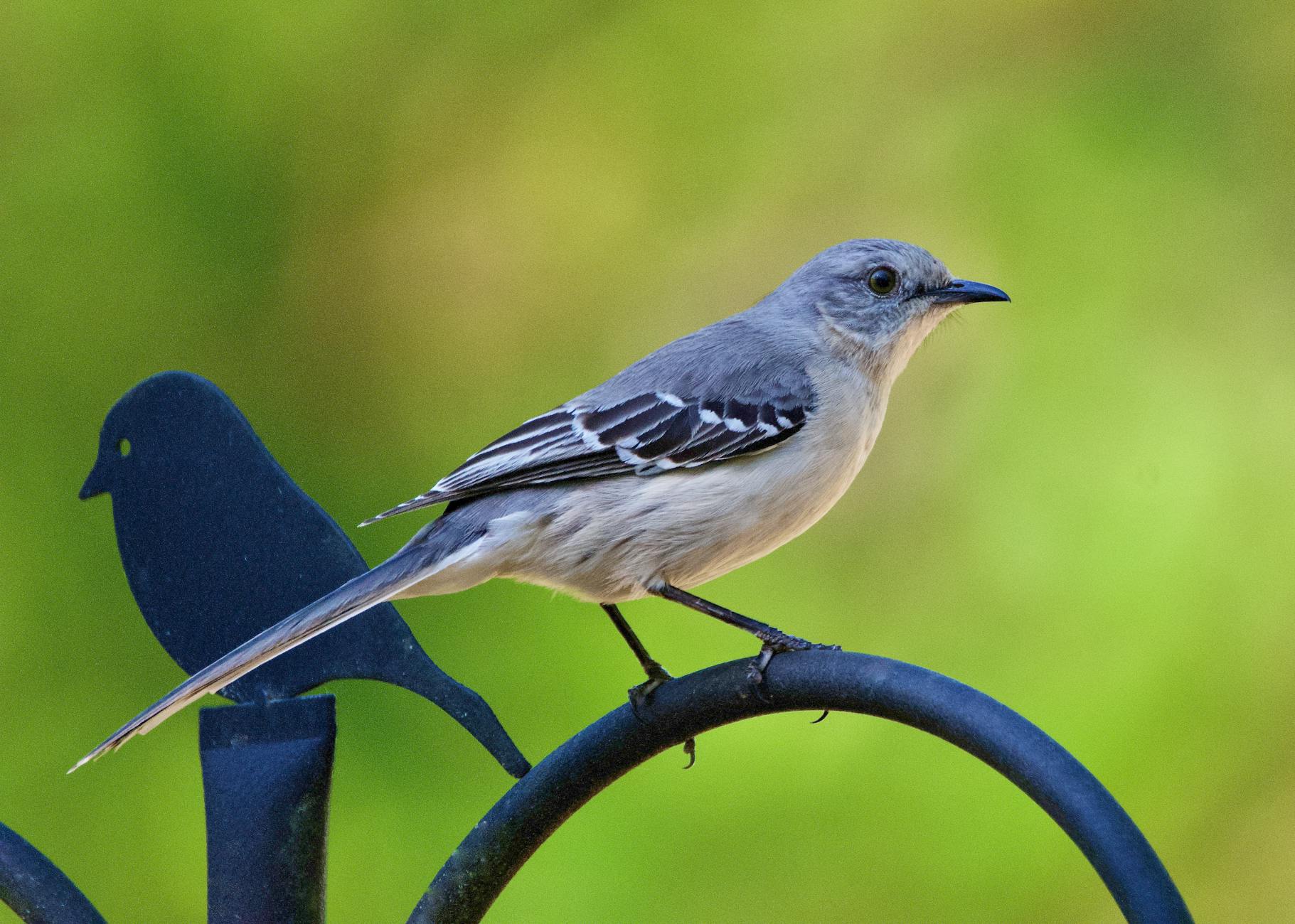
‘Nightingale, Molimo is after me. He’s as tall as the trees, so I can’t rest in any tree. The fire he breaths destroys any nest I try to make. I’m left to fly without stopping for days on end. My wings are nearly broken; see?’ The nightingale inspected the flycatcher’s wings, saw they were stiff, hardened by so much use. The nightingale said, ‘I’m the protector of the dead, not the living. Talk to the Mother Forest.’ But the flycatcher wouldn’t give up, insisting, ‘But I’m going to be dead if you don’t help. You are one of me; you’re a bird, too; shouldn’t you help those who are like you?’ The argument made sense to the nightingale. Wisely, he said, ‘It won’t be easy. But I have an idea.’ The nightingale explained the plan to the flycatcher, and they practiced for long hours. Day after day, the forest animals enjoyed sounds of different birds. Finally, by the time Molimo’s presence was felt in the forest again, both birds were ready.
Molimo stomped heavily, breaking branches and sending the animals running towards their dens, nests and burrows. While the forest held its breath, a long trill shattered the uneasy silence. It was the sound of the flycatcher. Molimo swung its thick arms around, stomping towards the call. Only there was no flycatcher, only a worthless nightingale. There! The sound of the flycatcher was behind him. Molimo turned and stomped towards the clearing. When he arrived, though, he saw nothing but another nightingale. His roar shook the entire forest. For days, Molimo thought he heard the flycatcher… but every time he tracked the sound, it was a different bird. Molimo grew more and more agitated, destroying tall trees and eating anything that stepped in his way. The forest animals trembled and retreated further out of sight. Finally — the sound of the flycatcher was behind Molimo but, when he turned, he saw no sight of the blue bird. The song was above him, but there was nothing in the trees. There! The caught sight of the flycatcher at long last – flying in front of him! Molimo breathed fire, but the flycatcher dropped low, leading Molimo stampeding through the forests, around the meadows and over the hills. The longer the chase went on, the angrier Molimo became until, finally, the flycatcher dipped. Molimo’s leaped without looking: there was nothing below him. The bird soared high above the canyon. From that day on, Molimo never bothered the flycatcher again. And that is how the nightingale used his many songs to trick Molimo and save a fellow bird.”
The fire crackles, casting long shadows on the band. The moon shines full in the sky, the children start to yawn, and Gaeton motions to Evariste. It is time to leave the forest and its people.
The two are quiet as they walk side by side through the midnight blue night. Evariste says softly, “I wish I had a nightingale.”
Surprised by her quiet solemnity and candor, Gaeton’s brows furrow. “Why?”
She lifts a shoulder, her eyes avoiding his.
“Evariste?”
“Some Hutus saw me walking to Sara’s the other day and…” she shook her head, her voice trailing.
“And what?” Gaeton reaches out, grabs her hand, slowing to a stop. “What happened?”
She smiles, but it doesn’t reach her eyes. After a few moments, she shakes her head, turns and starts to walk again. “It’s nothing; they didn’t do anything, Gaeton. But you were right: I’m never going to be Hutu. Having a nightingale might help confuse people, make them think I was one.”
Arrows fly through Gaeton’s veins. “You don’t need to be Hutu.”
She smiles again, briefly looking at him.
“I’ll talk to them.”
She exhales a sigh. “Oh, Gaeton, what would that do?” A true Evariste smile finally makes it to her eyes as she laughs softly. “You remember when you attacked that boy that was so much older than you with sticks before he called me his dirty cockroach? He told everybody you were demon possessed.”
Gaeton pulls her to a stop again, near the ancient tree, and under the moon’s glow. “I won’t let anyone hurt you. You’ll tell me if anyone tries and I’ll make it stop.”
She nods, her eyes widening. “You know – on second thought – I think I already have a nightingale,” her teasing wrenches a crooked smile from Gaeton. Gently, he reaches out and traces a finger from the edge of her eye down to the tip of her chin, and then slides his palm to her neck. Goosebumps dance along her arms. “You’re not supposed to touch me,” she reminds him softly.
Gaeton drops his arm and winks. “Oh, I’m not? Guess I just couldn’t help myself.”

 Tiffini Johnson