
FAQ of a Rape Crisis Volunteer
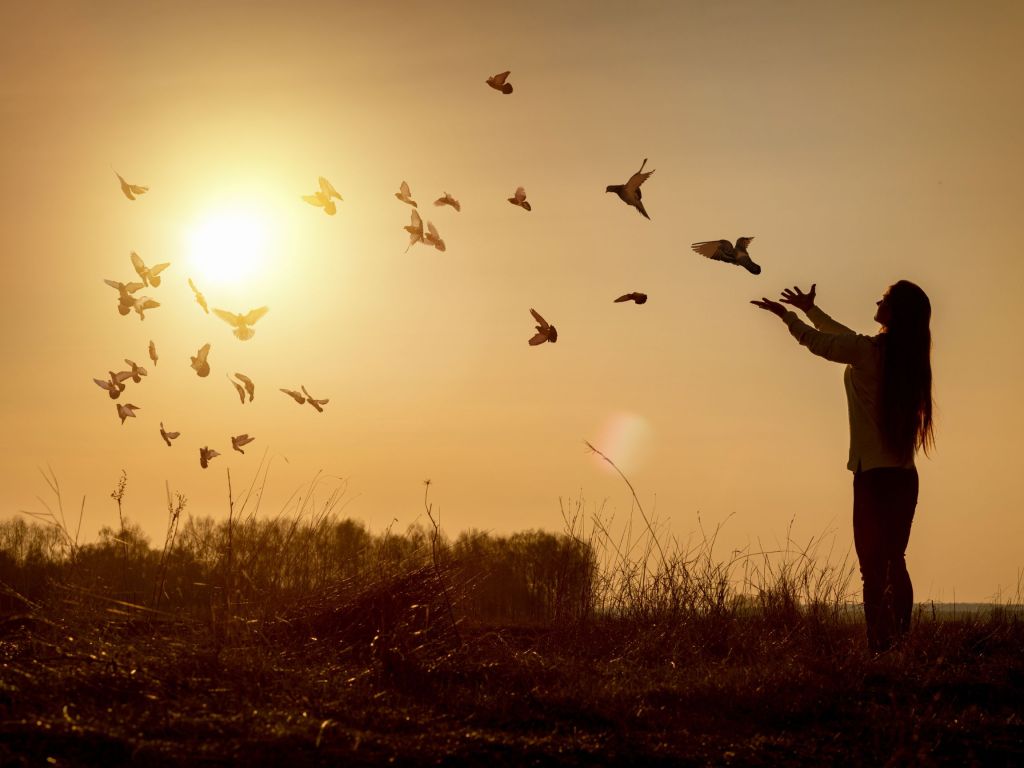
You’re on a roller coaster. Most days, healing feels like you’re traversing territory ripe with hidden landmines ready to blow any semblance of peace away. Stepping on one unleashes a trigger and, just like that, flashbacks dig their claws into your mind, wrenching you back into the worst experience of your life.
The pain of the memory is physical: the tangy smell of a cigar soaks the air but, presently, there is no cigar; breathing feels impossible because the clenching of his fingers against your throat feels terrifyingly real, even though he’s not in the room; concentrating on anything amounts to an Olympic sport because every muscle in your body is laser focused on analyzing the safety of each sound, each face, each minute detail of this room. If asked, you might struggle to answer the question: where are you because the past physically feels more real than the present. The five, ten, seconds ensnared by the flashback seems more like decades until something snaps your attention back to the present. You laugh, you scream, you pretend you’re okay, or you don’t, but, whatever the reaction, time crawls forward.
And a piece of you cries: a piece of you feels like you’re the only person on the planet. No one else feels this, normal people don’t think that, no one is as worthless as you. Whispers in your ear: don’t you deserve this because isn’t it true that no one is ever really completely a victim? you can’t ever be worth a happily-ever-after; nobody wants someone so dirty. You will always be alone. If you disappeared, nobody would notice. You’ve only got yourself to blame; nobody wants to hear your story because it doesn’t matter. You are a failure. You’re selfish: telling your story is selfish because it gives you attention instead of someone who really deserves it.
RAINN is the nation’s largest nonprofit organization dedicated to raising awareness of the causes, effects and statistics of rape, providing education and resources to anyone interested, and serving both survivors and their families by offering compassionate support and effective tools. I’m a support specialist, listening to callers / visitors an average of 20 – 25 hours weekly, which means being available over a hundred hours a month on a volunteer basis for survivors, and their loved ones, of sexual assault. While every situation is unique, there are trends, or similarities, between many of the callers. It’s weighing on me right now because how many don’t reach out to the hotline? I never did, and there are many others who either don’t know about, or trust, these resources, or who can’t find the words to tell a single soul, even anonymously, what’s going on. My heart feels them; tonight, as we dance into my favorite month of the year, I hurt for them.
Who knows?
Maybe, just maybe, someone who happens to find this blog will be one of them. So, I thought I’d share a list of commonly asked questions, and how I try to respond to them, here in case someone isn’t ready to talk…. but is searching to feel understood, to find a connection with someone who gets it: deep down in the bones, gets it. I’ve been raped. Violence has darkened days for me. I was held down; I didn’t tell. I promise: you can’t tell me anything I’ve probably not thought, or heard, already. I get it. Not only do I get it, though. My heart feels you; I genuinely, heartbreakingly, thoroughly, passionately care. This is for you. And for the damaged parts of me that still bleed sometimes, still ache to believe I’m more than I’ve always thought.
Question 1: Was it rape?
I hear this question just about every time I “log on.” At some point in the evening, at least one person will say something like, “was it rape?”, “I’m not sure this counts as sexual assault, but…”, “I don’t know what to call what happened to me..”
It is your experience. No one gets to tell you that what you experienced was, or was not, rape or sexual assault. It can be really important to define the experiences, and no matter what anyone else calls your experience, it happened to you and, because of that, how you feel about the experience is valid. No one gets to tell you how to feel about something that happened to you. In the end, the only one who can define an experience as anything is you. There are a couple of things that can help clarify experiences though.
- The words “rape” and “sexual assault” are legal terms: acts that meet the definition of those terms vary state to state. Some people find clarity in knowing what an objective definition is, and so sometimes it’s helpful to research what falls under the legal definition of those words: this site can help you find those definitions for your state.
- I am very much a “word” person. For me, I find comfort in understanding the origins of words, of being able to really know what something means. When I first told my story, I could not use the word “rape” because its connotation, to me, meant a vicious act, violence, like what you see in the movies where someone’s bound by a stranger. That’s not what happened to me. It was my father; I knew him. There are many, many people for whom the connotation of the word “rape” doesn’t feel like it fits their experience. Until you understand the meaning, the origin of the word. The word “rape” comes from the Latin word rapere, which means to steal, seize or carry away. When I realized this, I cried. That felt true. That felt real. Because I did feel like something had been stolen, carried away: I didn’t feel like me anymore. The innocence of the little girl I had been… where was she? If your experience created a line in the sand, if you feel like there was something lost or stolen, the word “rape” might fit.
- When someone says the word “consent”, what do you think of? Sometimes, talking with the survivors, I hear things like, I didn’t say no exactly; I might have led him on; he’s my husband/boyfriend/father, so I can’t say no. One of the worst lies of abuse is guilt. Feeling like you didn’t say no can make you feel guilty or ashamed for something that is not your fault. Let’s do the same word study: “consent” comes from the Latin word consentīre, which means hear me on this: to share or join in on the sensation, to be in unison. Was it something shared, or did you feel it was being taken? Sex, when it’s right, is about good communication: verbal and nonverbal. Sometimes this article on enthusiastic consent can help clarify what you’re feeling, and gives examples of what consent can, and won’t, look like.
- The bottom line? If it hurt you — physically, emotionally, spiritually — if you weren’t excited about what was happening, if you felt uncomfortable, scared or ignored… that matters, no matter what you call the experience.
Question 2:
Was it my fault? Did I deserve it?
Every. Single. Shift.
I get asked this every. single. shift. Things like: was it my fault? but I didn’t say no? but I was a little drunk, so it was my fault, cause I should have known better, right?
Hear me on this, cause it is a life-altering-kind-of-important notice:
It is never, ever, not ever your fault. I don’t care what you were wearing. I don’t care how drunk you were. I don’t care that you kissed him first. I don’t care about anything except the fact that when the boundary you set for your body was crossed, it didn’t immediately stop. In that consent article, it gives a few examples of when consent cannot be given:
- If you’re drunk or under the influence of any drug, you cannot give consent.
- If you’re asleep, you cannot give consent.
- If you were pressured or intimidated, you cannot give consent because any consent given under these circumstances was not freely given: it was coerced.
- If there’s an unequal power in the relationship — like student/teacher, parent/child, boss/employee — you can’t give consent because you’re not on equal footing: the person in the position of power holds something over you.
- If you are a minor, you cannot consent. Period.
If you cannot consent, then, logically, that means that whatever happened was not your fault because you did not allow it; it was done to you.
I hear things like I didn’t say no. I didn’t fight back. So it was my fault.
Not true. Our bodies are quite literally made to respond to physical stimuli. Sometimes people who are being raped don’t feel any pleasure, only pain. Sometimes they feel nothing whatsoever because their minds simply break from the reality and get them out of there emotionally. Sometimes people who are being raped climax. Fun fact: our brains protect us from trauma, and they do this in a myriad of ways, but there are four common ways. When you are in danger, or an uncomfortable situation, your brain might say something like:
- “Get out of here: run NOW” – this is flight, when you start running without thinking about it.
- “You can’t run, he’ll catch you. So SCREAM now!” — this is fight where you instinctively kick, scream, punch, fight back.
- “I literally don’t know how to help you. I don’t know the safest way out of this mess” – this is freeze, where your bones turn rigid and you simply don’t move. You don’t react in any way because your brain is still trying to think of the best way out.
- “If you just go along with this, it’ll be over faster. Doing anything else will make this situation worse.” This is fawning – this is when you try to please the person in order to calm them down and go away.
The important thing about these defense mechanisms is: you don’t get to choose which one you do. It’s involuntary. And whatever you do is what you’re supposed to do for you in that moment. However you reacted is the right way.
Listen. I read romance novels. Some might even argue, I write them . The reason these stories matter to me is because they taught me to believe that love–real, true love–has one goal: to lift us up, to make us feel treasured, beautiful and priceless. I don’t believe that only happens in fairy tales. If someone makes you hurt so much you feel like you’re broken…. if someone touches you in a way that makes you feel dirty or ashamed or less than… if someone ever makes you think did I deserve this much pain… that’s the opposite of what love is supposed to do.
The word ‘love’ comes from the Proto-Indo-European word leubh which means “to care.” Touch is powerful. Touch can make you feel cared for and desired and wanted. Or it can make you feel like an object, totally invisible. It can empower you, or it can render you completely helpless. But I firmly believe that you are a child of the living God (Psalm 139:13-14) and that your body is special. You deserve to be treated that way, to be touched as if that was the truth. You deserve to be heard. If you say something, it matters because you matter. You deserve protection, and care.
No. It was not your fault.
Question 3:
What will happen if I tell?
How do I tell?
Telling is a personal decision, first of all, and only you know what is best for you. You’ve lost so much. You’ve been through so much. You’ve had so much stolen from you. You get to decide this. The first step is in deciding who to tell. A parent? A teacher? A sibling or friend? If none of those are good options, what about a co-worker, a neighbor, someone at church? Even if you can’t think of anyone you know, there are people who care and who are standing by ,waiting to be an ear for you. Telling makes the dark light. As long as you’re standing in a pitch black room, the roar of the pain beats in your head, throbbing in your heart, and you can’t see that, in the same room with you, are a dozen people waiting to wrap you in a warm hug. I am one of them. But also, there are others. You can always reach out to RAINN : either through calling or chatting with one of us. Also, there are local centers who can do so, so much: connect you with support groups, low cost or free counselors, navigate the legal field with you, create safety plans for you… some even have programs where we can accompany you to the hospital or police station so that you don’t have to go alone.
After deciding who to tell, you get to further control this by deciding how you want to tell: e-mail, text, phone call, in person? When and where do you want to share: is there a day of week that’s better, less busy; is there a place you feel comforted or safe in? There are a lot of reactions others might have to hearing that you’ve been hurt: they might be supportive or not so. Whatever their reactions, it doesn’t change or invalidate your experience. Healing is not a one size fits all: everyone’s is a little different. For some, counseling can be very helpful. For others, not so much. For some, seeking justice can be empowering. Others don’t care about seeking legal justice. Collecting evidence through a SAFE exam can be a scary, but powerful, thing for some; for others, not so much.
What’s true for everyone, though, is remembering that hope is real, as real as the pain you’re in right now. Flashbacks are traumatizing, but there are a number of grounding techniques that can be really empowering:
- The “54321” method.
- Sensory boxes / bags
- Somatic Exercises: I rub the inside of my wrist when I am not feeling well. Others tap their fingers together repetitively; others pick at their nails or tap their foot. Repetitive movements can help soothe.
- Visualization exercises like are found in the Calm app on Android or iPhone.
- Holding ice: if you hold an ice cube, it will start to burn and that sensation can keep you focused on the present.
- Journaling: there are a number of things you can journal about and ways you can do this. Writing a letter to the person who hurt you to say whatever you want to say, knowing that you never have to send the letter, can help you feel like you’re reclaiming your voice. Writing to music and letting the feelings come out. Setting a timer and writing without picking the pen up for ten minutes can help clear your thoughts.
- Setting two days of the week aside to do something just for you: painting, running, whatever you used to enjoy. Even if you don’t like it as much right now, it will give you something to look forward to, something to do to help remind you of who you still are.
The most important thing to remember is that:
You are not alone.
I was five when I was hurt, and it lasted years. I remember the terror. I remember the fear. I felt numbed, and I lived in fear. But hope is real. It could be one minute, or one day, or one year, away. Those whispers in your head: they are lies.
You matter. Your story matters.
And, if you ever think that someone doesn’t care about you, remember: I do, and we can talk any time.
 Tiffini Johnson
[…] There is real-life in every single one. On top of these, I’ve got e-mails from survivors from RAINN telling me that listening to my speech encouraged them to tell someone they trust. One email about […]